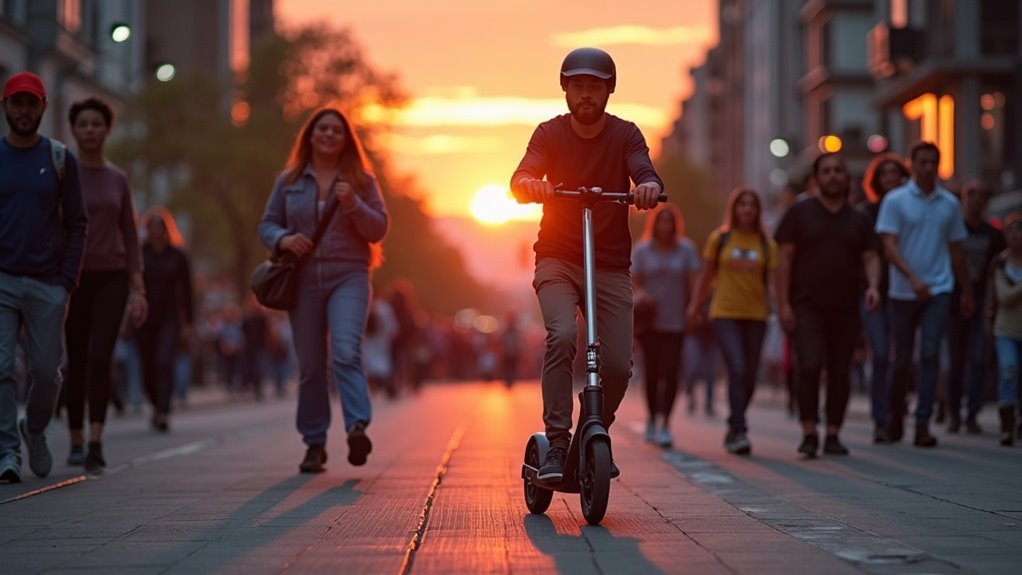
Electric scooters are allowed on the road because they’re classified as motor-assisted vehicles, making them suitable for urban travel. They can be used on public roads with speed limits up to 35 mph, which provides an eco-friendly and efficient option for short trips. Local regulations often govern their use, ensuring safety and compliance with traffic laws. Their rising popularity ties into a broader shift in urban transportation, and understanding their impact can reveal more exciting insights.
Key Takeaways
- Electric scooters are classified as motor-assisted vehicles under Texas law, allowing their operation on public roads.
- They are permitted on roads with speed limits of 35 mph or less, enhancing accessibility.
- Electric scooters provide an eco-friendly transportation option, reducing carbon emissions in urban areas.
- Local regulations often govern their use, promoting safety and compliance with traffic laws.
- Scooter-sharing programs increase their availability, making them a convenient choice for short trips.
The Growing Popularity of Electric Scooters
As urban areas continue to expand, electric scooters have gained traction for their convenience and eco-friendliness, making them a popular choice for short trips.
These scooters not only offer a cost-effective transportation option but also help reduce urban congestion.
With the global market projected to surpass $41 billion by 2030, scooter-sharing programs are increasing accessibility, appealing to locals and tourists alike.
Studies reveal that using electric scooters can cut carbon emissions by up to 40% compared to gasoline vehicles.
Many cities are responding with designated scooter lanes to enhance rider safety and integrate scooters into the broader transportation system.
Legal Framework for Electric Scooters
While traversing the legal landscape for electric scooters can seem intimidating, understanding the regulations is essential for safe and compliant riding.
In Texas, electric scooters fall under the Texas Transportation Code §551.351, allowing use on public roads with speed limits of 35 mph or less. Riders must obey local regulations, which often restrict riding on sidewalks and certain high-speed areas.
Age restrictions typically require riders to be at least 16 or 18 years old. While there are no insurance requirements, compliance with traffic laws and wearing appropriate safety gear is vital to promote safety for all road users.
Benefits of Using Electric Scooters
Electric scooters provide a practical and environmentally friendly alternative for urban transportation, especially as cities grapple with increasing traffic congestion and pollution. They offer numerous benefits for short-distance commutes, saving you money on fuel and parking. With designated bike lanes enhancing safety, you can confidently navigate urban areas. Rental services typically cost between $20-$30 per hour, making them accessible for many. However, the rise in popularity has led to over 56,000 e-scooter injuries reported in 2022, highlighting the importance of safe riding practices and regulations.
| Benefits | Details |
|---|---|
| Eco-Friendly | Reduces carbon emissions |
| Speed | Reaches up to 20 mph |
| Cost-Effective | Saves on fuel and parking |
| Safety Features | Utilizes bike lanes for safer rides |
Safety Regulations and Compliance
To guarantee a safe riding experience, understanding the safety regulations and compliance laws surrounding electric scooters is essential for both riders and pedestrians.
Electric scooters are classified as motor-assisted scooters, permitting their operation on public roadways with speed limits of 35 mph or less. Riders must comply with traffic laws, yielding to pedestrians at crosswalks and adhering to traffic signals.
Maintaining a maximum speed limit of 15 mph enhances safety. Municipal regulations prohibit riding on sidewalks in business districts, and while helmets aren’t legally required for those over 18, wearing one is advisable to mitigate injury risks.
Environmental Impact of Electric Scooters
As cities grapple with rising pollution levels and traffic congestion, the environmental benefits of electric scooters emerge as a compelling alternative to traditional vehicles.
With zero tailpipe emissions, electric scooters greatly reduce air pollution, leading to improved urban air quality. Studies show they can cut carbon emissions by up to 30% when chosen over cars for short trips, promoting sustainable transportation.
Their energy consumption averages about 0.02 kWh per mile, making them an energy-efficient option for urban commuting. Increased scooter usage can also alleviate traffic congestion, further minimizing the overall environmental impact in densely populated areas, thereby fostering healthier communities.
Future of Electric Scooters in Urban Transportation
While urban areas face increasing challenges related to congestion and pollution, the future of electric scooters presents a promising solution to these issues.
As cities enhance their infrastructure, dedicated lanes and parking zones will facilitate safer integration of electric scooters into urban transportation.
Dedicated lanes and parking zones will ensure electric scooters merge seamlessly and safely into urban transportation systems.
With a projected market growth of over 7%, e-scooter sharing programs will expand, encouraging eco-friendly travel and reducing carbon emissions.
Innovations in battery technology and smart features will further increase their appeal.