Tire pressure affects your e-bike’s range by directly influencing rolling resistance and efficiency. Properly inflated tires minimize contact area, reducing friction and allowing you to travel farther on a single charge. Under-inflation increases rolling resistance, which can decrease your battery range by up to 25%. Checking and maintaining tire pressure within the recommended range specific to your e-bike type is essential for peak performance. Discover how to adjust tire pressure for better riding experiences and efficiency.
Key Takeaways
- Proper tire pressure minimizes rolling resistance, allowing for longer travel on a single charge.
- Under-inflated tires increase friction, leading to higher energy consumption and reduced battery range.
- Maintaining ideal tire pressure enhances overall e-bike performance and riding experience.
- Tires lose about 5 PSI monthly, making regular checks essential for maximum range.
- The type and width of tires also influence the optimal pressure and overall energy efficiency.
The Importance of Tire Pressure for E-Bike Performance
When you ride your e-bike, proper tire pressure isn’t just a minor detail; it’s critical for maximizing your performance.
Maintaining tire pressure between 30 PSI to 70 PSI guarantees peak efficiency and comfort. Under-inflated tires can decrease your battery range by up to 25% due to increased rolling resistance, necessitating more power.
Regular checks are essential, as tires lose about 5 PSI monthly. Higher tire pressures are especially beneficial for paved roads, enhancing efficiency and extending your e-bike’s range.
Prioritizing proper tire inflation not only boosts performance but also contributes to a more enjoyable riding experience.
How Tire Pressure Influences Rolling Resistance
Tire pressure plays an essential role in determining rolling resistance, which directly affects your e-bike’s efficiency.
When you lower tire pressure, you increase the contact area with the ground, leading to higher friction and greater energy consumption.
Maintaining ideal tire pressure minimizes rolling resistance, enabling you to travel further on a single charge.
Tire Inflation Effects
Proper inflation of your e-bike’s tires is essential, as it directly influences rolling resistance and overall energy efficiency.
Here are key factors to take into account:
- Tire Pressure: Maintaining the ideal tire pressure (30-70 PSI) is vital for peak performance.
- Rolling Resistance: Under-inflated tires increase friction, decreasing energy efficiency and potentially reducing e-bike range by up to 25%.
- Higher Pressure: Increased tire pressure minimizes the contact area, leading to lower rolling resistance.
- Regular Checks: Consistently checking tire pressure helps prevent drag and enhances battery efficiency, ensuring you get the most out of every charge.
Rolling Resistance Explained
Rolling resistance plays an essential role in determining how efficiently your e-bike operates.
Tire pressure directly influences this resistance; under-inflated tires can increase it considerably, draining battery power and reducing e-bike range. Just a 25% decrease in tire pressure can drastically impact performance. Properly inflated tires can achieve a rolling resistance as low as 0.003, while wider, under-inflated ones may reach 0.006.
Higher tire pressure minimizes the contact patch with the ground, enhancing energy efficiency on paved surfaces. Regularly checking and adjusting tire pressure is vital, as tires can lose around 5 psi monthly, affecting overall e-bike performance.
Recommended Tire Pressure Based on E-Bike Type
The right tire pressure can greatly impact your e-bike’s performance and comfort. Understanding the recommended tire pressure for your specific e-bike type enhances your ride and extends your e-bike range.
Consider these guidelines:
- Electric Mountain Bikes: 20-45 PSI for traction and shock absorption on uneven terrain.
- Commuter E-Bikes: 40-70 PSI balances efficiency and comfort on various surfaces.
- Road E-Bikes: 70-100 PSI optimizes low rolling resistance for speed on smooth pavement.
- Fat Tire E-Bikes: 5-20 PSI improves grip on loose surfaces, supporting larger tire volumes.
Choosing the right PSI guarantees an enjoyable, efficient ride.
The Impact of Tire Width on Pressure and Range
Tire width plays a significant role in determining both tire pressure and e-bike range.
Narrower tires, ranging from 28mm to 42mm, minimize rolling resistance, making them perfect for paved roads and enhancing your e-bike range. Conversely, wider tires (50mm or more) offer better traction but increase rolling resistance, potentially reducing range by 15-20% on smooth surfaces.
Narrower tires enhance e-bike range on paved roads, while wider tires improve traction but may reduce range significantly.
Riders using 28mm tires may travel 20-25% further than those with 45mm tires.
Middle-range tires (42mm to 50mm) strike a balance, adapting to various terrains while maintaining reasonable energy consumption.
Selecting the right tire width guarantees you achieve the ideal pressure for peak performance.
Adjusting Tire Pressure for Optimal Performance
To achieve peak performance from your e-bike, you’ll need to adjust tire pressure within the manufacturer’s recommended range, typically between 30 PSI to 70 PSI.
Consider the terrain you’ll be riding; lower pressures enhance traction on rough surfaces, while higher pressures improve efficiency on smooth roads.
Regular adjustments based on rider weight and seasonal changes will further guarantee maximum battery efficiency and range.
Ideal PSI Ranges
Finding the right tire pressure is essential for optimizing the performance of your e-bike. The ideal PSI ranges typically fall between 30 to 50 PSI, depending on specific factors.
Consider these guidelines:
- Inflate to max PSI for paved surfaces to reduce rolling resistance and enhance energy efficiency.
- Adjust based on rider weight; heavier riders should use higher PSI for support.
- Lower pressure improves comfort and traction on rough terrains but may decrease eBike range.
- Regularly check tire pressure, as tires can lose about 5 PSI monthly—consistent maintenance boosts performance and prolongs battery life.
Impact of Terrain
When traversing varied terrains, adjusting your e-bike’s tire pressure becomes essential for optimizing performance and safety.
For paved surfaces, higher tire pressure minimizes rolling resistance, enhancing efficiency and extending your e-bike range. Conversely, on gravel or uneven terrain, lower tire pressure improves traction and comfort while offering better shock absorption, reducing the risk of pinch flats.
Electric mountain bikes typically perform best with pressures between 20 to 45 PSI, accommodating different terrain types.
Additionally, consider environmental factors, such as temperature, as they can impact tire pressure and overall ride quality, influencing your e-bike’s performance across diverse landscapes.
Maintenance Tips for Maintaining Ideal Tire Pressure
Maintaining ideal tire pressure is essential for maximizing your e-bike’s performance and range, as even a small drop in pressure can greatly impact efficiency.
Maintaining proper tire pressure is crucial for optimizing your e-bike’s performance, as even minor drops can significantly affect efficiency.
Follow these maintenance tips:
- Check tire pressure before each ride; tires lose about 5 PSI monthly.
- Refer to the tire sidewall for the manufacturer’s recommended inflation levels.
- Inflate tires to the maximum recommended pressure to reduce rolling resistance, increasing your range.
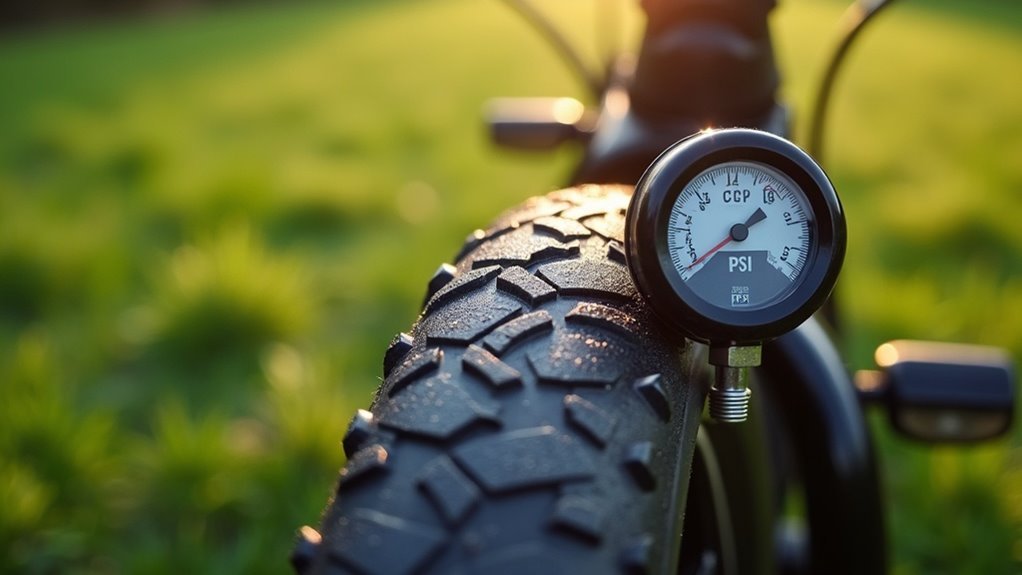
- Use a reliable pressure gauge for accurate measurements, avoiding under-inflated or over-inflated tires that compromise comfort and traction.
Stay vigilant, especially during seasonal temperature changes, to guarantee peak tire performance.