Belt drives are used in some e-bikes because they offer superior efficiency, reduced maintenance, and a cleaner operation compared to traditional chain systems. They require no lubrication and produce less noise, making your ride more enjoyable. The durability of belt drives can result in long-lasting performance, particularly in urban environments. However, they may come with higher initial costs and limited compatibility with multi-speed setups. If you want to know more about their performance and maintenance, keep going.
Key Takeaways
- Belt drives offer low maintenance, eliminating the need for lubrication and reducing upkeep for e-bike users.
- They provide a cleaner ride, preventing grease and grime buildup, ideal for urban commuting.
- The quiet operation of belt drives enhances the overall riding experience, especially in city environments.
- Their durability and lifespan of 10,000 to over 50,000 miles lead to long-term cost-effectiveness for e-bike owners.
- Belt drives ensure smooth power transfer, improving efficiency and performance during rides, particularly in stop-and-go traffic.
What Is a Belt Drive?
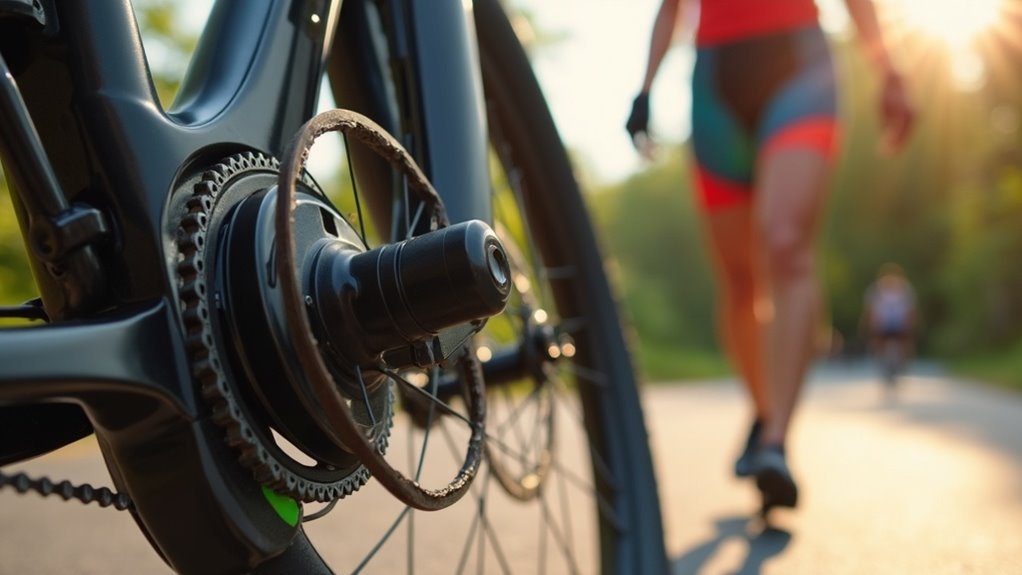
A belt drive is an efficient power transfer system that utilizes a toothed belt, typically made from polyurethane and reinforced with carbon fiber, to connect the crankset to the rear sprocket of a bicycle.
Unlike chain drives, belt systems excel in single-speed configurations or with internally geared hubs, offering durability with lifespans ranging from 10,000 to over 50,000 miles when well-maintained.
They require minimal maintenance since they need no lubrication, making them cleaner. The quieter operation enhances your experience, particularly on electric bikes, where a smooth ride is essential for commuting and serving your community effectively.
Advantages of Belt Drives for E-Bikes
Belt drives on e-bikes markedly reduce your maintenance efforts, requiring no lubrication and only occasional cleaning with water.
Their quiet operation enhances your riding experience, making each commute more enjoyable and less disruptive.
With durability and ease of use, belt drives cater to those who prioritize reliability in everyday riding.
Low Maintenance Requirements
While traditional chain systems require regular lubrication and maintenance, opting for a belt drive on your e-bike greatly reduces these efforts.
Belt drives are low maintenance, requiring no lubrication, which keeps your bike clean without the mess associated with chain oils. With a lifespan between 10,000 to 50,000 miles and durable carbon fiber reinforcement, you’ll experience less frequent servicing.
Additionally, their resistance to rust and grime accumulation means your belt drive can be easily cleaned and maintained.
Clean and Quiet Operation
Choosing a belt drive not only simplifies maintenance but also contributes to a clean and quiet riding experience.
Unlike traditional bike chains, belt drives don’t require lubrication, ensuring a clean operation that avoids messes. Their resistance to rust and grime guarantees long-lasting performance in various weather conditions.
You’ll appreciate the quiet operation, greatly reducing noise levels for a more pleasant urban commute or leisure ride.
With fewer moving parts, maintenance becomes straightforward; you can easily hose down the system without worrying about damaging components.
Ultimately, belt drives provide less maintenance and enhance your riding enjoyment, promoting a cleaner, quieter environment.
Disadvantages of Belt Drives for E-Bikes
When considering belt drives for your e-bike, you should be aware of their higher initial costs compared to traditional chain systems, which might stretch your budget.
Additionally, their limited compatibility with multi-speed drivetrains can restrict your gear options, making it less adaptable for varied riding conditions.
Finally, the availability and cost of replacement parts can pose challenges, potentially leading to inconvenient downtime.
Higher Initial Costs
Although belt drives are praised for their durability and low maintenance, their higher initial costs can be a significant barrier for many e-bike buyers. A belt drive ebike typically comes with a steeper price tag than traditional chain systems, making it less appealing for budget-conscious riders.
Furthermore, replacement parts like belts and sprockets are often pricier, adding to long-term costs. The specific design requirements for belt drives may necessitate purchasing a more expensive bike model, and servicing can incur additional costs due to the need for specialized knowledge and tools.
Ultimately, the investment may not suit everyone’s riding needs.
Limited Gear Options
The higher initial costs of belt drives often overshadow their performance limitations, particularly concerning gear options.
You’ll find that belt drives are typically limited to single-speed or internally geared hubs, which restricts your versatility. This rigidity requires specific tension and alignment, making it challenging to adapt to varying gear ratios.
Internally geared hubs compatible with belts, like the Alfine 8 or Rohloff, may not offer the extensive gear range of traditional chain systems. Consequently, these limited gear options can hinder your ability to tackle steep inclines or diverse terrains effectively, highlighting some significant disadvantages of a belt system.
Replacement Part Availability
How easily can you find replacement parts for belt drive systems on e-bikes? Unfortunately, availability can be a challenge.
Replacement belts are often harder to locate and pricier than traditional bike chains, with costs around £120 in some cases. This can lead to frustrating downtime if your local bike shop lacks stock.
Additionally, the unique specifications required for belt drives complicate matters, as compatibility with various bike models is limited. You may find yourself needing to visit specialized retailers or service centers, which can further delay repairs and deter potential buyers from choosing belt drive systems for their e-bikes.
User Experiences With Belt Drive E-Bikes
Many riders appreciate the benefits of belt drive systems on e-bikes, particularly when it comes to maintenance. Users report less cleaning and no lubrication, allowing for a cleaner ride. While some riders achieved impressive mileage—up to 9,600 miles—others faced issues, with belts snapping after about 2,200 miles. Proper alignment and tension are crucial for peak performance. Here’s a quick overview of user experiences:
| Experience | Observation |
|---|---|
| Mileage | Up to 9,600 miles |
| Common Issues | Snapping after 2,200 miles |
| Replacement Cost | Approximately £120 |
Maintenance and Longevity of Belt Drives
Riders who’ve experienced belt drive e-bikes often highlight their low maintenance requirements, setting the stage for a deeper understanding of how these systems function over time.
Unlike traditional chains, belt drives need no lubrication, reducing maintenance frequency considerably. Gates Carbon Belts can last between 10,000 to 20,000 miles, with proper care allowing for longevity beyond 50,000 miles.
Their clean design minimizes grime accumulation, simplifying transport and upkeep. Regular maintenance involves checking alignment and tension, which prevents issues like snapping and guarantees peak performance, particularly beneficial for mid-drive e-bike users who face higher loads compared to conventional bike chains.
Comparing Belt Drives and Chain Drives
While both belt drives and chain drives serve as effective means of power transmission in e-bikes, they differ considerably in performance, maintenance, and overall user experience.
Belt drives offer quieter operation and require less maintenance, lasting up to 20,000 miles, unlike chain drives, which may wear out after 1,000 to 2,000 miles.
However, belt systems limit you to single-speed setups or internally geared hubs, while chain drives provide more gearing options.
Although belt drives can deliver a smoother ride, their higher initial cost and harder-to-find replacement parts may deter some riders compared to the more conventional chain drive systems.
Recommendations for Prospective Buyers
Choosing a belt drive e-bike requires careful consideration of several factors to ascertain it meets your needs. Here are some recommendations for prospective buyers:
| Factor | Recommendation |
|---|---|
| Purchase Location | Buy from a reputable local bike shop |
| Spare Parts | Carry a spare belt for emergencies |
| Maintenance | Regular cleaning and tension checks |
Weigh the higher initial costs against the low maintenance and durability advantages. Belt drives excel in urban settings, providing a clean ride. Assess your riding preferences to ascertain this choice aligns with your lifestyle and performance expectations.