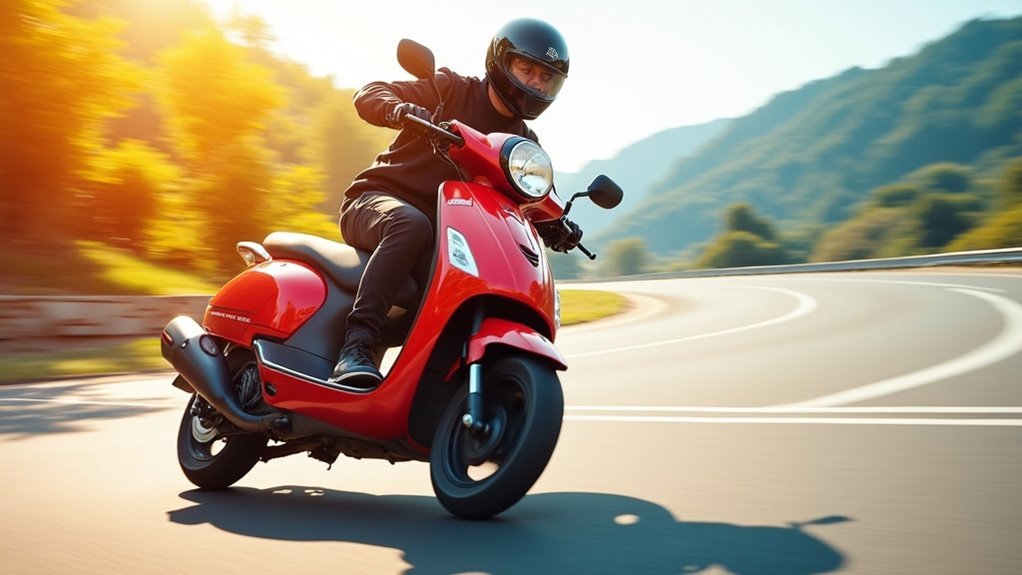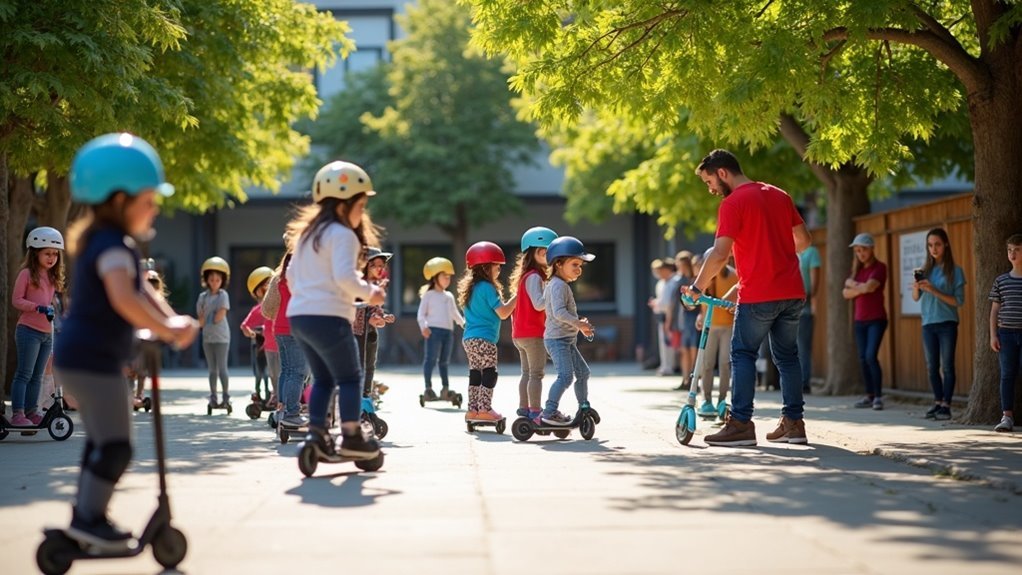
To practice threshold braking safely on an electric bicycle or scooter, find a smooth, empty parking lot or closed course. Start by accelerating to about 15-20 mph, then apply maximum brake pressure just before your wheels lock up. Pay attention to the feedback from the brakes to understand your vehicle’s limits. Practice inducing a controlled lock and releasing it slightly to regain grip. Regular practice in safe areas will boost your confidence and skills. Remember to wear appropriate safety gear while practicing, and always be aware of your surroundings. There’s much more to explore about perfecting your braking technique on electric vehicles!
Key Takeaways
- Choose an empty parking lot or closed course with smooth, obstacle-free surfaces ideal for electric bicycles or scooters for safe practice.
- Ensure the practice area is legally accessible and free of pedestrians and heavy traffic to maintain safety.
- Start practicing threshold braking at moderate speeds of 15-20 mph to recognize feedback from the electric motor and brakes.
- Gradually increase the speed while practicing controlled braking and regaining grip after a slip, focusing on the unique braking system of your electric bike or scooter.
- Regularly test braking on various surfaces, such as asphalt and gravel, to enhance adaptability and confidence in different riding conditions.
Understanding Threshold Braking
When you’re riding an electric bicycle or scooter, understanding how to effectively use the brakes is essential for maintaining control during sudden stops.
This technique involves applying maximum brake pressure just before your wheels lock up, ensuring optimal braking performance. Each e-bike or e-scooter has a unique threshold where brakes engage and tires begin to skid, so it’s crucial to be aware of your vehicle’s limits.
Mastering brake pressure just before wheel lock ensures optimal performance; know your e-bike’s limits for safe riding.
Pay attention to changes in brake lever feedback and the sensation of reduced grip, as these signals indicate you’re approaching lock-up.
Practicing at lower speeds, such as around 15 mph, allows for safe experimentation, helping you master braking techniques across various surfaces and conditions, ultimately boosting your riding confidence.
Finding a Safe Practice Location
To practice threshold braking safely on your electric bicycle or scooter, you need to find a suitable location, such as an empty parking lot or a closed course.
Ensure the surface is smooth and free of obstacles, pedestrians, and other vehicles, allowing you to focus on refining your braking technique.
Always verify that the area is legally accessible for riding to avoid any potential issues.
Private Tarmac Selection
Finding a suitable private tarmac location for practicing electric bicycle or electric scooter skills is essential for both safety and effectiveness.
Look for a privately owned road or parking lot with minimal traffic and no obstacles. Ensure the surface is smooth, free from debris and potholes, to maintain stability while riding.
Consider spots that offer varied conditions, like flat areas and slight inclines, to enhance your adaptability and control over your electric vehicle.
Always obtain permission to use the space, as unauthorized practice can lead to legal troubles.
Schedule your sessions during off-peak hours to avoid other vehicles or pedestrians, allowing for uninterrupted, focused practice.
Assessing Surface Conditions
Before you begin practicing threshold braking on your electric bicycle or scooter, it’s essential to assess the surface conditions of your chosen location.
Look for a safe, privately owned tarmac area or closed course that’s free from traffic and hazards. Ensure the surface is dry and in good condition, as wet or damaged areas can compromise your ability to brake effectively.
Additionally, consider practicing on surfaces with varying grip levels and gentle slopes to understand how incline affects braking performance.
Always conduct a thorough inspection to identify potential obstacles or hazards.
- Choose a dry, well-maintained surface.
- Test different grip levels.
- Inspect for hazards before practice.
Safety Measures Implemented
Evaluating surface conditions is crucial for a safe practice session on electric bicycles or scooters, but selecting the right location is equally important.
Look for a privately owned tarmac or an empty parking lot, ensuring it’s free from traffic and obstacles. Prioritize a dry, level surface to effectively assess braking performance.
Choose a site with clear visibility and ample space to safely accelerate and decelerate. Implement safety measures by using appropriate signage or barriers to prevent unintended entry.
Always inform someone about your practice location and duration, and have an emergency plan ready. These steps help create a secure environment while honing your braking skills on electric bicycles and scooters.
Stage 1: Familiarization With Wheel Lock
How can you guarantee you’re ready for threshold braking on your electric bicycle or scooter? Start by finding a safe, privately owned area away from public hazards.
Accelerate to a moderate speed, around 15-20 mph, then brake firmly to experience how your e-bike or scooter responds to pedal or hand brake pressure.
- Pay attention to changes in brake feedback, whether it’s through the lever or pedal.
- Notice sensations and warning signs before wheel lock, such as changes in steering or tire noise.
- Observe which wheels tend to lock first to understand your vehicle’s dynamics.
This practice will help you recognize the threshold of wheel lock, ensuring you’re prepared for effective threshold braking when it counts during your rides.
Stage 2: Regaining Friction After Lock
In Stage 2, you’ll focus on regaining traction after a wheel lock on your electric bicycle or scooter.
Begin by inducing a controlled wheel lock at a speed of around 20 mph, then gently release the brake to free the locked wheel.
Once it’s spinning again, reapply the brake with less pressure to regain control and maximize braking effectiveness.
This technique will help you maintain stability and safety while riding, especially in emergency situations.
Inducing Controlled Wheel Lock
When you experience a wheel lock during hard braking on an electric bicycle or scooter, it’s essential to act quickly to regain traction.
Here’s how to manage it effectively:
- Release the brake slightly to allow the locked wheel(s) to regain grip.
- Reapply the brakes with reduced pressure, focusing on smooth modulation to maintain control.
- Pay attention to feedback from the brake lever to assess wheel behavior and adjust accordingly.
Practicing this technique in a safe area is crucial.
Ensure you have enough space and traction to maintain control of your electric ride.
Developing the ability to modulate brake pressure will enhance your braking performance and help you navigate safely in various conditions.
Stay focused and practice regularly to improve your skills!
Reapplying Brake Pressure Effectively
Regaining control after a wheel lock on an electric bicycle or scooter is essential for maintaining your safety and stability.
To reapply brake pressure effectively, quickly release the brake slightly to free the locked wheel(s) before gently reapplying the brakes with reduced pressure. Practicing this technique at moderate speeds helps you understand your vehicle’s response and refine your recovery method.
Always focus on maintaining balance, as losing it can lead to a loss of control. Pay close attention to the brake lever feedback to gauge your adjustments, ensuring you regain grip efficiently.
Consistent practice will develop a good feel for brake pressure, enhancing your overall braking performance on your electric ride.
Stage 3: Perfecting the Technique
To perfect your threshold braking technique on electric bicycles or scooters, it’s essential to practice consistently while maintaining control.
Start by braking from about 20 mph, gradually increasing pressure until just before wheel lock. Utilize the release and reapply method if needed, ensuring minimal tire screech for a smoother stop.
- Monitor tire wear after each session to prevent excessive damage and ensure safety.
- Focus on visual and tactile feedback from the brake levers to refine your sensitivity and response time.
- Repeat the technique until you can reliably execute threshold braking without locking the wheels.
With dedication, you’ll enhance your braking skills, ensuring safety and control while riding on various terrains.
Variability of Surface Conditions
Understanding how varying surface conditions affect braking is vital for maintaining control and safety while riding electric bicycles or scooters.
Different surfaces, such as wet, icy, or muddy conditions, require you to adjust your braking pressure to avoid wear and tear on your brakes and tires. In slippery environments, locking your brakes can help maintain traction, contrary to what you’d expect on dry surfaces, especially with the regenerative braking systems found in many electric models.
Uphill braking is more effective due to gravity, while road camber can reduce grip, demanding careful modulation of your electric vehicle’s braking system.
In split-mu situations, being aware of different grip levels is essential to prevent loss of control and ensure safe stopping, which is particularly important for the added weight and speed of electric bicycles and scooters.
Understanding Grip and Control
As you navigate various terrains on your electric bicycle or scooter, recognizing the grip between your tires and the surface is essential for maintaining control and safety.
Understanding how different surfaces impact braking will enhance your riding experience and decision-making skills.
Recognizing how surface types affect braking can significantly improve your riding confidence and choices.
- Practice threshold braking in varied conditions to assess grip levels on your electric bike or scooter.
- Identify tire lock-up points to recognize slippery surfaces while riding your electric vehicle.
- Engage the driveline while braking to prevent tire lock-up and ensure a smooth ride on your electric bicycle or scooter.
Building Driving Skills and Resources
Building riding skills on electric bicycles or scooters requires a commitment to consistent practice and access to valuable resources. To master techniques like smooth acceleration and effective braking, practice regularly in safe, controlled environments.
Seek professional instruction or workshops for structured guidance and personalized feedback on your riding style. Utilize online resources such as instructional videos and tutorials to stay updated on advanced riding techniques.
Join electric bike or scooter communities and forums to share insights and learn from experienced riders about navigating various terrains and conditions.
Finally, practice on different surfaces to understand handling and performance variations, ensuring you’re adaptable in real-world situations. These steps will enhance your skill retention and build the confidence necessary for safe riding.