To route brake hoses on electric bicycles or scooters and prevent kinks, position them snugly along the frame or within the scooter’s structure. Avoid sharp bends and ensure there is enough length for full movement of the electric components and suspension. Use zip ties near pivot points for added stability and make sure hoses are kept away from heat sources, such as the motor. Regularly inspect the hoses for wear or pinching, as this can affect brake performance. Selecting durable materials, like braided hoses, can significantly enhance overall performance and longevity. For more detailed guidance on installation and maintenance specific to electric bikes and scooters, you’ll want to explore further.
Key Takeaways
- Route brake hoses along the frame or inside the fork of electric bicycles or scooters to minimize the risk of kinks and snagging during movement.
- Avoid sharp bends and tight angles; use gentle curves to maintain optimal fluid flow and prevent kinking in the brake system.
- Ensure sufficient clearance for hoses during full suspension compression or steering maneuvers to avoid pinching and wear, especially in electric models with complex wiring and components.
- Utilize zip ties or guides to secure hoses near pivot points, preventing them from shifting and creating kinks, which is crucial for the performance of electric braking systems.
- Regularly inspect brake lines for wear, kinks, or damage to ensure consistent braking performance and safety, particularly in high-speed electric bicycles and scooters.
Understanding the Importance of Proper Routing
Proper routing of brake hoses is essential for maintaining optimal braking performance in electric bicycles and scooters. Kinks in brake lines can severely hinder fluid flow, increasing the risk of brake failure.
To avoid this, run the front brake line on the inside of the fork, ensuring a snug fit that minimizes kinking during suspension movement. Adjust routing near pivot points rather than along the top tube to reduce kinks caused by constant movement.
Run the front brake line inside the fork for a snug fit, minimizing kinks during suspension movement.
Utilizing factory retainers and clips during installation preserves the original design, protecting the brake line. Regularly inspect your brake lines for wear or kinks to guarantee consistent performance and safety on the road.
Proper maintenance of your brake system is crucial for the reliability and safety of your electric ride.
Recommended Routing Techniques for Brake Hoses
When routing brake hoses for electric bicycles or scooters, it’s crucial to prioritize techniques that minimize the risk of kinks and ensure reliable braking performance.
Start by positioning the hoses along the frame or on the inside of the fork to avoid snagging and guarantee a snug fit. Use proper bends and avoid sharp angles to prevent kinks.
Always allow sufficient space for the hoses during full suspension compression or steering to avoid pinching. Regularly inspect for wear or kinks, adjusting the routing as needed.
Consider utilizing zip ties or guides to stabilize hoses near pivot points. Engaging in these practices can enhance your brake performance and contribute to informed discussions on the forum.
Common Mistakes to Avoid When Installing Brake Hoses
Installing brake hoses on electric bicycles or electric scooters can seem straightforward, but overlooking key details can lead to significant issues down the line.
One common mistake isn’t following the original routing paths provided by the manufacturer, which can result in instability. Avoid sharp bends and kinks; tight angles can compromise braking performance. Make sure hoses aren’t routed near heat sources, like batteries or motors, to prevent damage.
Additionally, leave extra tubing at the ends to allow for adjustments without tension. Regularly inspect for pinching or rubbing against other components, as this can lead to wear and eventual failure.
Prioritizing these details is essential for ensuring safe and effective braking operation on your electric ride.
Tools and Materials for Effective Brake Hose Routing
A well-equipped workspace is essential for effective electric bicycle or scooter maintenance.
Start with high-quality wiring harnesses, ensuring all connections are secure and insulated. Acquire a roll of electric wire and connectors for a customized fit, avoiding the limitations of pre-cut lengths.
Use a wire bending tool or a home-brew bending form to create gentle curves in the wiring, steering clear of sharp bends that can cause damage. Position wires away from heat sources like motors and battery packs, and regularly inspect all tools and materials, including clips and fittings, for compatibility and condition.
Regular Inspection and Maintenance Practices
Maintaining the integrity of your electric bicycle or electric scooter’s braking system is essential for safety and performance. Regular inspection is vital; check your brake lines and cables for wear or kinks during routine maintenance every 5,000–7,500 miles.
Before and after winter, inspect for corrosion, especially in salty or damp conditions. If you notice a soft or spongy brake lever feel, address it immediately, as it may indicate brake line or cable issues.
Look for visible fluid leaks or severe rust, which require immediate action. Use a structured checklist focusing on common failure points, like improper bends, damaged clips, or worn brake pads, to enhance your braking system’s longevity and performance through diligent maintenance practices.
Upgrading to Durable Brake Hose Materials
Upgrading to durable brake hose materials can significantly enhance the braking performance and safety of electric bicycles and scooters.
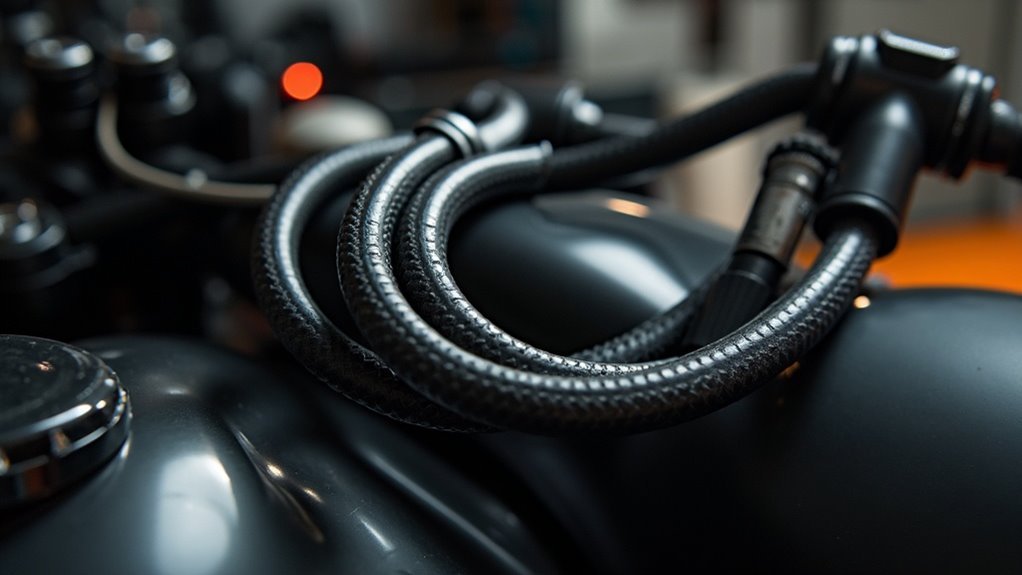
Consider installing braided brake hoses, which provide superior durability and resistance to kinking and bursting compared to standard rubber hoses. Their stainless steel outer layer protects against abrasion and environmental damage, while a Teflon inner lining withstands heat and pressure fluctuations.
Custom-length options help reduce excess slack, further preventing kinks during operation. Regularly replacing rubber hoses with these braided alternatives improves your braking system’s integrity and responsiveness, minimizing safety risks associated with degraded materials.
Prioritize these upgrades to ensure reliable and consistent braking performance on your electric ride.
Seeking Professional Help for Complex Issues
When complex electrical issues arise with electric bicycles or scooters, seeking professional help is essential to ensure proper diagnostics and repairs.
A qualified technician has the expertise to identify underlying problems, such as faulty wiring or damaged components, which you might overlook. They also use specialized tools for testing and calibrating the electrical systems, ensuring optimal performance and safety.
By consulting experts, you gain access to high-quality replacement parts, enhancing your vehicle’s longevity and efficiency. Additionally, professionals can address warranty considerations, ensuring compliance with manufacturer guidelines.
Ultimately, their knowledge safeguards your electric bike or scooter and promotes safe, reliable operation.