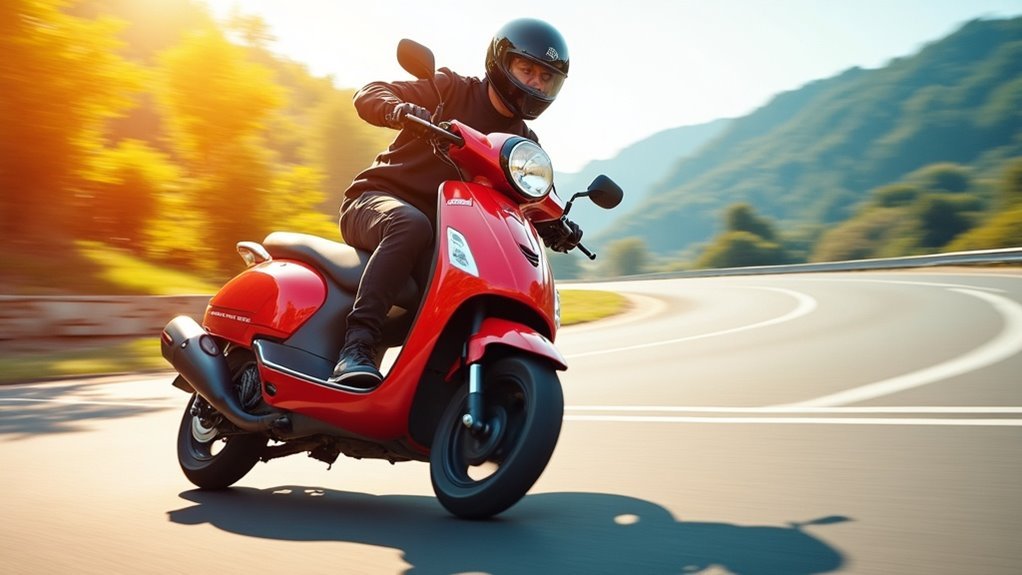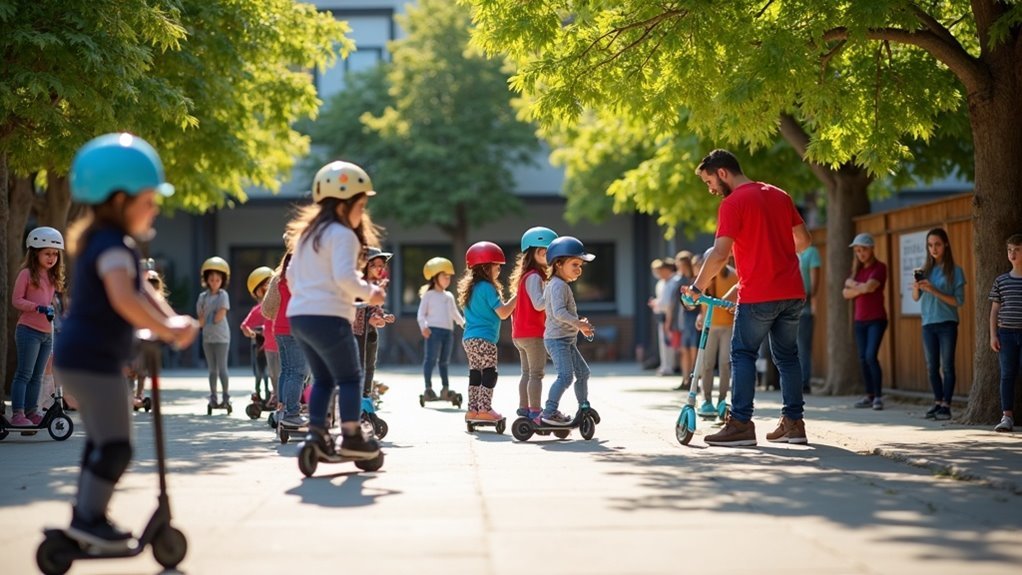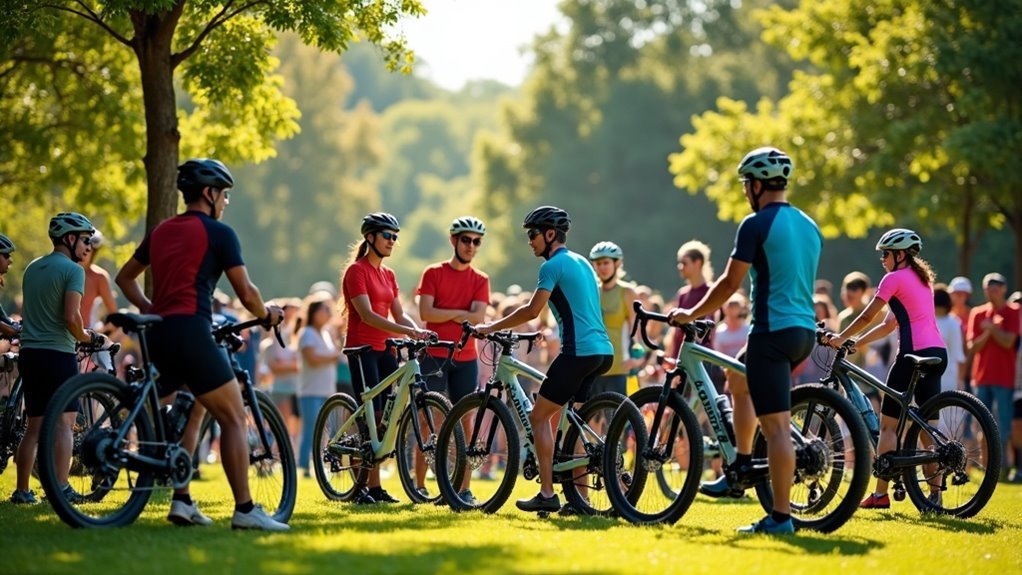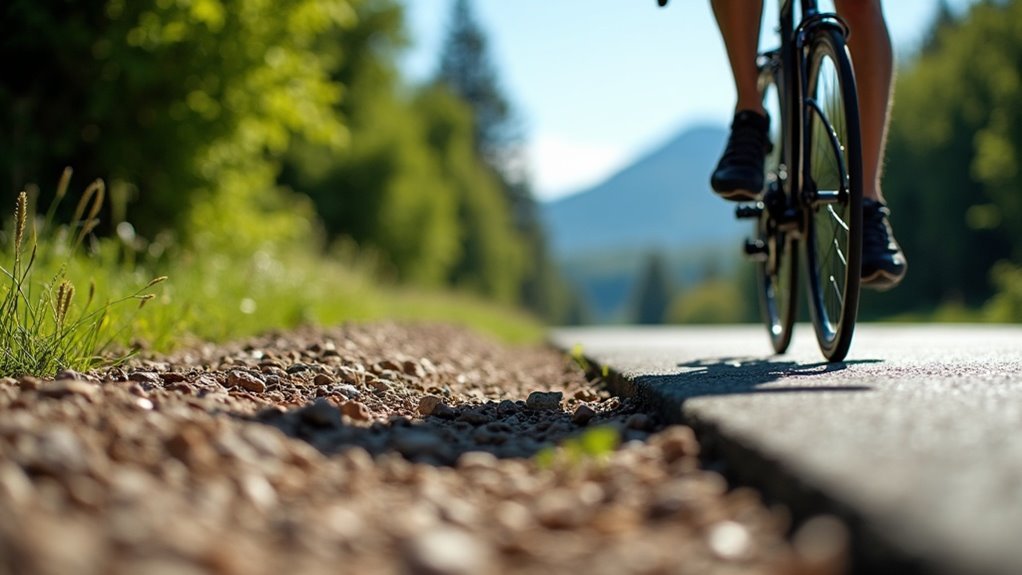
To adapt to gravel transitions from paved lanes on an electric bicycle, slow down and maintain a steady grip on the handlebars. Keep an eye out for uneven surfaces, ruts, or loose stones that can affect stability. Slightly bend your knees to lower your center of gravity for better balance and control. Choosing wider tires with good traction and adjusting tire pressure can significantly enhance your grip on gravel. As you gain confidence riding your electric bicycle on gravel, you’ll discover new techniques that will make your rides even smoother.
Key Takeaways
- Slow down to 10-15 mph before transitioning to gravel for better traction and control on your electric bicycle or scooter.
- Keep handlebars steady and maintain a straight line to avoid losing balance when navigating gravel surfaces.
- Check the gravel surface for ruts or loose stones to anticipate potential hazards that could affect your ride.
- Lower tire pressure to enhance grip and reduce the risk of pinch flats on uneven terrain, especially important for electric bicycles.
- Ensure proper body positioning and engage core muscles to stabilize while navigating gravel, making your ride on an electric scooter or bicycle more comfortable and safe.
Understanding Gravel Transition Challenges
As you navigate the shift from paved paths to gravel terrain on your electric bicycle, you’ll quickly notice the challenges that arise. Uneven surfaces can disrupt your bike’s stability, while poor drainage can lead to puddling and runoff issues.
To combat these problems, ensure you create a well-defined edging system at the transition point to keep gravel contained and enhance visual appeal. Regular maintenance is essential; consider using weed barriers and replenishing gravel periodically.
Choosing the right type of gravel—angular and sized between 4 to 10 millimeters—can greatly improve compaction, creating a smoother, more stable transition that serves both your riding needs and aesthetics.
Best Practices for Approaching Gravel
Maneuvering gravel surfaces can be tricky, especially after riding on smooth pavement on an electric bicycle or scooter. To guarantee safety and control while navigating gravel, follow these best practices every time you approach:
| Practice | Description |
|---|---|
| Slow Down | Reduce your speed to 10-15 mph for better traction on your electric bike or scooter. |
| Steady Steering | Keep the handlebars steady; avoid sharp turns to maintain balance. |
| Maintain Distance | Stay back from other riders and vehicles to allow for sudden stops. |
| Check Surface Conditions | Look for ruts or loose stones that could affect your ride stability. |
Maintaining Balance on Uneven Surfaces
Shifting to gravel can be challenging on an electric scooter, but with the right techniques, you can maintain your balance effectively.
Start by bending your knees slightly to lower your center of gravity, enhancing stability on uneven surfaces. As you approach the changeover, slow down—this gives you better control and reduces the risk of slipping.
Bend your knees and slow down to enhance stability and control when navigating uneven surfaces.
Opt for wider tires with good traction to improve grip on loose gravel. Focus on a straight line and smooth steering to avoid sudden weight shifts.
Finally, engage your core muscles; they’re essential for stabilizing your body as you navigate these changeovers, ensuring you maintain balance throughout your ride.
Adjusting Your Cycling Technique for Gravel
Maneuvering gravel on an electric bicycle requires a different approach to your riding technique than cruising on smooth pavement.
Start by lowering your tire pressure by 10-15 PSI for better grip and comfort, especially when using an e-bike. Shift your body slightly back, lowering your center of gravity to enhance stability on loose surfaces.
Adopt a smoother, fluid pedaling style to avoid wheel spin and maintain momentum, even with the added weight of the electric components. Always scan the terrain ahead, anticipating obstacles like rocks or ruts, and adjust your line early to prevent any mishaps.
The final step is to practice on varied gravel conditions, building your confidence and adaptability for different surfaces, ensuring a more enjoyable ride with your electric bicycle.
Vehicle Preparation for Gravel Driving
Before hitting those gravel paths on your electric bicycle or scooter, you’ll want to check your tire pressure; slightly lowering it can enhance traction, but be cautious of pinch flats from sharp stones.
Also, take a moment to assess your suspension system, if applicable, as a well-tuned setup can make a significant difference in absorbing the bumps and dips of rough terrain.
Preparing your electric ride properly not only enhances your experience but also helps protect it from potential damage.
Tire Pressure Adjustments
As you prepare to tackle gravel roads on your electric bicycle, adjusting your tire pressure becomes essential for a superior riding experience.
Lowering your tire pressure to around 25-30 psi improves traction and smooths your ride compared to the standard 32-35 psi. This reduction increases the tire’s footprint, enhancing grip and reducing the risk of punctures from sharp gravel edges.
Regularly monitor your tire pressure, especially before shifting from paved to gravel surfaces. Consider a portable air compressor for quick adjustments, ensuring peak handling and safety.
Always check your electric bicycle’s owner’s manual for specific recommendations to maintain performance and safety on various terrains.
Suspension System Considerations
When navigating gravel roads on an electric bicycle, it’s vital to ensure your bike’s suspension system is optimized for the best performance.
Start by adjusting the suspension settings to a softer configuration, allowing it to absorb bumps and irregularities effectively. Electric bikes with higher ground clearance are ideal, as they reduce the risk of damage to the undercarriage.
Additionally, inspect your front fork and rear shock; replacing worn components ensures they can adequately dampen vibrations.
For improved traction, consider equipping your electric bicycle with off-road tires featuring deeper treads.
Importance of Proper Tire Selection
Choosing the right tires for electric bicycles is essential for guaranteeing a smooth and safe riding experience on gravel paths. Tires with deep enough treads offer better traction, preventing slips on loose surfaces.
Opting for tires specifically designed for off-road conditions can enhance your electric bicycle’s durability and stability.
- Reinforced sidewalls resist impacts and punctures, which is crucial for off-road riding
- Lower tire pressure improves grip on uneven terrain, allowing for better control
- All-terrain tires balance performance on paved and gravel roads, making them versatile for different conditions
- Specialized tires, like those for mud and snow, boost handling during shifts in terrain
Selecting the right tires ensures safer and more enjoyable rides on gravel roads with your electric bicycle.
Building Confidence on Gravel Terrain
Building confidence on gravel terrain with electric bicycles starts with understanding how gravel behaves beneath your tires.
By adjusting your riding techniques and selecting the right gear, you can enhance your stability and control, making those changes smoother.
Stay mindful of the shifting conditions, and you’ll find yourself maneuvering gravel with newfound ease, all while enjoying the added power and assistance of your electric bicycle.
Understanding Gravel Dynamics
As you navigate the shift from paved roads to gravel surfaces on your electric bicycle, understanding the dynamics at play can greatly boost your confidence on uneven terrain.
Gravel can shift underfoot or under tires, making sudden movements a waste of time. Keep these tips in mind:
- Maintain a steady speed to enhance control.
- Choose gravel sizes between 4 to 10 millimeters for stability.
- Opt for wider tires for better performance.
- Practice gradual braking and steering techniques to ensure a smooth ride.
Adjusting Riding Techniques
Maneuvering gravel surfaces on an electric bicycle requires a shift in your riding techniques to boost your confidence and control.
Start by shifting your weight slightly back to keep the front wheel from sinking into loose gravel. Maintain a steady, moderate speed—accelerating too quickly can cause loss of traction, while going too slow may lead to instability.
Be really careful and practice looking ahead to anticipate terrain changes, allowing for quick adjustments.
Before hitting the gravel, lower your tire pressure for better grip, but don’t go too low to avoid pinch flats.
Wider handlebars can also give you improved leverage and control over shifting stones, making your ride smoother and more enjoyable.
Selecting Appropriate Gear
Selecting the right gear can greatly boost your confidence when tackling gravel terrain on an electric bicycle or scooter. Choosing the appropriate equipment not only enhances your performance but can help protect you from falls and injuries.
Here are essential items to evaluate for electric bicycles:
- An electric mountain or hybrid bike with thicker tires for better grip and stability on gravel
- Specialized cycling shoes designed for electric biking, offering excellent traction and comfort
- A lightweight helmet that provides good ventilation for comfort during longer rides
- Wider handlebars for improved steering control, especially when navigating uneven surfaces
With the right gear, you’ll navigate loose gravel with ease on your electric bicycle, allowing you to focus on enjoying the ride and building your skills on this challenging terrain.