Seasonal street sweepings can make lanes slippery during the transition from winter to spring and in the fall, particularly for electric bicycle riders. Melting snow mixes with debris, while wet leaves create slick surfaces, posing a risk for cyclists. Poorly swept streets contribute to hidden hazards, increasing accident risks for electric bicycle users. Regular maintenance is essential to enhance traction and prevent pooling water in gutters. To ensure safer rides, consider the timing of sweeps and weather conditions, and you might discover more tips for riding safely on your electric bicycle.
Key Takeaways
- Seasonal street sweepings can make lanes slippery for electric bicycle riders when mixed with moisture from rain or melting snow.
- Accumulated wet leaves during fall create a slick surface, increasing the risk of slipping for electric bicycle riders.
- Debris left unremoved during street sweeping can clog gutters, causing water pooling and hazardous conditions for electric bicycles.
- Freshly swept roads may initially be slippery due to lost traction from debris removal, especially in wet conditions, posing a risk for electric bicycle riders.
- Regular maintenance and timely street sweeping are crucial to minimize slipperiness and enhance road safety for electric bicycle riders.
The Transition From Winter to Spring
As winter gives way to spring, the streets often become a hazard for electric bicycle and scooter riders due to the accumulation of debris, such as leaves and branches, which can create slippery conditions when wet.
Effective street sweeping is essential during this shift, as melting snow mixes with winter debris to form muddy puddles, particularly in shaded areas.
Effective street sweeping is crucial as melting snow creates muddy puddles mixed with winter debris, especially in shaded areas.
Regular maintenance helps remove this buildup, enhancing traction and minimizing the risk of accidents for riders.
By prioritizing street sweeping, communities can guarantee safer roadways, allowing both electric bicycle and scooter users to navigate without fear of slippery conditions.
This proactive approach is significant for maintaining public safety during seasonal street changes.
The Impact of Fall Leaves
While enjoying the vibrant colors of fall, it’s important to consider the hidden dangers posed by accumulated leaves on roadways, especially for electric bicycle riders.
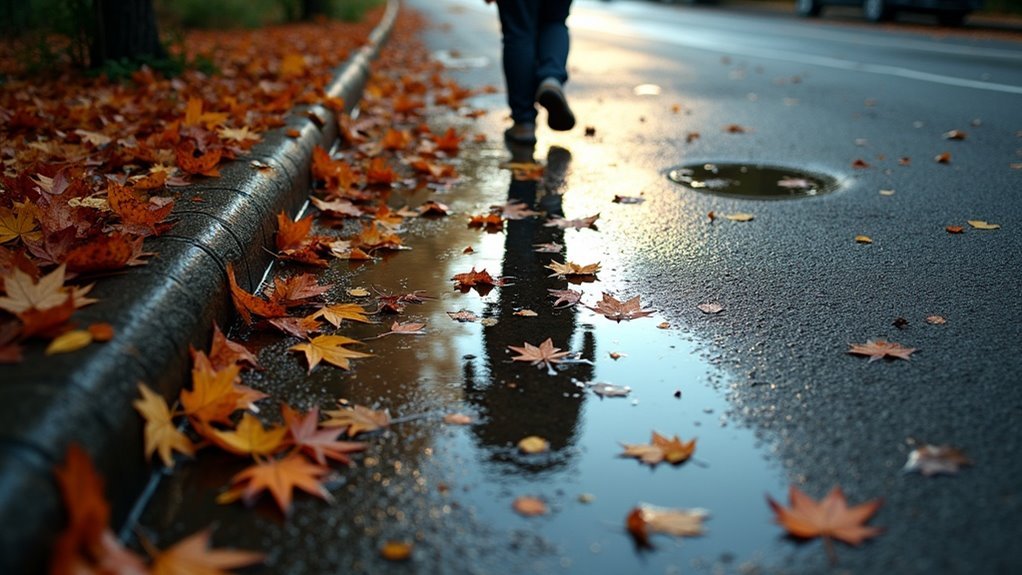
Wet fall leaves can create slippery conditions, acting like grease on asphalt, which can significantly compromise road safety for cyclists. Additionally, leaves in gutters can clog drainage systems, leading to pooling water that further increases hazards during rainstorms.
For electric bicycle riders, navigating through this debris becomes even more challenging, as the reduced traction can lead to accidents. Therefore, effective street sweeping in autumn is essential for removing this debris, including dead grass, acorns, and branches, to maintain safe riding conditions.
The Role of Moisture and Debris
Accumulated moisture from rain or snow combines with fallen leaves and dirt on roadways, creating dangerously slippery conditions that can be particularly hazardous for riders of electric scooters.
This interaction can lead to risky situations for those navigating urban environments. To understand the risks, consider these factors:
- Wet leaves form a slick layer, significantly diminishing traction for electric scooters.
- Debris accumulation in gutters can cause pooling, exacerbating slipperiness and increasing the likelihood of accidents.
- Ineffective street sweeping in wet conditions leaves more debris on roads, posing a greater risk to scooter riders.
- The moisture-debris mix greatly increases stopping distances, compromising safety for those using electric scooters.
Importance of Timely Street Sweeping
Timely street sweeping plays an essential role in maintaining safe road conditions for electric bicycles, especially during fall and after rain events when debris can quickly accumulate.
By removing slippery debris like leaves and dirt, the risk of accidents for cyclists is significantly reduced. Regular sweeping also prevents clogged storm drains, which can lead to pooling water and hazardous riding conditions for e-bikes.
Scheduling these sweeps during off-peak hours maximizes efficiency and ensures that bike lanes are clear when traffic increases. Post-rainstorm sweeping is critical in high-traffic areas, enhancing public safety for cyclists and minimizing collision risks.
Prioritizing timely street sweeping ultimately creates a safer environment for everyone, especially those riding electric bicycles.
Safety Measures for Drivers
As you navigate freshly swept bike lanes, especially during the fall when wet leaves can create slippery conditions, it’s crucial to prioritize safety on your electric bicycle.
Here are some important safety measures to keep in mind:
- Reduce speed to maintain control on potentially slippery surfaces.
- Increase your following distance from other cyclists and pedestrians to allow for sudden stops or skids.
- Stay informed about weather conditions and recent street maintenance schedules to anticipate hazards on your route.
- Ensure your electric bicycle’s tires and brakes are in good condition to enhance riding safety on freshly swept paths.