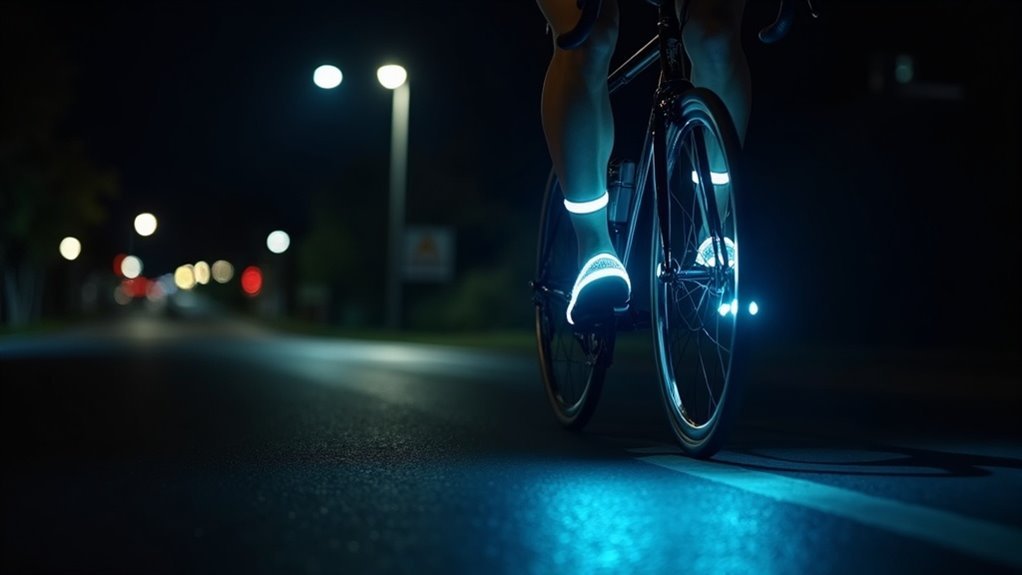
Pedal reflectors provide some visibility but aren’t sufficient for safety, even on well-lit streets, especially when it comes to electric bicycles. Their effectiveness relies on active vehicle lighting, which can diminish in low-light conditions, dirt, or moisture. Reflectors have narrow visibility angles, making them less effective for cyclists who need broader detection. Without active lighting, the risk of accidents increases markedly. To enhance your safety at night while riding an electric bicycle, exploring options for better visibility, such as bright headlights and taillights, can make an essential difference.
Key Takeaways
- Pedal reflectors are not sufficient for visibility in low-light conditions, even on well-lit streets, particularly for electric bicycles.
- Their effectiveness diminishes without direct headlights from vehicles, putting electric bicycle riders at risk.
- Reflectors have a narrow visibility angle, making them less effective for cyclists in various environments, especially when riding electric bicycles that can travel at higher speeds.
- Active lighting is crucial for enhanced visibility and safety, particularly in urban settings where electric bicycles are commonly used.
- Relying solely on reflectors can create a false sense of security for electric bicycle riders, increasing the risk of accidents.
The Limitations of Pedal Reflectors
While pedal reflectors are designed to enhance visibility for cyclists, their limitations become apparent in various scenarios, particularly during nighttime or in poorly lit areas.
These reflectors, often too small for adequate visibility, rely heavily on active lighting from vehicles. If headlights aren’t directed at them, their effectiveness diminishes.
Pedal reflectors, often inadequate in size, depend on vehicle headlights for visibility, rendering them less effective in low-light conditions.
Additionally, environmental factors like dirt and moisture can impede their performance.
Studies reveal that cyclists lacking proper lighting, including active lights on electric bicycles, face a higher risk of accidents.
Ultimately, relying solely on pedal reflectors compromises your safety, especially during night riding on electric bicycles where visibility remains critical.
The Importance of Active Lighting
Pedal reflectors may offer some visibility, but they fall short in ensuring safety, especially during nighttime riding on electric scooters.
Active lights emit their own illumination, making you visible to other road users regardless of external light conditions. Studies indicate that blinking lights greatly enhance detection distance, proving more effective than passive reflectors in accident prevention.
While reflectors may suffice in well-lit areas, their reliability diminishes in various environmental factors. As a result, using bright, steady active lights is essential for urban electric scooter safety.
Relying solely on reflectors creates a false sense of security; combining both options maximizes your visibility and safety on the road.
Understanding Visibility Angles
How well do you understand the concept of visibility angles when it comes to reflectors on electric bicycles?
Recognizing the limitations of reflectors is essential for safety, especially for cyclists. Here are four key points to take into account:
- Reflectors shine brightest when perpendicular to light sources, maximizing visibility within a ten-degree angle.
- The observation angle is narrow, with reflectors appearing bright only at about 0.2 degrees.
- Cyclists typically have a larger observation angle (1.5 degrees), reducing reflector effectiveness.
- Environmental factors like fog or dirt can impair performance, making reflectors inadequate as a sole safety measure against nighttime bicycle collisions.
Common Misconceptions About Reflectors
Many electric scooter riders believe that pedal reflectors alone provide adequate visibility, especially in urban settings.
However, their limited effectiveness and reliance on direct light sources can create serious safety risks.
To enhance your visibility, it’s essential to recognize that active lights are necessary, as reflectors often fail to perform well in dynamic environments.
Reflector Limitations Explained
Electric scooters, often seen as a convenient mode of transportation, have significant limitations regarding their visibility that can lead to misconceptions about their safety.
Here are four key points to take into account:
- Reflectors only shine brightly when aligned with a light source, making them less effective in foggy or low-light conditions.
- Their visibility is limited to a narrow angle of 0.2 degrees, which can be problematic for other road users.
- Many accidents involving electric scooters occur despite the presence of CPSC-approved reflectors.
- Environmental factors and human errors in visibility perception can hinder detection of the scooter and its rider.
While reflective materials provide some measure of safety, relying solely on reflectors isn’t sufficient for riding electric scooters at night.
Understanding these limitations is essential for improving rider safety.
Visibility in Urban Areas
Relying solely on pedal reflectors for visibility while riding electric scooters in urban areas can lead to significant misconceptions about safety.
Many riders assume reflectors provide adequate protection, yet studies indicate they often create a false sense of security. Reflectors depend on vehicle headlights, which can be obstructed, reducing their effectiveness.
Their limited observation angle means drivers approaching from various angles may overlook you. Additionally, urban distractions can further compromise visibility.
As the brightness of reflectors diminishes beyond ten degrees from the light source, you should consider using active lighting systems to enhance your visibility and guarantee your safety on busy streets.
Active Lights Necessity
While it might seem that pedal reflectors provide sufficient visibility, relying on them can lead to dangerous misconceptions about safety, especially for electric scooters.
Consider these points:
- Reflectors have a narrow observation angle (0.2 degrees).
- CPSC-approved reflectors don’t guarantee safety; many accident victims had them.
- Environmental factors like fog can obscure reflectors at night.
- Active lights enhance detection distance, greatly improving visibility.
For nighttime riding on electric scooters, active lights are essential. They emit their own light, ensuring safety regardless of reflector limitations.
Studies show that blinking lights improve visibility, underscoring the necessity of active lights over passive reflectors for effective safety measures.
Safety Statistics and Cyclist Vulnerability
Electric scooter riders face significant risks on the road, especially after dark, as statistics reveal that roughly one scooter rider is killed each night in the USA. This alarming figure underscores rider vulnerability, even on well-lit streets.
Many victims possess CPSC-approved reflectors, suggesting that mere reflectors may not guarantee adequate safety. Common human errors related to visibility often lead drivers to overlook scooter riders, despite these safety features.
In addition, reflector performance issues contribute to high injury rates, indicating that riders require more than just reflectors for safety. Remarkably, most nighttime scooter/auto collisions occur from the front, emphasizing the need for improved visibility solutions.
Recommendations for Enhanced Nighttime Visibility
To enhance your nighttime visibility while riding an electric bicycle, it’s essential to prioritize active lights over just pedal reflectors.
Research shows that using front and rear lights significantly boosts your detection by drivers, particularly in well-lit environments where reflectors may fall short.
Importance of Active Lights
Active lights play an essential role in enhancing nighttime visibility for electric scooter riders, especially when external lighting conditions may be inadequate.
To guarantee your safety while riding at night, consider these recommendations:
- Use front and rear active lights for maximum illumination.
- Incorporate blinking lights to improve detection distance.
- Equip your scooter with two taillights for added visibility from various angles.
- Recognize that reflectors can lose effectiveness in adverse weather conditions.
Reflector Limitations and Risks
While pedal reflectors can contribute to overall visibility for electric bicycles, their limitations pose significant risks for cyclists, especially in well-lit environments.
Reflector limitations mean they only shine when directly lit, creating visibility issues that can lead to nighttime collisions. With a narrow observation angle, misaligned or dirty reflectors may go unnoticed by drivers, increasing danger.
Despite bright streetlights, electric bicycle riders remain vulnerable, as many accidents occur from the front without adequate warning.
To enhance safety, cyclists should prioritize active lighting solutions, like powerful front and rear lights, alongside pedal reflectors to improve visibility and reduce the likelihood of accidents.