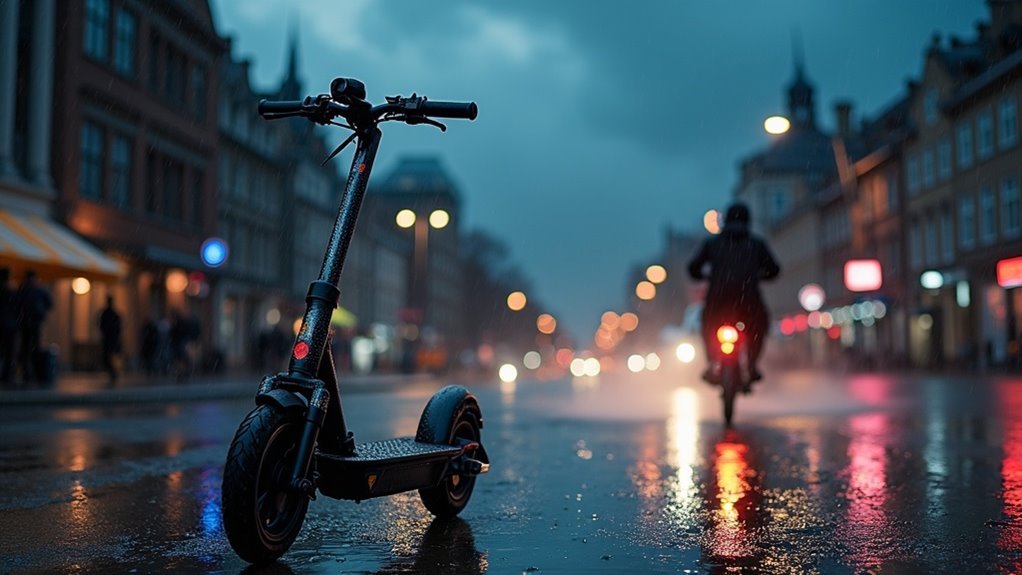
Yes, you can ride electric scooters in the rain, but caution is key. Most scooters are only water-resistant, not waterproof, so check their IP rating first. Riding in wet conditions can reduce visibility and grip, increasing the risk of skidding. To stay safe, slow down, use both brakes evenly, and wear high-visibility clothing. After your ride, wipe down your scooter and inspect for moisture. Want to learn more about safe riding in the rain?
Key Takeaways
- Most electric scooters are water-resistant (IP54 or higher), but riding in heavy rain is not recommended due to moisture risks.
- Visibility is significantly reduced in rain, making it dangerous for both riders and drivers.
- Wet surfaces decrease tire grip, increasing the likelihood of skidding and loss of control.
- If riding in the rain, maintain lower speeds and ensure even brake usage for better stability.
- Post-ride, clean and inspect your scooter for moisture to prevent long-term damage.
Understanding Water Resistance in Electric Scooters
When you ride an electric scooter in the rain, understanding its water resistance is crucial. Most scooters are water-resistant, but this doesn’t mean they’re waterproof.
Look for the IP rating; for example, IP54 can handle light rain, while IP65 offers better protection against water jets. Keep in mind, about 65% of models lack an official IP rating, indicating limited water protection.
Moisture can harm the battery and motor, so regular maintenance, like checking seals and proper storage, is important. By knowing these factors, you can guarantee a safe and enjoyable experience while riding in wet conditions.
The Importance of IP Ratings for E-Scooters
IP ratings play an essential role in ensuring your electric scooter can withstand various weather conditions.
These ratings indicate how resistant your scooter is to dust and water, vital when considering a waterproof electric scooter. For instance, an IP54 rating offers light rain protection, while IP65 and IP66 are better suited for unpredictable weather.
However, around 65% of scooters lack an IP rating, leaving you unaware of their water resistance capabilities.
Assessing the Risks of Riding in Wet Conditions
When riding your electric scooter in the rain, visibility becomes a key concern, as reduced light can hinder your ability to see and be seen.
Wet pavement also poses a significant risk, diminishing tire grip and increasing the likelihood of skidding or losing control.
Staying aware of these factors is essential for maintaining stability and ensuring a safer ride in challenging conditions.
Visibility Challenges in Rain
As rain pours down, the visibility challenges for electric scooter riders become markedly pronounced, raising serious safety concerns.
In wet conditions, visibility drops considerably—by up to 80% during heavy rain—making it difficult for you to see obstacles and for drivers to spot you. Glare from raindrops on windshields further complicates interactions, increasing the risk of accidents.
While wearing high-visibility clothing and using lights can help, they don’t fully eliminate the dangers. It’s wise to reflect on alternative transportation when visibility is severely compromised, as water splashes can obscure your view and create hazardous riding conditions.
Your safety should always come first.
Tire Grip and Stability
Riding an electric scooter in the rain presents significant challenges due to reduced tire grip and stability.
Wet roads can lead to skidding and loss of control, especially with narrow tires. To navigate these risks, consider the following:
- Opt for all-terrain pneumatic tires to improve grip.
- Maintain lower speeds for better stability and reaction times.
- Use non-slip grip tape on the scooter deck for enhanced foot traction.
- Be aware of potential hydroplaning on slick surfaces.
Tips for Riding Safely in the Rain
While the thrill of riding an electric scooter can be enticing, maneuvering through rainy conditions requires extra caution.
To ride safely, maintain a lower speed to enhance control and reduce skidding risks on wet pavement. Use both brakes evenly for stability, especially when turning or stopping.
Wearing high-visibility clothing is essential, as rain can diminish your visibility to others. Avoid large puddles that may hide hazards or damage your scooter’s waterproof components.
Finally, regularly inspect and maintain your scooter to guarantee seals are intact, minimizing water ingress during your wet rides.
Stay safe and enjoy your ride!
What to Do After Riding in Wet Weather
After riding your electric scooter in wet weather, it’s essential to wipe it down with a microfiber cloth to prevent rust and corrosion.
Next, inspect all seals and connectors for moisture to guarantee everything is dry before charging.
These steps help maintain your scooter’s performance and longevity, so you can ride confidently in the future.
Wipe Down Scooter
Once you’ve navigated through the rain on your electric scooter, it’s crucial to wipe it down promptly to protect its longevity. This simple step helps prevent water damage, ensuring your ride remains in top shape.
- Use a microfiber cloth to remove moisture from the frame.
- Focus on drying sensitive areas like the battery compartment and electrical connections.
- Don’t forget to wipe down the wheels and brake components.
- Allow your scooter to air-dry completely in a low-humidity environment.
Inspect for Damage
Inspecting your electric scooter for damage after riding in wet weather is essential for maintaining its performance and longevity.
Start by checking for moisture ingress, especially around the battery compartment and electrical connections. Wipe down the scooter with a microfiber cloth to prevent rust.
Look for any exposed charging ports that might’ve collected moisture; verify they’re dry before sealing or charging.
Pay attention to unusual performance, like unresponsive controls or reduced speed, as these can indicate water damage.
Finally, store your scooter in a dry area to help any residual moisture evaporate, minimizing long-term damage.
Preparing Your Scooter for Rainy Days
When you’re gearing up for a ride in the rain, ensuring your electric scooter is ready for the wet conditions is essential.
Preparing your electric scooter for rainy rides is crucial for a safe and enjoyable experience.
Start by checking the IP rating; aim for at least IP54 for light rain, and IP65 or higher for heavier downpours.
Next, inspect seals to protect your scooter from moisture.
Enhance traction with non-slip grip tape and consider adding fenders to minimize water splashes.
Don’t forget to keep a microfiber cloth handy to wipe down your scooter after your ride.
- Check IP rating
- Inspect seals
- Add non-slip grip tape
- Use a microfiber cloth
Choosing the Right Scooter for Rainy Conditions
Choosing the right electric scooter for rainy conditions can make all the difference in your ride experience and safety.
Look for scooters with a high IP rating, like IP65 or IP66, ensuring they’re water-resistant and can handle moisture.
Opt for all-terrain models, such as those from CycleBoard, featuring heavy-duty tires that enhance grip on wet surfaces.
Essential features include sealed battery compartments and water-sealed connectors to prevent damage.
Non-slip grip tape and oversized decks boost stability, reducing slipping risk.
Finally, regular maintenance of seals and components is vital for prolonging your scooter’s lifespan in rainy conditions.