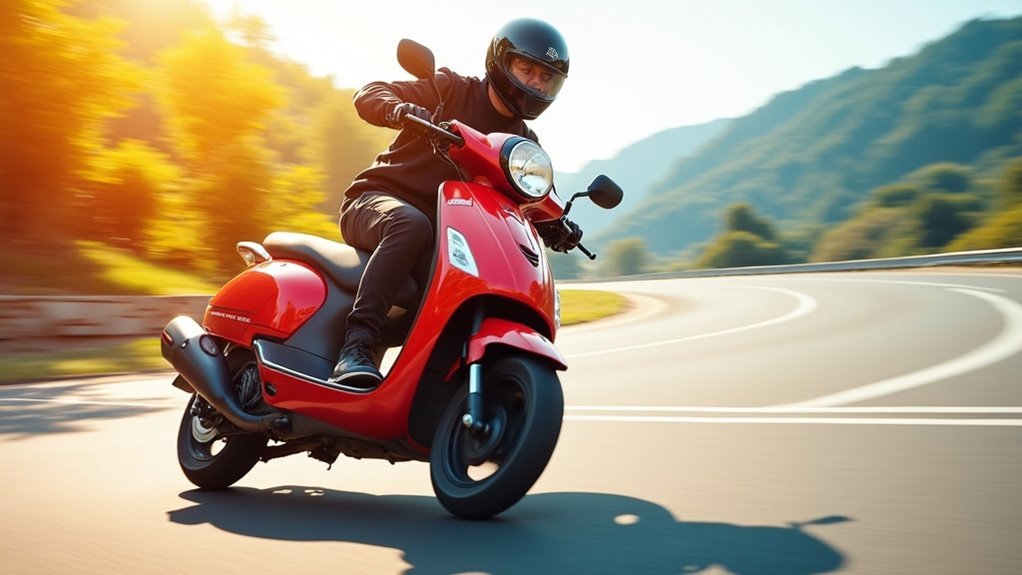
Electric bicycles typically reach speeds between 20 to 28 mph, depending on their classification. Class 1 and Class 2 e-bikes assist up to 20 mph, while Class 3 e-bikes can reach up to 28 mph when you pedal. Factors like motor power, terrain, and rider weight can all influence how fast you go. So, if you’re curious about finding the right e-bike for your needs or exploring high-performance options, there’s plenty more to discover!
Key Takeaways
- Electric bicycles typically reach speeds between 20 to 28 mph, depending on the class and model.
- Class 1 and Class 2 e-bikes are limited to a maximum speed of 20 mph.
- Class 3 e-bikes can assist with speeds up to 28 mph while pedaling.
- Speed is influenced by factors such as motor power, terrain, rider weight, and riding conditions.
- Local regulations may impose speed restrictions that affect e-bike classifications and usage.
Understanding Electric Bicycle Speed
When it comes to understanding electric bicycle speed, what should you know about the different classifications?
Electric bikes generally reach speeds between 20 to 28 mph. Class 1 and Class 2 eBikes are limited to 20 mph, while Class 3 eBikes can assist up to 28 mph.
These speeds depend on factors like motor power, terrain, and rider weight. Most eBikes feature pedal assistance, enhancing your riding experience while adhering to speed regulations.
Remember, advanced models, like those with Race Track Mode, can exceed typical limits but should only be tested in safe environments.
Types of Electric Bikes and Their Speeds
Understanding the different types of electric bikes can greatly enhance your riding experience and help you choose the right one for your needs.
Class 1 e-bikes offer pedal assistance up to a maximum speed of 20 mph, perfect for a traditional cycling feel.
Class 2 e-bikes also assist to 20 mph but include a throttle for power without pedaling, providing flexibility.
For those seeking higher speeds, Class 3 e-bikes assist while pedaling and can reach up to 28 mph, ideal for quicker commutes.
Factors Influencing Electric Bicycle Speed
When it comes to electric bicycle speed, motor power and terrain play pivotal roles.
A higher wattage means quicker acceleration and top speeds, while the type of terrain you ride on can either boost or hinder your performance.
Understanding these factors can help you maximize your electric bike’s potential on every ride.
Motor Power and Wattage
Motor power plays an essential role in determining how fast your electric bicycle can go.
Measured in watts, e-bike motors range from 250W to over 8000W. A higher wattage, typically 600W and above, allows for better acceleration and can help you reach higher speeds, especially on flat terrain.
For instance, a 750W electric motor can markedly outpace a 250W motor under the same conditions.
Keep in mind that while wattage impacts your bike’s top speed, factors like terrain and rider weight also play a vital role in how effectively motor power translates into speed.
Choose wisely for ideal performance!
Terrain and Riding Conditions
As you ride your electric bicycle, the type of terrain you encounter can greatly influence your speed. Smooth, flat surfaces allow you to maximize speed easily, whereas hilly or rough trails can slow you down.
Additionally, riding conditions like strong winds can impede your maximum speed, especially headwinds. Weight distribution matters too—your weight and any cargo affect acceleration and overall performance.
Keep in mind that uneven surfaces require more effort to maintain momentum. Finally, environmental factors, including temperature and humidity, impact battery efficiency, which ultimately influences how fast you can go.
Choose your routes wisely for the best experience!
E-Bike Classifications
E-bike classifications are essential for understanding the type of electric bicycle that best suits your needs. Here’s a quick overview:
- Class 1 e-bikes: Provide pedal assistance up to 20 mph without a throttle.
- Class 2 e-bikes: Also assist up to 20 mph, but include a throttle for motor engagement without pedaling.
- Class 3 e-bikes: Designed for faster commuting, offering pedal assistance up to 28 mph, often with riding restrictions.
Knowing these e-bike classifications helps guarantee you comply with local regulations, as exceeding the speed limits can reclassify your e-bike as a moped or motorcycle.
Understanding e-bike classifications ensures you stay within legal limits and avoid unintended reclassification as a moped or motorcycle.
Choose wisely!
Legal Aspects of Electric Bicycle Speeds
Understanding the legal aspects of electric bicycle speeds is essential for any rider, especially since regulations can vary considerably by location.
In the U.S., electric bikes fall into three classes: Class 1 and Class 2 have a speed limit of 20 mph, while Class 3 can reach up to 28 mph when pedaled.
Exceeding these limits may lead to reclassification as a moped or motorcycle, bringing different legal compliance requirements.
In the UK, the cap is 15.5 mph.
Always stay informed about local laws to guarantee safe riding and avoid penalties, especially if you’re tempted to use race modes on private property.
Exploring High-Performance Electric Bikes
With regulations in mind, many riders are exploring the exhilarating world of high-performance electric bikes.
These machines offer higher top speeds and thrilling experiences, making them perfect for adventure seekers.
- The HPC Revolution X – the fastest electric bike, reaching 96 km/h (60 mph) with an 8000W motor.
- The Stealth B-52 and Delfast Top 3.0i both achieve 80 km/h (50 mph), but the latter’s overall weight may affect maneuverability.
- The Juggernaut FS XD Fat excels in off-road capabilities, hitting 61 km/h (38 mph) while maintaining versatility.
Choose wisely and enjoy your ride!
Choosing the Right E-Bike for Your Needs
Choosing the right electric bike means considering your unique riding needs and preferences. E-bikes come in three classes, with speed depending on how you plan to use them. For commuting, look for models like the Transend E+, which can reach 28 mph and offers a 105-mile range. If comfort is key, the Vida E+ provides adjustable assistance. For heavy loads, cargo bikes like the Pakyak E+ maintain speed while accommodating weight. Always check local regulations to guarantee your E-bike goes where you need it to.
| Class | Speed Assistance |
|---|---|
| Class 1 | Up to 20 mph |
| Class 2 | Up to 20 mph |
| Class 3 | Up to 28 mph |
| Cargo Bikes | Varies |
| Traditional | N/A |