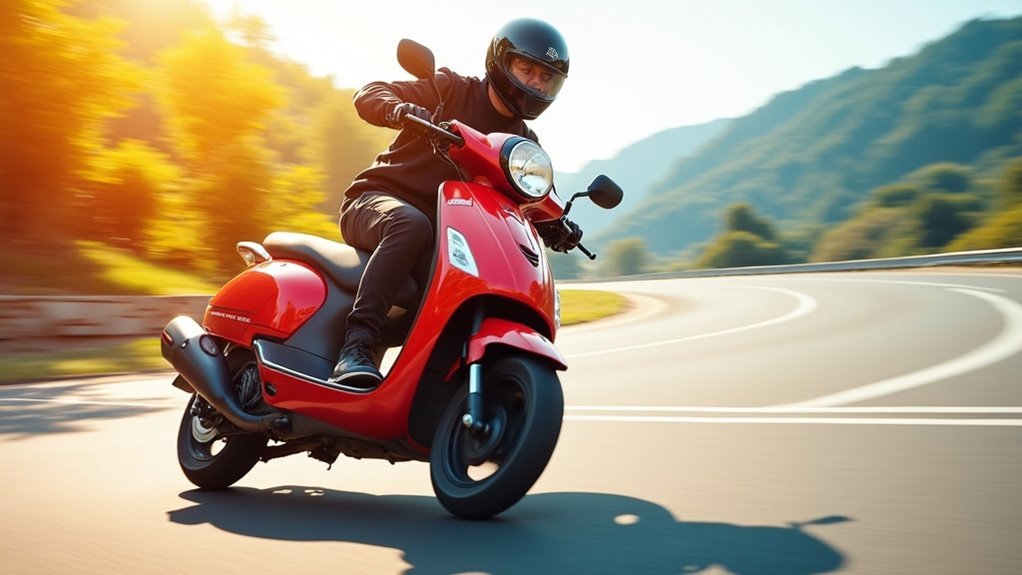
Electric scooters can reach speeds ranging from 10 to 50 mph, depending on the model and rider factors. Entry-level scooters offer leisurely rides at 10-20 mph, while mid-range options hit 20-30 mph. High-performance models can exceed 30 mph, with some elite scooters hitting over 80 mph. Rider weight, terrain, and battery capacity play essential roles in speed. Want to know more about types and speeds tailored for your needs? Keep exploring the details to find your perfect scooter!
Key Takeaways
- Most electric scooters have top speeds ranging from 10 to 50 mph, depending on the model and specifications.
- Entry-level scooters typically reach speeds of 10-20 mph, suitable for casual rides.
- Mid-range scooters can achieve speeds between 20-30 mph, like the NEON Ultra ES40 at 24 mph.
- High-performance models exceed 30 mph, with elite scooters like the Slack Core 920 hitting up to 90 mph.
- Factors like rider weight, terrain, and motor power significantly influence the scooter’s speed capabilities.
Electric Scooter Speed Overview
When you hop on an electric scooter, you might wonder just how fast it can go. Most electric scooters achieve top speeds between 10 to 50 mph; however, urban commuting models typically cap around 15 to 25 mph due to local speed limits.
Factors like motor power, rider weight, terrain, and battery capacity influence these speeds. Entry-level scooters are designed for casual rides, reaching 10-20 mph, while high-performance scooters can exceed 30 mph, with some elite models hitting over 80 mph.
Understanding these dynamics helps you choose the right scooter for your needs and comply with electric scooter laws in your area.
Types of Electric Scooters and Their Speeds
Electric scooters come in various types, each tailored to different riders and purposes, which means their speeds can vary considerably.
Entry-level electric scooters typically reach speeds between 10-20 mph, perfect for casual rides. Mid-range scooters can hit 20-30 mph, like the NEON Ultra ES40 at 24 mph, making them suitable for moderate traffic.
Entry-level electric scooters offer speeds of 10-20 mph, ideal for leisurely rides, while mid-range options reach 20-30 mph for urban commuting.
High-performance scooters exceed 30 mph, with models like the Panther ES800 reaching 37 mph. For kids, scooters range from 6 to 26 mph, ensuring safety for younger riders.
The fastest electric scooters, such as the Slack Core 920, can soar up to 90 mph, showcasing impressive power output and speed.
Factors Influencing Electric Scooter Speed
When it comes to electric scooter speed, several factors come into play that you should consider.
The motor power output directly affects how fast you can go, but your weight and the terrain also play significant roles.
Motor Power Output
Though many factors influence the speed of electric scooters, motor power output stands out as a critical determinant. Measured in watts (W), higher wattage typically correlates with enhanced performance; for instance, a 250W motor usually caps speeds below 18 mph.
Continuous power output guarantees sustained performance, while peak power allows for brief bursts during acceleration. Torque, the rotational force, greatly impacts acceleration and climbing ability, with higher-rated motors delivering superior results.
Brushless DC hub motors are preferred for their efficiency and longevity, while dual-motor setups often exceed single-motor speed capabilities, further enhancing overall handling and performance.
Rider Weight Impact
Motor power output is just one piece of the puzzle when it comes to the speed of electric scooters.
Rider weight plays an essential role in determining top speed and acceleration. Heavier riders typically require more power, which can reduce efficiency, leading to lower performance and a shorter range.
For every 10 kg increase in rider weight, expect a decrease in top speed by about 1-2 mph. Staying within weight limits—generally 100 kg to 120 kg—is critical for peak performance.
A proper weight-to-scooter ratio guarantees you enjoy a smoother ride, maximizing your electric scooter’s capabilities.
Terrain and Conditions
While cruising along smooth urban roads, you’ll likely notice your electric scooter reaching its top speed with ease. These surfaces provide excellent traction and minimal resistance, enhancing performance.
However, uneven surfaces like bumps or potholes can drastically slow you down, impacting stability and control. Inclines pose another challenge; most scooters handle 15 to 20-degree slopes well, but rider weight also plays a significant role—heavier riders may struggle to maintain speed.
Additionally, the type and condition of your tires matter; larger, well-maintained tires offer better grip, while worn or under-inflated ones can hinder your scooter’s high speeds.
Legal Speed Limits for Electric Scooters
When you ride an electric scooter, knowing the legal speed limits is essential for your safety and compliance.
Most states cap speeds at 20 mph, but specific regulations vary—California and New York enforce a lower limit of 15 mph, while Missouri allows up to 30 mph.
Always check local laws, as municipalities often impose their own restrictions that could affect your ride.
State Regulations Overview
As you navigate the diverse landscape of electric scooter regulations across different states, it’s essential to understand the varying speed limits that govern their use.
Most states allow electric scooters to operate at speeds up to 20 mph on public roads, promoting commuter scooters and safety. However, California and New York impose stricter limits of 15 mph, while Michigan permits speeds of 25 mph, and Missouri allows up to 30 mph.
Always check local laws, as they may set more restrictive limits. Staying informed about these regulations guarantees a safe riding experience and helps you avoid fines related to speed and weight limits.
Local Jurisdiction Limits
Understanding local jurisdiction limits is essential for anyone using electric scooters, especially since these regulations can differ greatly from state laws. Riders must be aware that maximum speed limits can vary considerably, affecting their riding experience.
| State | Maximum Speed |
|---|---|
| California | 15 mph |
| New York | 15 mph |
| Michigan | 25 mph |
| Missouri | 30 mph |
| General | 20 mph |
Always check local laws to confirm compliance while riding on public roads. Following these regulations not only enhances your safety but also fosters a respectful environment for other road users.
Safety Features in Electric Scooters
While cruising at higher speeds can be thrilling, ensuring your safety on an electric scooter is essential.
Look for models equipped with reliable braking systems, like disc brakes and regenerative braking, to enhance control during high-speed riding. Advanced suspension systems improve stability and comfort, especially on uneven terrain.
Safety features such as LED headlights increase visibility at night, which is vital for accident prevention. Additionally, integrated anti-lock braking systems (ABS) help avoid wheel lock-up during sudden stops, while high-quality tires offer superior traction.
Together, these elements greatly enhance your riding experience and keep you safer on the road.
Comparing Electric Scooters and E-Bikes
When comparing electric scooters and e-bikes, you’ll quickly notice key differences in speed, performance, and design that cater to various riding preferences. Electric scooters typically have higher top speeds, often reaching 50+ mph with high-performance models. E-bikes, on the other hand, are limited by regulations, with Class 3 models capping at 28 mph. Both are influenced by rider weight and terrain, but scooters generally outperform e-bikes. Here’s a breakdown:
| Type | Top Speed | Speed Limit |
|---|---|---|
| Electric Scooters | 50+ mph | Varies |
| Entry-Level Models | 10-20 mph | 20 mph |
| E-Bikes | 30 mph | 20-28 mph |
Recommendations for Choosing a Fast Electric Scooter
Choosing a fast electric scooter requires careful consideration of various factors to guarantee you get the best performance for your needs.
Look for models with at least a 1000W motor for speeds between 20-30 mph, perfect for efficient commuting. Prioritize scooters with robust braking systems, like hydraulic brakes, to assure safety at high speeds.
Opt for scooters with a minimum 1000W motor and hydraulic brakes for safe, efficient commuting speeds of 20-30 mph.
Consider options with dual motors for superior performance, allowing speeds over 30 mph. Evaluate battery capacity to maintain speed without rapid depletion, and check for adjustable riding modes to optimize efficiency.
Finally, confirm the scooter meets your weight capacity for a balanced ride.