To avoid interference between your electric bicycle’s kickstand and disc rotor, ensure proper alignment by mounting the kickstand on the non-drive side while maintaining a 1-2 cm clearance. Regularly inspect the kickstand’s angle and mounting points for wear and adjust as needed. Choose kickstands designed specifically for electric bicycles with disc brakes, preferably adjustable models that mount away from the rear triangle. Conduct routine checks to ensure everything remains functional and secure. There are additional key insights and tips to optimize your setup further for a smooth riding experience.
Key Takeaways
- Ensure the kickstand is mounted at the designated point on the electric bicycle or scooter, away from the rear triangle for optimal clearance.
- Maintain a clearance of at least 1-2 centimeters between the kickstand and the disc rotor to avoid any interference during operation.
- Choose kickstands specifically designed for electric bicycles or scooters equipped with disc brake systems, preferably adjustable models for better fit.
- Regularly inspect and tighten all mounting hardware to prevent loosening and misalignment that could affect performance.
- Clean the area around the kickstand and rotor to remove debris that might cause interference, ensuring smooth operation of your electric bicycle or scooter.
Understanding the Problem: Kickstand and Rotor Interference
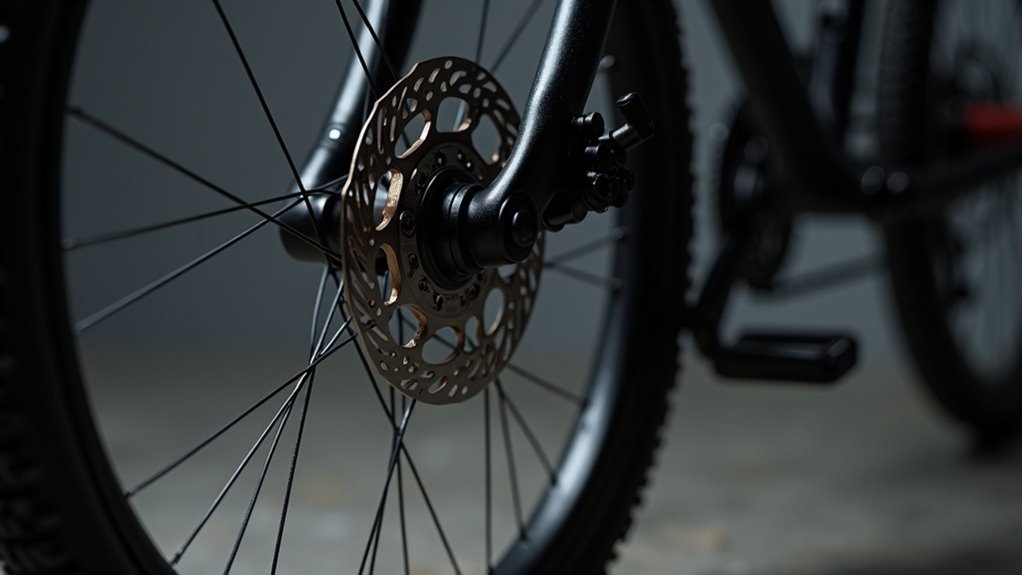
When you install a kickstand on an electric bicycle equipped with disc brakes, it’s crucial to understand the potential for interference with the disc rotor.
Kickstand interference often occurs due to improper positioning or misalignment, leading to contact between the kickstand and rotor during movement. To mitigate this risk, always use the designated kickstand mounting point, ensuring adequate clearance from the rotor.
Kickstand interference can be prevented by using the correct mounting point and ensuring clearance from the rotor.
Additionally, consider the length and angle of the kickstand; a poorly designed one can extend into the rotor’s path.
Regular inspections of your kickstand and brake components can help you identify and address potential issues before they escalate.
Proper Alignment of the Kickstand
To guarantee the kickstand remains clear of the disc rotor on your electric bicycle, it’s essential to align it correctly along the bike frame.
Follow these steps for ideal positioning:
- Verify the kickstand angle is at a 90-degree angle when deployed.
- Measure for at least 1-2 centimeters of clearance between the kickstand and rotor.
- Regularly inspect the mounting points for wear or looseness that could lead to misalignment.
- If necessary, loosen the bolts to adjust the kickstand angle, reposition it, and retighten to maintain proper alignment while also ensuring the caliper is aligned for optimal brake performance.
Selecting the Right Kickstand for Disc Brakes
Guaranteeing proper alignment of your kickstand is just the first step in preventing interference with the disc brakes of your electric bicycle.
Choose a kickstand specifically designed for disc brake systems; these are engineered to avoid rotor and caliper contact. Opt for adjustable models to customize height, ensuring adequate clearance from brake components.
Look for kickstands that mount away from the rear triangle, which reduces the likelihood of contact with the rotor. Additionally, select lightweight aluminum or reinforced plastic options for better compatibility with the electric bicycle’s frame.
Finally, ensure the kickstand’s foot is wide enough for stability without encroaching on rotor space, preventing any potential rubbing or damage.
Regular Maintenance and Inspections
Regular maintenance and inspections of your electric bicycle’s kickstand are essential to prevent interference with the disc rotor.
Regular checks can guarantee proper alignment and functionality. Here’s what you should focus on:
- Inspect the alignment of the kickstand to avoid rotor contact.
- Check for wear or damage on the kickstand and mounting points.
- Ascertain mounting hardware is tightly secured and free of loose bolts.
- Clean the area around the kickstand and rotor to remove debris.
Tips for Adjusting and Troubleshooting Issues
After completing routine maintenance and inspections on your electric bicycle, you may still encounter issues with your kickstand interfering with the disc rotor.
First, verify that the kickstand is mounted on the non-drive side to minimize interference. If it’s too long, adjust its length for better clearance.
Check the kickstand’s positioning relative to the rotor; reposition if necessary for adequate space.
Regularly inspect the kickstand mechanism for wear or misalignment, as these factors can increase the risk of interference.
If problems persist, consider upgrading to a kickstand specifically designed for electric bicycle setups, offering enhanced clearance and stability for your bike.