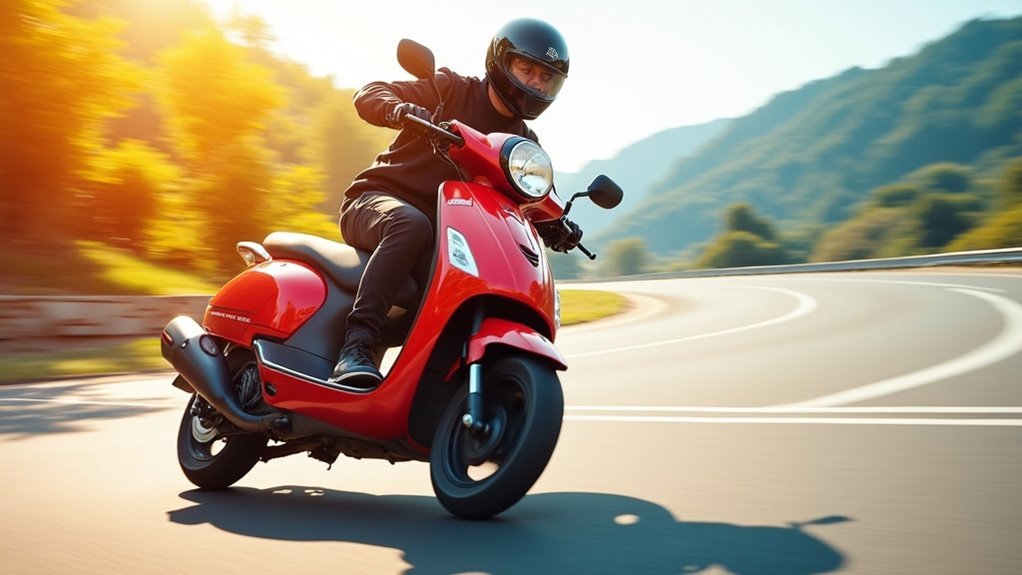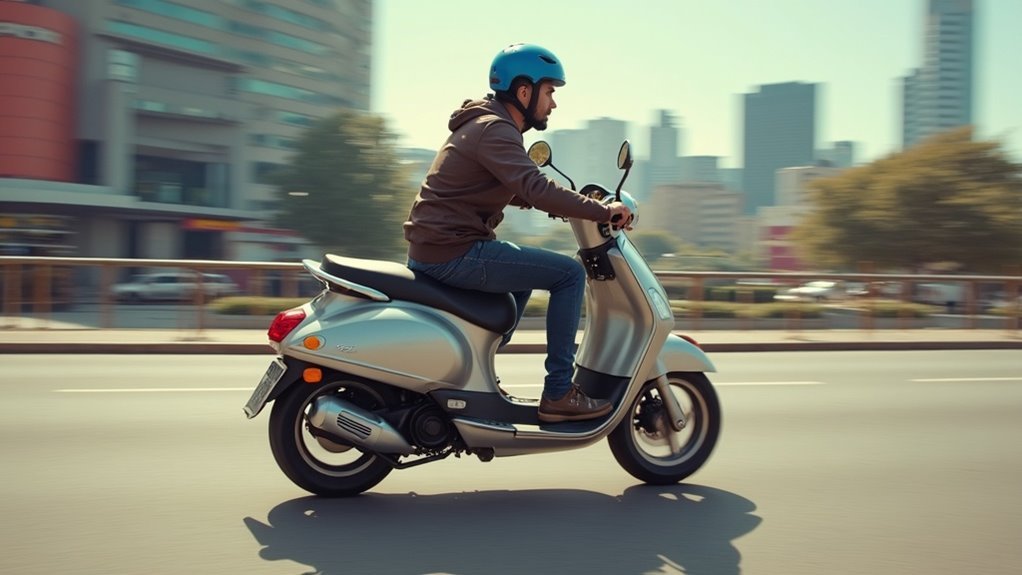
To manage your electric scooter stance during emergency braking, keep a slight bend in your knees and elbows for balance. Shift your weight slightly forward while rolling off the throttle. Maintain an upright position and keep your head up to enhance awareness. Use your rear brake first and apply pressure gradually to ensure smooth stops. Position your feet flat on the footrests and avoid abrupt movements. Mastering these techniques can enhance your safety, and more tips await you ahead.
Key Takeaways
- Maintain a slight bend in your knees and elbows for better balance during emergency braking on your electric scooter.
- Shift your weight slightly forward to enhance braking effectiveness and stability while riding.
- Engage the rear brake first to prepare for a quick and controlled stop on your electric scooter.
- Keep your head up to assess stopping distance and react swiftly to obstacles in your path.
- Ensure a stable stance with feet flat on footrests to prevent grip loss and maintain control while operating your electric scooter.
Importance of Proper Stance During Braking
When it comes to emergency braking on an electric scooter, your stance plays an essential role in your safety and control.
To achieve effective braking, maintain a slight bend in your knees and elbows. This position enhances your balance, allowing for a complete stop while minimizing the risk of losing traction. Shift your weight slightly forward to improve braking effectiveness, ensuring you stop in a straight line.
Engaging the rear brake while keeping the front brake off prepares you for a quick response after stopping. A proper stance not only enhances control but also contributes to a safer riding experience for everyone.
Keeping Your Head Up for Better Awareness
While navigating emergency braking on your electric scooter, keeping your head up is crucial for maintaining balance and awareness of your surroundings. When you focus your gaze ahead, you’ll better gauge your stopping distance, allowing you to come to a complete stop with confidence. This practice enhances your ability to react swiftly to obstacles and traffic, ensuring safety.
| Benefits | Consequences of Looking Down | Tips for Improvement |
|---|---|---|
| Better balance | Increased instability | Practice consistently |
| Enhanced awareness | Reduced reaction time | Focus ahead |
| Quick decisions | Poor stopping distance | Stay engaged |
Rolling Off the Throttle Smoothly
To guarantee a safe and effective emergency stop on your electric scooter, rolling off the throttle smoothly is essential. Gradually reduce your throttle input to prevent sudden weight shifts that could destabilize your scooter.
Maintain a firm grip on the handlebars for control as you decelerate. Aim for a smooth shift rather than an abrupt one to keep traction and avoid lifting or skidding the rear wheel.
While rolling off the throttle, position your hand to prepare for engaging the rear brake, ensuring the handlebars stay straight.
Practicing this technique enhances your overall control and response in critical situations, ultimately benefiting both yourself and others.
Maintaining an Upright Position
Maintaining an upright position during emergency braking is essential for ensuring safety and control on your electric scooter. To achieve this, roll off the throttle and gently push down on the high hand grip to straighten the handlebars. This helps maximize braking power and minimizes the risk of losing traction.
| Action | Purpose | Outcome |
|---|---|---|
| Roll off throttle | Reduce speed safely | Maintain stability |
| Push down on grip | Straighten handlebars | Enhance control |
| Center your weight | Stabilize scooter | Prevent loss of grip |
Practice this technique to improve your emergency response while riding your electric scooter.
Distributing Weight Evenly on the Scooter
To maintain control during emergency braking on an electric scooter, you need to distribute your weight evenly.
Keep your body centered over the scooter, adjusting your foot position on the footpegs to enhance stability.
Body Positioning Techniques
When you distribute your weight evenly on the electric scooter, you enhance your stability and control during emergency braking.
Keep your body centered and hips aligned with the seat to maintain balance. Shift your upper body slightly forward while keeping your knees snug against the scooter, which helps prevent sliding.
Position your feet firmly on the footrests, ensuring they’re flat to reduce the risk of losing control. Engage your core muscles for added stability and maintain a relaxed grip on the handlebars, allowing for better feedback and quicker adjustments when needed during braking.
This technique ultimately enhances your safety and performance on the scooter.
Effective Weight Distribution
Effective weight distribution is key to maximizing your control and stability on an electric scooter, especially during emergency braking. Keep your body centered and low, leaning slightly forward while keeping your upper body relaxed. This helps maintain traction on the tires.
| Technique | Action | Benefit |
|---|---|---|
| Centered Position | Keep weight balanced | Enhances stability |
| Lean Forward | Shift weight slightly | Maintains traction |
| Grip with Legs | Stabilize your body | Prevents sliding |
| Practice Exercises | Controlled braking drills | Boosts confidence and response |
Apply these techniques to guarantee safety on your rides.
Stability During Braking
Maintaining stability during emergency braking is essential for a safe ride on your electric scooter, as uneven weight distribution can lead to loss of control.
Keep your body centered over the scooter, firmly planting your feet on the footpegs and hugging your knees against the frame. Lean slightly forward while braking to shift your weight towards the front, enhancing traction and stopping power.
Avoid sudden movements that disrupt balance, which can cause skidding or tipping. Practicing these weight distribution techniques in a controlled setting will markedly improve your reaction and stability during real emergency braking situations, ensuring a safer ride for everyone.
Grip Techniques for Handlebar Control
To maintain control during emergency braking on an electric bicycle, it’s essential to position your hands correctly on the handlebars.
A firm grip with your fingers on the brake lever allows for better modulation while keeping your arms relaxed to absorb bumps.
Proper Hand Positioning
A firm grip on the handlebars is essential for ideal control when riding an electric scooter, especially during emergency braking.
Position your dominant hand on the high grip for better leverage while rolling off the throttle. Apply forward pressure with this hand to stabilize the scooter.
Use four fingers on the brake lever, keeping your index finger poised to engage the brake when needed.
Maintain straight handlebars during braking to avoid losing traction and to guarantee stability.
Practicing these hand positioning techniques in a controlled setting can greatly improve your reaction time and grip strength, preparing you for emergency situations.
Weight Distribution Techniques
While maneuvering emergency braking on your electric scooter, effective weight distribution is essential for maintaining control and stability. Keep your head up, looking ahead to enhance balance. Apply forward pressure on the high handle grip to stabilize the scooter, shifting weight toward the front for better traction. Gently use the rear brake while keeping the front brake off initially to manage weight transfer. Firmly grip the handlebars with slightly bent elbows to absorb shocks. Practice these techniques to make them instinctive during emergencies.
| Technique | Description |
|---|---|
| Forward Pressure | Stabilizes scooter, shifts weight forward |
| Gentle Rear Brake | Manages weight transfer, prevents rear wheel slip |
| Firm Grip with Bent Elbows | Maintains control and absorbs braking shocks |
Foot Placement for Stability on Footrests
Proper foot placement on the footrests of electric scooters is essential for maintaining stability during emergency braking. Position your feet firmly, with the balls resting over the brake controls for quick access when needed.
Keep your feet shoulder-width apart to create a stable base, enhancing balance and control while braking. Distribute your weight evenly between both feet, especially during sudden stops or on rough surfaces.
Avoid letting your heels hang off the footrests, as this can compromise your grip and stability. Maintain a relaxed yet ready stance, allowing your legs to absorb shocks while staying prepared for effective braking.
Avoiding Abrupt Movements While Stopping
Maintaining a stable stance is just the beginning when it comes to effective stopping on an electric scooter. To avoid abrupt movements, keep your head up and your body relaxed for better control.
Start braking gently with the rear brake to initiate a smooth weight transfer. Use a progressive braking technique by gradually increasing pressure, which helps prevent loss of traction.
Additionally, keep your handlebars straight during braking to avoid unintended steering shifts.
Finally, practice emergency braking in a controlled environment to build muscle memory, ensuring you can stop smoothly without sudden movements. This approach promotes safety for you and those around you.