To reduce drivetrain noise from chainline issues on electric bicycles, first, verify that the chainring and cassette are aligned within 2-3 mm. Periodically check for misalignment and adjust the derailleur hanger if it exceeds this range. Regularly clean and lubricate your chain while inspecting for wear, especially since electric bicycle chains can experience more stress than traditional ones. Tight links can also cause noise, so backpedal to test for stiffness. Ensure that all components are compatible with your electric bike and in good condition. By following these steps, you can enhance your electric bicycle’s drivetrain performance and longevity. There’s more to explore on maintenance techniques specific to electric bikes.
Key Takeaways
- Regularly check the chainline alignment on your electric bicycle, ensuring deviation is within 2-3 mm for optimal performance and reduced noise.
- Inspect and straighten the derailleur hanger to ensure proper chain routing on your electric bike, minimizing noise during operation.
- Clean and lubricate the chain to prevent excess friction and reduce metal-on-metal contact contributing to noise in electric bicycles.
- Use shims behind the cassette if alignment issues persist, helping to achieve a straighter chainline for quieter operation on your electric bike.
- Monitor chain wear with a chain checker tool; replace worn components to maintain smooth shifting and minimize noise in your electric bicycle.
Getting Started
When you begin addressing drivetrain noise caused by chainline issues on electric bicycles, it’s crucial to first assess the alignment between your chainring and cassette.
Check for deviations; ideally, the chainline should stay within 2-3 mm of the center. If you notice greater misalignment, it’s time to adjust the derailleur hanger, as a bent hanger can lead to increased friction and noise.
Consider using shims behind the cassette to achieve a straighter chainline if necessary. Periodically measuring the chainline with a specialized tool can guarantee peak alignment, contributing to quieter operation and enhanced shifting performance.
Your efforts will serve both you and your electric bike well.
Chain Maintenance
Maintaining your chain is essential for minimizing drivetrain noise and ensuring a smooth ride on your electric scooter.
Regularly check the alignment of your chainline, ensuring the chainring and cassette deviate no more than 2-3 mm for peak performance.
Ensure optimal performance by regularly checking your chainline alignment; deviations of only 2-3 mm are ideal.
Use a chain checker tool to monitor wear; chains exceeding 75% wear can cause poor meshing and increased chain noise.
Clean and lubricate your chain, ensuring it glistens without excess lube.
Inspect and replace worn components, like chainrings and cogs, as mismatches can worsen noise.
Finally, test for tight links by backpedaling to identify any stiff spots needing attention.
Derailleur Alignment
To guarantee peak performance and minimize drivetrain noise on electric bicycles, checking your derailleur alignment is essential.
Start by verifying that the derailleur hanger is straight and the cage is vertical; any misalignment can disrupt your chainline, causing increased friction and noise, especially in lower gears.
Regularly inspect the derailleur limit screws to confirm they’re set correctly, as improper limits can lead to chain misalignment.
When adjusting, make sure the chain’s tension is appropriate, and align the idlers with the chainline.
A well-aligned derailleur not only reduces noise but also enhances shifting performance, resulting in smoother gear shifts and less wear on components.
Inspecting Components
A well-aligned derailleur sets the stage for effective drivetrain performance in electric bicycles, but inspecting other components is equally important in reducing drivetrain noise.
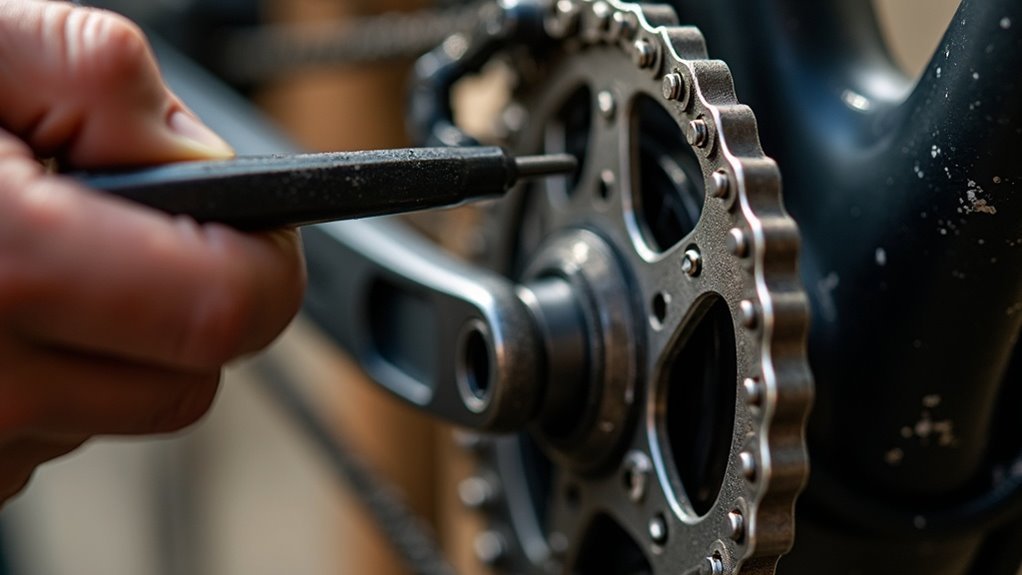
Start by checking the chainline; verify that the chainring and cassette align within 2-3 mm to minimize friction.
Examine the derailleur hanger for any bends that could misroute the chain, leading to increased noise.
Inspect idlers and jockey wheels for wear, as damaged components can exacerbate sound issues.
Additionally, confirm compatibility between the chain and cogs to ensure smooth meshing.
Regularly assess chain tension and alignment, maintaining a straight path to further reduce unnecessary noise during operation.
Preventive Strategies
While you might think that drivetrain noise is an inevitable part of riding electric scooters, several preventive strategies can greatly reduce it.
Start by regularly checking the alignment of the electric motor and the drivetrain components, ensuring everything is positioned correctly to minimize friction. If misalignment occurs, adjusting the motor mounts may be necessary for improvement.
Regularly check motor alignment and drivetrain components to minimize friction and enhance performance. Adjust motor mounts if needed.
Inspect the mounting brackets for straightness, as any bends can contribute to noise. Confirm that all components are compatible and in good condition; mismatched parts can be potential sources of noise.
Finally, keep your scooter’s drivetrain clean and lubricated to minimize metal-on-metal contact, especially after tough rides.
These steps will enhance your riding experience on your electric scooter.