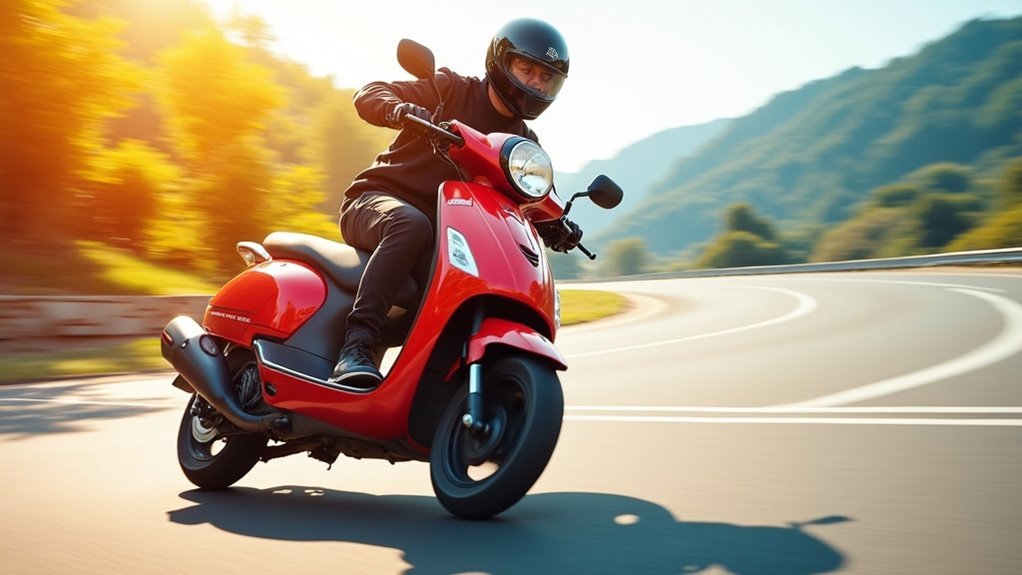
To rehearse evasive swerves on electric scooters in empty lots, first, find an area free from obstacles and well-lit for visibility. Start practicing at low speeds, around 10-15 mph, using visual markers like cones to simulate obstacles. Focus on gentle steering movements and incorporate controlled braking to maintain stability. Gradually increase your speed while executing the maneuvers to build confidence. Repeat these exercises regularly to enhance your muscle memory and overall safety. By mastering these techniques, you’ll be better prepared for unexpected situations while riding your electric scooter.
Key Takeaways
- Identify a spacious, empty lot with smooth surfaces, free from pedestrians and obstacles for safe practice on your electric scooter.
- Use visual markers like cones to simulate obstacles and guide your swerving techniques.
- Start practicing evasive swerves at low speeds (10-15 mph) to build control and confidence on your scooter.
- Gradually increase your speed to 25-30 mph while maintaining smooth, controlled movements during maneuvers.
- Regularly evaluate your performance and adjust techniques to enhance your responsiveness and safety while riding your electric scooter.
Identifying Safe Practice Locations
When you’re looking for a safe practice location for electric bicycles or electric scooters, it’s vital to find an area that’s truly empty and free from pedestrians, obstacles, and other vehicles.
Choose well-lit spaces to enhance visibility, helping you spot potential hazards.
Choosing well-lit areas boosts visibility, allowing you to easily identify and avoid potential hazards.
Look for locations with a smooth, even surface to guarantee predictable responses from your ride, promoting safe handling.
Verify that you have legal access to avoid fines or legal issues.
To make an informed choice, consider using a risk assessment matrix to evaluate various locations based on size, surface quality, and accessibility.
This careful selection process sets the stage for effective and safe practice with electric bicycles or scooters.
Starting With Low-Speed Maneuvers
Starting with low-speed maneuvers is essential for mastering evasive swerves on your electric bicycle.
Begin practicing at 10-15 mph to maintain control as you learn to steer smoothly. Focus on gentle movements to initiate a swerve, avoiding any abrupt jerks that might lead to a loss of control.
Use visual markers like cones or lines in an empty lot to simulate real-life obstacles. As you gain confidence, gradually increase your speed while ensuring you can still effectively control your bicycle.
Consistently practice these low-speed maneuvers until they become second nature, enabling quicker responses in emergencies.
Practicing Sudden Steering Techniques
To practice sudden steering techniques on an electric scooter, you’ll want to focus on controlled movements that keep your vehicle stable.
Anticipate how your scooter responds to each input; smooth steering is key to maintaining control.
Start slow, then gradually build up to more complex maneuvers as you gain confidence.
Controlled Steering Movements
As you practice controlled steering movements on your electric scooter, begin by riding slowly in a straight line before gradually increasing your speed to mimic real-world riding conditions.
Maintain a firm grip on the handlebars and use smooth, deliberate inputs to avoid jerky motions that can lead to loss of control.
Incorporate gentle braking before executing a swerve to reduce speed and ensure traction.
Set up cones in a controlled environment to create a course, allowing you to practice swerving around obstacles while focusing on balance.
Regularly assess your surroundings and scan for potential hazards to enhance your situational awareness during these maneuvers.
Anticipating Vehicle Response
While maneuvering sudden steering techniques on an electric scooter, it’s crucial to anticipate how your vehicle will respond to your inputs. Start by maintaining a firm grip on the handlebars, enhancing control during evasive driving.
Gradually increase your steering input to see how your scooter reacts; abrupt movements can lead to losing control at high speeds. Practice swerving while gently applying the brakes to mimic real-world scenarios.
Familiarize yourself with your scooter’s dynamics, noting how weight distribution affects handling, especially in various weather conditions. Set up cones in an empty lot to create a course for refining your precise swerving techniques and awareness of turning radius.
Incorporating Braking Techniques
To effectively incorporate braking techniques into your evasive maneuvers on electric scooters, start with threshold braking to maintain control without locking your wheels.
Use empty parking lots for practice, allowing you to combine gentle braking with swerving smoothly.
Focus on understanding how speed affects your stopping distance, and always keep a safe following distance during your drills to ensure a safer riding experience.
Threshold Braking Basics
When you need to stop quickly without losing control on your electric bicycle, mastering threshold braking is essential. This technique involves firm pressure on the brakes just before the wheels lock, maximizing deceleration while maintaining steering control. Here’s a quick reference table for effective threshold braking on electric bicycles:
| Technique | Description |
|---|---|
| Firm Pressure | Apply steady pressure without locking wheels |
| Pumping | Gently pump brakes if wheels begin to lock |
| Anticipation | Focus ahead to anticipate obstacles |
| Confidence Building | Practice in empty areas to gain muscle memory |
| Evasive Maneuvers | Use during emergencies for quicker stops |
Practicing these techniques can greatly reduce stopping distance and enhance your safety while riding an electric bicycle.
Practicing in Parking Lots
Practicing threshold braking techniques in a safe environment, like an empty parking lot, helps you build confidence and control on your electric scooter.
Start by applying steady pressure to the brakes without locking the wheels, especially if your scooter lacks ABS. Choose a parking lot with clear lines and ample space for safe rehearsals.
Accelerate gently, then steer smoothly while braking to simulate real-world evasive scenarios. Incorporate sudden stops after swerving, using your mirrors and maintaining awareness of your surroundings.
Regularly evaluate your performance to enhance control and reinforce safe riding habits, which are essential for emergency situations.
Combining Braking With Swerving
As you navigate your electric bicycle through potential hazards, combining gentle threshold braking with swerving becomes essential for maintaining control and safety. Start by practicing in empty lots, focusing on smooth braking to shift your weight and enhance traction.
| Action | Purpose |
|---|---|
| Gentle Braking | Reduces speed safely |
| Controlled Swerve | Avoids obstacles |
| Firm Grip | Maintains stability |
Gradually Increasing Speed and Complexity
To build your confidence and skill in executing evasive maneuvers on an electric scooter, start at very low speeds, around 10-15 mph, where you can focus on developing muscle memory and control.
Use markers or cones to simulate obstacles, gradually narrowing the space between them as your skills improve. Maintain a firm grip on the handlebars and initiate the maneuver smoothly, ensuring the scooter remains balanced.
As you gain confidence, increase your speed to 25-30 mph. Incorporate gentle braking before swerving at higher speeds to enhance control.
Repeat these riding techniques, reflecting on your scooter’s response to refine your timing and technique.
Repeating Exercises for Muscle Memory
Consistent repetition of exercises is key to building muscle memory for evasive swerves on electric scooters.
Start by practicing gentle swerves at low speeds (10-20 mph) in a straight line. This helps you develop initial muscle memory without risking control. Gradually increase your speed and intensity, focusing on smooth steering inputs to avoid jerky movements.
Practice gentle swerves at low speeds to build muscle memory and control before increasing speed and intensity.
Incorporate obstacle scenarios using cones to simulate hazards, enhancing realism. Aim for 15-20 minutes of focused practice sessions regularly to establish muscle memory effectively.
Consider recording your practice or seeking feedback from an experienced rider to refine your technique and ensure you’re developing muscle memory safely.
Developing Consistent Safe Driving Habits
While practicing evasive maneuvers is essential, developing consistent safe riding habits on electric bicycles is equally important to guarantee your safety on the road.
Start by establishing a routine that includes defensive riding techniques. Practice swerving slowly at first, gradually increasing your speed while prioritizing control. Use visual markers to simulate obstacles, helping you decide when to swerve or brake.
Incorporate smooth, controlled steering to avoid overcorrection during emergencies. Always maintain a checklist of safety precautions before each ride, ensuring the area is clear, the bicycle is ready, and you’re aware of local regulations.
This fosters responsible riding habits and enhances overall safety.