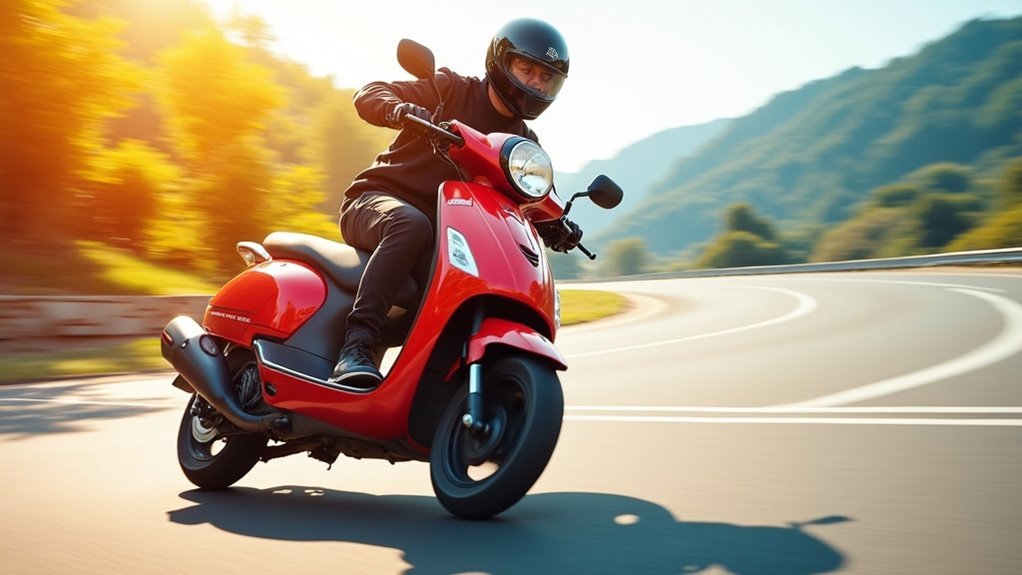
To ride through wind tunnels created by tall buildings on an electric scooter, brace yourself by leaning forward as you approach corners, where winds can nearly double in strength. Stay alert for sudden gusts that may affect your balance. Use pressure sensors to gauge wind changes, and be cautious of debris that can be blown into your path. Understanding wind patterns enhances your safety while riding. Explore innovative riding techniques and urban design solutions for better navigation in challenging conditions.
Key Takeaways
- Lean forward and brace yourself against the wind to maintain balance while riding your electric scooter through narrow passages near tall buildings.
- Be aware that wind speeds can double around building corners, increasing your risk of losing control on your scooter.
- Always wear a helmet to protect against falls caused by sudden gusts or turbulence while riding your scooter.
- Use pressure sensors or local weather apps to assess wind conditions before riding your electric scooter in urban areas.
- Advocate for architectural designs that mitigate wind tunnel effects to enhance safety for all electric scooter riders.
Understanding the Wind Tunnel Effect
As urban landscapes evolve, understanding the wind tunnel effect becomes vital for electric scooter users, especially in areas with tall buildings. This phenomenon occurs when airflow around structures alters, amplifying wind speeds in narrow spaces.
Wind tunnel testing reveals that gusts can double near building corners due to high suction, creating discomfort and hazards for scooter riders. In Philadelphia, locations like the gap between Morgan Hall North and South exemplify these challenges.
Neglecting thorough wind studies in current building designs exacerbates safety risks, as downwash effects lead to turbulent wind patterns. Recognizing these dynamics is essential for enhancing the urban riding experience and ensuring the safety of electric scooter users.
Navigating Wind Patterns in Urban Areas
Maneuvering urban areas on electric scooters requires an awareness of wind patterns that can greatly impact your ride. Wind speeds often double as you approach building corners, creating challenging air movement.
Utilize pressure sensors if available, as they help gauge these fluctuations, allowing for informed navigation decisions. In places like the corridor between Morgan Hall North and South in Philadelphia, you may need to lean forward to counteract strong winds while riding.
Advocating for architectural designs that account for these dynamics can enhance rider comfort, fostering community discussions that lead to improved urban design focused on safety and usability for everyone.
Safety Tips for Cyclists and Pedestrians
When traversing urban environments on electric bicycles, cyclists must prioritize safety, especially in areas prone to wind tunnel effects.
Lean forward and brace against the wind when maneuvering narrow passages between tall buildings to maintain balance and control. Be cautious, as wind speeds can double around corners, increasing your risk of being knocked off balance.
Lean forward and brace against the wind in narrow passages to maintain control and balance while cycling.
Always wear a helmet to protect against potential falls due to sudden gusts. Before you ride in these areas, assess wind conditions, particularly between Morgan Hall North and South in Philadelphia.
Stay alert for debris blown into your path, which can lead to accidents.
Urban Design Solutions to Mitigate Wind Tunnels
While urban landscapes continually evolve, addressing the wind tunnel effect must be a priority for architects and city planners, especially as the popularity of electric scooters increases.
Innovative urban design solutions, like circular skyscrapers, can effectively reduce turbulence created by sharp building corners, making it safer for scooter riders.
Utilizing CFD software allows for precise analysis of airflow patterns, helping to identify high wind-speed areas that can negatively impact those on electric scooters.
Current building codes often overlook these factors, compromising comfort and safety for riders.
Community Awareness and Engagement
Community awareness and engagement are essential in promoting the use of electric scooters and ensuring safe riding conditions for all. By actively participating, you can influence urban design and enhance the overall scooter experience.
Community engagement is vital for promoting electric scooters and ensuring safe urban riding experiences for everyone.
Here’s how you can get involved:
- Share your experiences riding electric scooters in urban areas.
- Join community discussions on scooter regulations and their impact on rider safety.
- Advocate for designated scooter lanes and infrastructure that support comfortable and safe riding.
- Participate in awareness campaigns to educate others about the benefits and safety of electric scooters.
Your input fosters a collective understanding and drives change, ensuring that future developments prioritize the convenience and safety of all electric scooter users.