To select tire pressure for electric bicycles or electric scooters on mixed surfaces, aim for 30-35 psi. For smoother, paved roads, consider increasing the pressure for better efficiency, while reducing the pressure on loose gravel can enhance grip and stability. Keep your weight in mind; heavier riders may require a slightly higher psi for optimal performance. Utilize reliable tire pressure calculators designed for electric vehicles to fine-tune your settings based on the specific conditions you encounter. Regularly test and document your adjustments to achieve the best balance between comfort and speed. Explore additional strategies to improve your tire setup and overall ride quality.
Key Takeaways
- For mixed surfaces, set the tire pressure of your electric bicycle or scooter between 30-35 psi to balance comfort and performance on paved, hard pack, and loose gravel sections.
- Adjust tire pressure based on rider weight; heavier riders may require 5-10 psi more for optimal performance and stability.
- Utilize reliable tire pressure calculators designed for electric bikes and scooters that account for different surface types and rider specifications for accurate recommendations.
- Regularly monitor and adjust tire pressure before rides, considering temperature changes and varying riding conditions to ensure the best performance from your electric vehicle.
- Document tire pressure settings and performance feedback to refine and optimize pressure adjustments over time for a smoother riding experience.
Understanding Mixed Surface Requirements
When navigating a mixed surface circuit on an electric bicycle or scooter, understanding the specific requirements of each terrain is vital for optimizing your ride experience. A typical circuit may consist of 60% paved paths, 20% hard pack dirt, and 20% loose gravel, necessitating careful adjustments to tire pressure.
For mixed surfaces, a recommended tire pressure usually falls between 30-35 psi, which enhances traction and handling on gravel while still performing adequately on pavement. While higher pressures can improve efficiency on paved sections, they may compromise stability on loose gravel.
Testing tire pressure before your ride will help you achieve the best balance between comfort and speed, especially when using tubeless tires to reduce the risk of pinch flats. This ensures you can enjoy a smooth ride across varying terrains while maximizing the capabilities of your electric bicycle or scooter.
Tire Pressure Recommendations for Paved Roads
While smooth asphalt provides an ideal riding surface for electric bicycles and scooters, selecting the correct tire pressure is crucial for optimizing performance.
For tires in the 25–28mm range, a recommended pressure of 90–100 psi strikes a balance between rolling resistance, comfort, and speed.
If you’re navigating rough asphalt or worn roads, lowering the pressure to 75–90 psi can enhance grip and reduce rider fatigue.
When encountering wet or slippery conditions, it’s advisable to reduce your pressure by 5–10% from your dry settings to improve traction.
Maintaining proper tire pressure ensures a stable and efficient ride, allowing you to enjoy your electric ride while serving others effectively on paved surfaces.
Adjusting Pressure for Gravel and Dirt
As you transition from paved roads to mixed surfaces like gravel and dirt on your electric bicycle or scooter, adjusting your tire pressure becomes crucial for optimizing traction and comfort. Lowering your tire pressure to 30-35 psi can significantly enhance grip and handling on loose terrain.
Adjusting tire pressure to 30-35 psi enhances grip and comfort on mixed surfaces like gravel and dirt.
Consider these strategies:
- Opt for a wider front tire (e.g., 40mm) at lower pressure to improve gravel grip for your electric bike or scooter.
- Maintain a slightly higher pressure in the rear (e.g., 35mm) to ensure speed without sacrificing control, especially important for e-bikes that may have more weight.
- Regularly monitor and adjust tire pressure based on the riding conditions and your personal experience to maximize performance on mixed surfaces.
This way, you can enjoy a smoother ride while making the most of your electric mobility device.
Impact of Rider Weight on Tire Pressure
Rider weight plays a critical role in determining the ideal tire pressure for your electric bicycle or scooter, as heavier riders often require higher psi to maintain both comfort and performance.
For instance, if you weigh around 70kg, a recommended pressure of about 50 psi is suitable for road and light gravel riding on your electric bike or scooter. However, if you’re heavier, increasing that pressure by 5-10 psi can enhance peak performance, ensuring a smoother ride and better handling.
Conversely, lighter riders may benefit from lower pressures, which can improve grip and comfort on mixed surfaces, making your electric ride more enjoyable.
Regularly adjusting tire pressure according to rider weight not only enhances your electric bicycle or scooter’s performance but also guarantees the best balance between grip, comfort, and rolling resistance.
Utilizing Tire Pressure Calculators
When selecting a tire pressure calculator for your electric bicycle or scooter, ensure it meets your specific requirements, taking into account factors like tire width and the type of terrain you’ll be navigating.
Accurately inputting data, such as your weight, tire dimensions, and the vehicle’s specifications, is crucial for obtaining precise pressure recommendations.
Finally, carefully interpret these suggestions to determine an optimal tire pressure that enhances performance across various surfaces, ensuring a smooth and efficient ride.
Choosing the Right Calculator
How do you verify ideal tire pressure for electric bicycles or scooters on mixed surfaces?
Choosing the right tire pressure calculator is essential. Here are three key considerations:
- Calculator Credibility: Use trusted calculators from brands like Bosch, Shimano, or Specialized that focus on e-bike or e-scooter specifications.
- Input Accuracy: Ensure you enter your tire width, rider weight, and the weight of your electric bike or scooter correctly for tailored recommendations.
- Terrain Adaptability: Select a calculator that accounts for different surface types, balancing pavement and off-road conditions to optimize performance and safety.
Inputting Accurate Data
Accurate data input is essential for optimizing tire pressure on electric bicycles and scooters, as even slight discrepancies can lead to suboptimal performance. To achieve the recommended pressure, you need to take into account your weight, tire width, and the terrain type. For mixed surfaces, inputting terrain percentages—like 60% paved, 20% hard pack dirt, and 20% loose gravel—enables the calculator to suggest balanced tire pressures.
| Input Type | Example Value | Purpose |
|---|---|---|
| Rider Weight | 160 lbs | Determines base pressure |
| Tire Width | 28 mm | Affects pressure calculations |
| Terrain Type | Mixed Surfaces | Optimizes pressure recommendations |
Regularly updating these inputs guarantees effective tire settings for your electric bike or scooter, enhancing your riding experience and ensuring safety on various surfaces.
Interpreting Pressure Recommendations
What factors should you consider when interpreting tire pressure recommendations for electric bicycles or scooters from calculators?
Understanding the nuances of your specific situation enhances performance on mixed surfaces. Here are three key factors:
- Rider Weight: Heavier riders often need higher PSI pressure for ideal support, especially when navigating urban environments or steep inclines.
- Terrain Composition: Consider the distribution of paved roads, gravel paths, and uneven surfaces to fine-tune the recommended pressure for optimal grip and comfort.
- Personal Adjustments: Use initial calculator suggestions as a starting point, then adjust based on your riding experience and the current conditions of your route.
Testing and Fine-Tuning Pressure Settings
To optimize your electric bicycle or scooter tire pressure settings, begin with pre-ride tests across various terrains, including smooth pavements and rugged gravel paths.
Make small adjustments to the tire pressure and observe how each change influences handling and ride comfort.
Keep a detailed log of your findings to create a dependable reference for future adjustments tailored to specific riding conditions.
Pre-Ride Pressure Testing
Before hitting the mixed surface circuit on your electric bicycle or electric scooter, it’s crucial to conduct pre-ride pressure testing to determine the best tire settings for varying terrains.
Start with the recommended tire pressure for your e-bike or e-scooter, then gradually lower it until you encounter performance issues.
To optimize your tire pressure for mixed surfaces, follow these steps:
- Use the SRAM Tire Pressure Calculator to find initial settings based on tire width and rider’s weight, considering the additional weight of the electric components.
- Test different pressures across paved, hard pack dirt, and loose gravel sections to see how your electric ride performs.
- Document your findings, noting how each setting affects speed, comfort, and handling, which will help inform future adjustments for a smoother and more efficient ride on your electric bicycle or scooter.
Adjusting for Terrain Variability
As you navigate mixed surfaces on your electric bicycle or scooter, adjusting tire pressure becomes essential for optimizing performance across varying terrains.
Start by testing pressures between 30-50 psi, as lower settings can enhance traction on gravel while maintaining speed on pavement.
Utilize tools like the SRAM Tire Pressure Calculator to factor in your tire width, inner rim width, rider weight, and terrain ratio specific to your electric ride.
Conduct pre-ride tests on each surface type, gathering performance feedback to fine-tune pressures for improved ride quality.
Remember to account for environmental factors, adjusting pressures further as necessary to ensure consistent performance throughout your ride on your electric bicycle or scooter.
Documenting Performance Changes
While you navigate the complexities of mixed terrain on your electric bicycle or scooter, documenting performance changes through systematic testing and fine-tuning of tire pressure settings is essential for maximizing your ride.
Follow these steps to guarantee accuracy:
- Conduct pre-ride testing by adjusting tire pressure in small increments (2-5 psi) for varied surfaces, ensuring optimal performance of your electric ride.
- Document tire pressure settings alongside conditions and rider feedback on handling, comfort, and speed, while also considering the impact of the electric motor on performance.
- Analyze performance changes regularly to refine ideal pressures for future rides, aligning adjustments with evolving course conditions and battery performance.
This meticulous approach will enhance your understanding of how tire pressure impacts the performance and grip of your electric bicycle or scooter in real-world scenarios.
Regular Maintenance and Monitoring of Tire Pressure
Regularly checking your electric bicycle or scooter tire pressure is essential for optimizing performance across various surfaces.
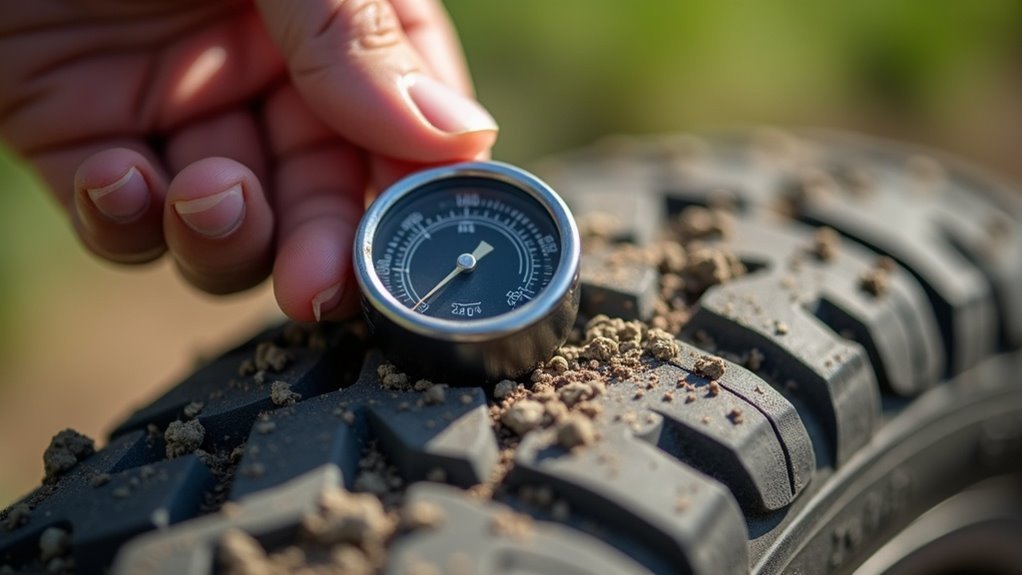
Use a reliable gauge to monitor your tire pressure before each ride, being mindful of fluctuations due to temperature and riding conditions. Document your adjustments to identify effective settings for different terrains, whether you’re cruising on pavement or navigating rougher paths.
Start with the manufacturer’s recommended pressure, then fine-tune based on your personal experience and specific riding conditions. Utilize pressure calculators from reputable brands to determine ideal pressures tailored to your tire type, width, and rider weight.
Consistent monitoring enhances your setup and ensures a balance between comfort and speed, leading to the best performance for your electric ride.