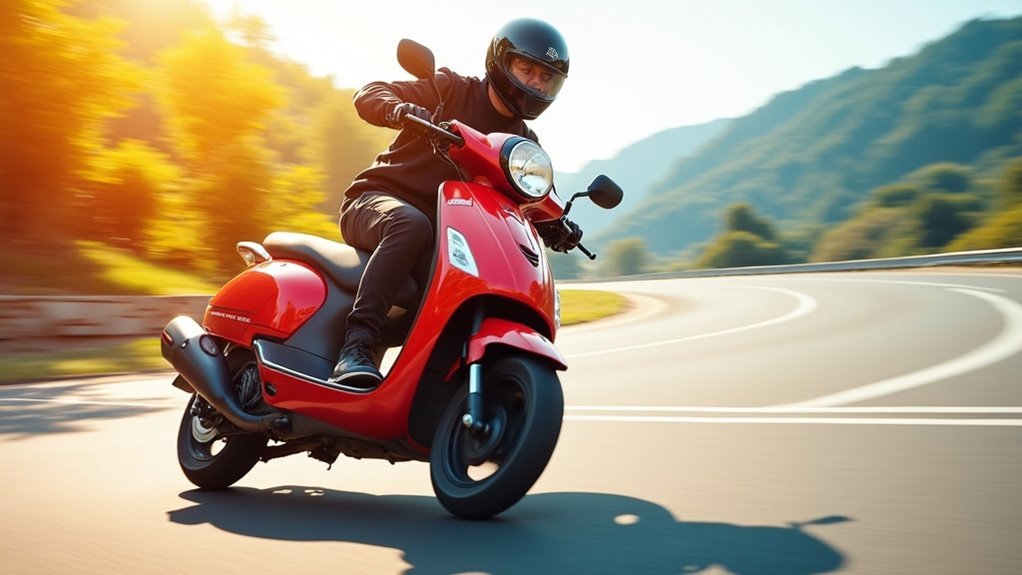
An electric scooter is a compact, lightweight personal vehicle designed for urban mobility. Powered by lithium-ion batteries, they can reach speeds of 15 to 20 mph and travel up to 100 km on a single charge. These eco-friendly scooters operate quietly, making them ideal for short trips while helping to reduce congestion and pollution. If you’re curious about how they work and their safety features, there’s plenty more to discover about this innovative mode of transport.
Key Takeaways
- Electric scooters are lightweight personal electric vehicles designed for urban mobility, powered by lithium-ion batteries.
- They can reach speeds of 15 to 20 mph and travel up to 100 km on a single charge.
- Electric scooters produce zero emissions, making them an eco-friendly alternative to traditional transportation methods.
- They operate quietly, contributing to reduced noise pollution in urban environments.
- E-scooter sharing services are growing, highlighting the need for cities to adapt infrastructure for safer riding experiences.
Definition and Overview
An electric scooter is a modern solution for urban mobility, combining convenience and eco-friendliness.
This compact, lightweight personal electric vehicle is designed for short-distance transportation, making it ideal for urban commuting. Powered by lithium-ion batteries, electric scooters reach speeds of 15 to 20 miles per hour and can travel up to 100 kilometers per charge.
They’ve surged in popularity since the launch of the first dockless e-scooter service in 2017, contributing to reduced congestion and air pollution.
With their quiet operation, electric scooters offer a sustainable alternative to traditional transportation, promoting eco-friendly transportation in bustling cities.
How Electric Scooters Work
Electric scooters operate by using a motor that transforms energy from lithium-ion batteries into movement, giving you that smooth ride.
The electronic controller fine-tunes power delivery based on how you accelerate or brake, ensuring a responsive experience.
Plus, with regenerative braking, you can recharge the battery while slowing down, enhancing efficiency on your journeys.
Motor and Battery Functionality
Understanding how electric scooters work reveals the intricate relationship between their motor and battery systems.
The motor converts electric power from lithium-ion batteries into mechanical energy, propelling you forward without gears. You control the power delivery through an accelerator grip, allowing for a smooth ride.
The battery capacity impacts your range, typically offering 40 to 100 km per charge, influenced by weight and terrain. Many scooters also feature regenerative braking, which captures kinetic energy during braking, recharging the battery.
With a maximum speed of 15 to 20 miles per hour, electric scooters blend efficiency and convenience for your daily journeys.
Power Regulation Mechanics
When you twist the accelerator grip of an electric scooter, you’re initiating a finely tuned system that manages power regulation to guarantee a smooth ride.
This system relies on an electric motor, which converts energy from the rechargeable battery into mechanical power. Electronic controllers oversee power delivery based on your input, allowing for seamless acceleration without the complexity of gears.
This design not only enhances performance but also reduces maintenance needs compared to traditional engines.
With typical speeds reaching 15 to 20 miles per hour, you can enjoy an efficient ride while knowing that the battery’s range depends on its capacity.
Braking System Efficiency
Power regulation plays a significant role in how smoothly an electric scooter operates, but just as important is the braking system, which guarantees safety and control during your ride.
Most electric scooters use regenerative braking, converting kinetic energy back into electrical energy, boosting efficiency by up to 30%. Your braking system may include electronic, disc, or drum brakes, with disc brakes offering superior stopping power.
Quick response times address safety concerns, allowing faster stops. Regular maintenance, like checking brake pads and fluid levels, is vital for ideal performance, ensuring you ride safely and confidently while serving your community.
Types of Batteries Used
Electric scooters mainly rely on lithium-ion batteries, which are favored for their high energy density and lightweight design, allowing for quick recharging. These batteries typically range from 250Wh to over 1000Wh, impacting the scooter’s range from 40 km to over 100 km per charge. While some scooters may use nickel-metal hydride (NiMH) batteries, they’re less common due to their heavier weight. Emerging technologies like lithium-titanium oxide (LTO) batteries promise rapid charging and longevity. Remember, factors like rider weight and terrain can affect battery performance considerably.
| Battery Type | Characteristics |
|---|---|
| Lithium-ion | High energy density, lightweight |
| Nickel-metal hydride (NiMH) | Lower energy density, heavier |
| Lithium-titanium oxide (LTO) | Rapid charging, longer lifespan |
| Capacity Range | 250Wh – 1000Wh |
| Range per Charge | 40 km – 100 km |
Advantages of Electric Scooters
When you choose an electric scooter, you’re opting for a cleaner, greener way to travel, producing zero emissions and helping reduce urban air pollution.
Plus, with operating costs that can be as low as one to two cents per mile, it’s an economical alternative to traditional vehicles.
This combination of environmental benefits and cost-effective transportation makes electric scooters an appealing choice for your short-distance travel needs.
Environmental Benefits
As cities grapple with pollution and traffic congestion, electric scooters emerge as a compelling alternative for urban transportation.
These environmentally friendly vehicles produce zero emissions during operation, considerably cutting air pollution. By replacing cars for short-distance transportation—particularly trips under 2 kilometers—you can help alleviate traffic congestion.
Additionally, electric scooters operate quietly, reducing noise pollution and enhancing your city’s ambiance. Their lightweight design encourages active transportation, promoting physical health and raising environmental awareness.
Cost-Effective Transportation
While you might be accustomed to the expenses of traditional transportation, electric scooters present a budget-friendly alternative that can remarkably reduce your commuting costs.
With operating costs averaging just one to two cents per mile, they’re considerably cheaper than gasoline vehicles. For urban commuting, prices range from $300 to $2,000, making them accessible for many.
Plus, shared e-scooter services eliminate the need for ownership, perfect for occasional rides. With minimal maintenance costs and impressive ranges of 40 to over 100 km per charge, electric scooters prove to be a cost-effective solution for traversing city life efficiently.
Differences Between Electric Scooters and Mopeds
Electric scooters and mopeds may seem similar at first glance, but they cater to different needs and preferences when it comes to urban transportation. Here’s a quick comparison:
| Feature | Electric Scooters | Mopeds |
|---|---|---|
| Speed | 15-20 mph | 30-40 mph |
| Licensing | Often no license required | Driver’s license needed |
| Power Source | Rechargeable batteries | Gas or electric motors |
| Environmental Impact | Zero emissions | May contribute to pollution |
In urban settings, electric scooters are more eco-friendly, while mopeds offer faster options for longer commutes. Choose based on your needs!
Safety Considerations
When considering urban transportation options like electric scooters and mopeds, safety becomes a paramount concern. E-scooters share vulnerabilities with pedestrians and bicyclists, particularly in road traffic.
In Europe, 80% of e-scooter rider deaths involve collisions with heavier vehicles, highlighting the dangers of mixed roadway usage. From 2019 to 2022, France reported a staggering 185% rise in e-scooter riders admitted to trauma centers, underscoring urgent safety issues.
Implementing and adhering to regulations, such as age limits and helmet requirements, is critical. By prioritizing safety, we can help reduce accidents and promote responsible riding in our communities.
Legal Regulations
As cities embrace the rise of e-scooters, understanding the legal regulations surrounding their use is essential for both riders and urban planners.
The legal status of electric scooters varies widely; some regions enforce speed limits and designate specific bike lanes for safe riding. Sidewalk use is often prohibited to protect pedestrians. Age restrictions and helmet requirements can differ, impacting rider safety.
Additionally, cities may regulate e-scooter sharing services, controlling fleet sizes and operational hours. However, inconsistent enforcement of these regulations can complicate integration into existing transportation systems, highlighting the need for clear guidelines and community awareness.
The Future of Electric Scooters
With the growing interest in sustainable urban transportation, the future of electric scooters looks promising. The market is projected to reach $42 billion by 2030, fueled by innovations in battery technology that enhance range and efficiency.
Imagine e-scooters offering over 100 km per charge! E-scooter sharing services are expanding, transforming short-distance travel and reducing reliance on cars.
As cities adapt, infrastructure improvements like dedicated lanes and parking spaces will become crucial. Ongoing research aims to enhance safety features and regulatory frameworks, ensuring a secure riding experience.
Embracing these trends will position electric scooters as an essential component of urban mobility.