Phase amps indicate the current flowing to the motor of electric bicycles and scooters, often 2 to 3 times greater than battery amps, which measure the energy drawn from the battery. The controller regulates these currents to enhance performance and prevent overheating. By managing phase amps through pulse width modulation, you improve acceleration while balancing battery amps for sustained power. Understanding this dynamic is essential for peak performance in electric bikes and scooters, and further exploration reveals more strategies to fine-tune your settings for an optimized riding experience.
Key Takeaways
- Phase amps indicate the current flowing through the motor phases of electric bicycles and scooters, often 2 to 3 times higher than battery amps, enhancing acceleration and torque for a more responsive ride.
- Battery amps measure the current drawn from the battery, which is crucial for sustaining speed and optimizing overall motor efficiency during your commute or recreational ride.
- Controllers in electric bicycles and scooters regulate both phase and battery amps, using PWM (Pulse Width Modulation) to balance performance and prevent overheating during operation, ensuring a smooth and safe ride.
- Higher phase amps improve acceleration for quicker starts and hill climbing, while battery amps support sustained speeds for longer distances; balancing both is essential for optimal performance and safety on the road.
- Adjusting phase amps can significantly enhance performance, but it also carries the risk of overheating; monitoring temperature is vital to ensure safe operation and extend the longevity of the components in your electric bike or scooter.
Understanding the Basics of Phase Amps and Battery Amps
What distinguishes phase amps from battery amps in electric bicycles and scooters? Phase amps represent the current flowing through the motor phases, often 2 to 3 times higher than battery amps, which indicate the current drawn from the battery. Understanding this distinction is vital for optimizing motor efficiency in e-bikes and e-scooters. Controllers, like the Fardriver model with a maximum rating of 600 A, regulate phase amps to enhance performance without risking overheating. Safe phase current settings typically start around 1.2 times the battery current. By managing phase amps through pulse width modulation, you can improve acceleration while keeping battery amps in check, ensuring efficient power consumption for your electric ride.
The Functionality of the Controller in Current Regulation
Understanding the role of the controller in current regulation is crucial for optimizing the performance of electric bicycles and scooters. The controller is responsible for managing the flow of electrical current, ensuring that battery current limits and phase amps are appropriately regulated to achieve peak motor performance.
By employing pulse width modulation (PWM), it effectively adjusts the voltage supplied to the motor phases, which helps to prevent excessive current draw from the battery.
As the load on the motor increases, the controller can dynamically boost phase amps, often allowing them to be 2.0 to 3.0 times higher than the battery current. This feature ensures that the motor receives the necessary current efficiently, while also safeguarding against overheating and potential damage.
Therefore, an understanding of how the controller functions is essential for anyone looking to enhance their electric bicycle or scooter experience.
The Relationship Between Phase Amps and Battery Amps
The interaction between phase amps and battery amps is a fundamental aspect of electric bicycles and scooters, directly impacting their performance and efficiency.
Phase amps represent the current delivered to the motor, often ranging from 2.0 to 3.0 times higher than battery amps. Controllers in electric bikes and scooters utilize pulse width modulation to manage this relationship, allowing phase amps to exceed battery amps without overwhelming the battery.
Phase amps can be 2 to 3 times higher than battery amps, enabling powerful performance while protecting the battery.
For instance, a 100A controller can output nearly 400A in phase amps, providing the necessary power for quick acceleration and hill climbs.
Balancing these currents is essential for the longevity of the bike or scooter; excessive phase amps can lead to overheating and potential damage to the motor and battery.
Understanding the dynamics between phase amps and battery amps is key to optimizing responsiveness, torque, and overall performance in electric bicycles and scooters, ensuring a smooth and exhilarating ride.
Impact of Current Settings on Electric Motorcycle Performance
Current settings directly influence your electric bicycle’s acceleration characteristics and thermal management.
By optimizing phase amps for quick torque delivery and battery amps for sustained speed, you can enhance performance while preventing overheating.
Balancing these variables is essential to achieving efficient operation without damaging components, ensuring a smooth and enjoyable ride on your electric scooter as well.
Acceleration Characteristics
To optimize the acceleration characteristics of an electric bicycle or scooter, understanding the interplay between phase amps and battery amps is vital.
Higher phase amps significantly enhance acceleration from a standstill to mid-speed by generating more torque, while battery amps provide the sustained power necessary for achieving higher velocities from mid to top speed.
Typically, phase current is 2.0 to 3.0 times greater than battery current, allowing for optimized acceleration performance in these vehicles.
Balancing these currents is essential; excessive phase current can lead to overheating, while insufficient battery current can limit top speed.
It’s advisable to start with a safe battery current and gradually increase phase current to improve overall acceleration in electric bicycles and scooters.
Thermal Management Considerations
While optimizing performance, you must consider the thermal management of electric bicycles and scooters, especially regarding current settings. High phase amps can enhance torque and acceleration but generate excessive heat, risking thermal runaway without proper cooling solutions.
Controllers typically limit phase currents to levels that are 2.0 to 3.0 times higher than battery currents, highlighting the balance required between these two settings. Monitoring temperature levels is essential; sustained high phase currents can degrade component longevity and performance.
Implementing cooling systems, such as fans or liquid cooling, can efficiently dissipate heat, ensuring your electric bicycle or scooter maintains peak performance while safeguarding against thermal issues.
Power Dynamics: Calculating Input and Output
Understanding power dynamics in electric bicycle and electric scooter systems is essential for optimizing performance and efficiency. The relationship between battery voltage, battery amps, and phase amps is critical in these vehicles.
Battery amps measure the current drawn from the battery, while phase amps can exceed this due to voltage modulation by the controller. The formula—battery voltage x battery amps > phase voltage x phase amps—highlights energy loss in the system.
During operation, the average battery current is usually lower than the motor current because the duty cycle allows for high motor performance with less battery draw. This ensures effective power management across varying speeds, enabling riders to enjoy longer distances and improved efficiency on their electric bicycles and scooters.
Advantages and Disadvantages of Adjusting Phase Amps
Adjusting phase amps in electric bicycle and scooter systems can significantly enhance performance, but it also comes with inherent risks. Increasing phase amps improves torque and responsiveness, which is essential for quick acceleration and hill climbing.
However, higher phase amps generate more heat, risking overheating and potential damage to the controller and motor. Striking a balance between phase amps and battery amps is crucial; excessive phase current can lead to reduced system reliability and a shorter component lifespan.
Higher phase amps can increase performance but also risk overheating and damage, making balance essential for system reliability.
It’s important to always monitor temperatures during operation. Adjustments should align the controller’s maximum phase amp rating with the battery’s capacity to prevent issues.
Real-world testing is essential, as the characteristics of the motor and the overall system can greatly influence how it responds to changes in current settings.
Real-World Insights From the Electric Motorcycle Community
Electric bicycle and scooter builders often share valuable insights about the interplay between phase amps and battery amps, emphasizing their distinct roles in performance.
They highlight that while phase amps drive motor torque, battery amps reflect power consumption. Increasing phase amps can enhance torque and responsiveness at lower speeds, but it’s crucial to balance this against overheating risks.
Many recommend starting with battery amps around 20-30 A, adjusting phase amps in a 1:1 ratio, and closely monitoring motor behavior.
Forums stress matching controller phase amp ratings with battery capabilities to ensure reliable operation and avoid exceeding thermal limits during high-load scenarios for optimal electric bicycle and scooter performance.
Recommendations for Optimizing Phase and Battery Current Settings
To optimize your phase and battery current settings for electric bicycles or scooters, start by balancing the currents to ensure safe operation.
As you monitor the performance of your e-bike or e-scooter, adjust the phase current incrementally while keeping an eye on temperature to prevent overheating.
Regular assessments will help you fine-tune the settings based on your specific electric bicycle or scooter’s characteristics and performance needs.
Balance Current Settings
Finding the right balance between phase amps and battery amps is essential for optimizing the performance of electric bicycles and scooters. Start with a 1:1 ratio of battery current to phase amps, ensuring an initial battery current of 40-50 A. Gradually increase phase current, targeting around 1.2 times the battery current to maintain reliability and efficiency during rides. It’s crucial to monitor both currents in real-time to prevent overheating, especially during steep climbs or high-speed runs. Adjust settings based on real-world testing and the specific motor characteristics, such as Kv rating, to enhance your riding experience.
| Setting Type | Recommended Value |
|---|---|
| Battery Current | 40-50 A |
| Phase Current | 1.2 x Battery Current |
| Monitoring Tool | Watt Meter/Amp Meter |
Monitor Motor Performance
Monitoring motor performance in electric bicycles and scooters is crucial for optimal operation.
Begin by adjusting the battery current to a range of 40-50 A, and set the phase current to a 1:1 ratio. Gradually increase the phase current while closely observing the motor’s behavior for any signs of overheating, as excessive phase current can lead to component damage.
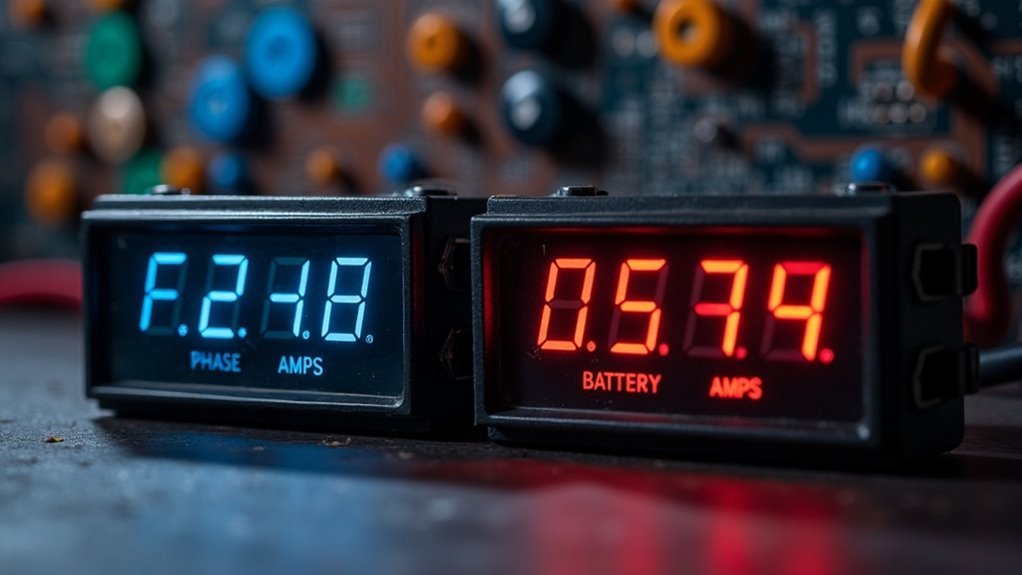
Utilize a watt meter or amp meter to monitor the relationship between phase and battery current, ensuring effective power delivery.
Adjust your settings based on real-world testing, taking into account your motor’s Kv rating and the terrain you’ll be riding on.
It’s important to remember that load conditions significantly affect performance; when carrying heavier loads, you’ll need to increase current settings to achieve optimal acceleration and efficiency.