Electric bikes really took off in popularity during the late 2000s. This growth happened alongside advancements in lithium-ion battery technology, which made e-bikes lighter and more efficient. You saw a dramatic rise in sales, jumping from around 200,000 units in 2007 to over 5 million by 2021, driven by a push for sustainable transport. If you’re curious about the trends and innovations that shaped this movement, there’s much more to explore!
Key Takeaways
- Electric bikes began gaining popularity in the late 20th century with advancements in battery technology and design.
- The 2000s marked a significant surge, with e-bike sales increasing from 200,000 units in 2007 to over 5 million by 2021.
- Government policies promoting eco-friendly transportation contributed to the growing acceptance of electric bikes during this period.
- The COVID-19 pandemic accelerated e-bike adoption in the U.S., resulting in a 72% increase in sales.
- E-bike sharing programs in the 2010s enhanced accessibility, further integrating e-bikes into urban transportation networks.
The Early Beginnings of Electric Bikes
The journey of electric bikes began over a century ago, marking a fascinating chapter in transportation history.
In 1895, Ogden Bolton Jr. patented a battery-powered bicycle, showcasing early innovations in electric bicycle design. Following this, Hosea W. Libbey introduced a model with a double electric motor in 1897.
However, these early models faced challenges; heavy battery packs and limited performance rendered them impractical for most riders. Despite their potential, electric bikes didn’t gain traction until the late 20th century, when advancements in battery technology and design finally made them a viable option for everyday cycling enthusiasts.
Technological Advancements in the 1990s
As the 20th century progressed, electric bikes began to evolve dramatically thanks to significant technological advancements in the 1990s. The introduction of lithium-ion batteries revolutionized energy density and reduced weight, making e-bikes practical. Yamaha’s 1993 launch of the first commercially available e-bike featured a pedal-assist system, shaping modern designs. Advances in electric motor technology led to efficient propulsion systems, boosting performance. R&D investments from companies like Panasonic fostered innovations in battery management systems. By the late ’90s, consumer interest and urban planners’ attention surged, laying the groundwork for electric bikes’ resurgence.
| Key Innovations | Impact on Electric Bikes |
|---|---|
| Lithium-Ion Batteries | Improved energy density |
| Pedal-Assist Systems | Enhanced user experience |
| Efficient Propulsion | Boosted overall performance |
The Surge in Popularity During the 2000s
With the advent of lithium-ion batteries, the 2000s marked a turning point for electric bikes, catapulting them into mainstream popularity.
E-bike sales skyrocketed, especially in Europe, growing from 200,000 units in 2007 to over 5 million by 2021. Government policies promoting environmentally friendly transportation and rising health awareness fueled this trend.
The COVID-19 pandemic further accelerated e-bike adoption as many sought safe alternatives to public transport, resulting in a 72% sales increase in the U.S.
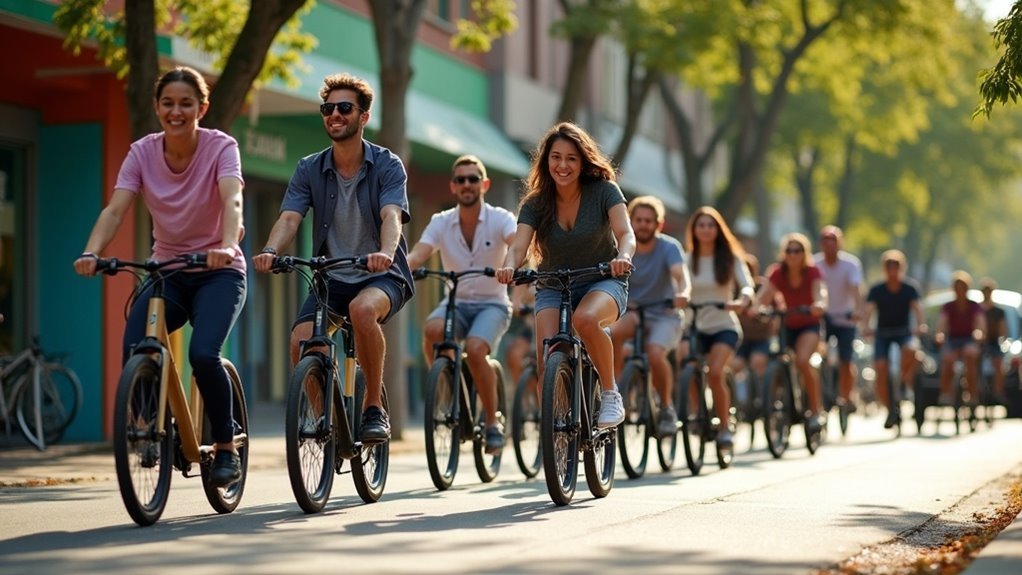
Urban areas began embracing e-bikes, improving infrastructure to accommodate this growing demand, making e-bikes a viable and beneficial mode of transportation.
E-Bike Sharing Programs and Urban Adoption
E-bike sharing programs are transforming urban mobility by offering a convenient and eco-friendly alternative to traditional transportation.
As cities adopt these services, you’ll find that they not only enhance accessibility but also contribute to cleaner air and reduced congestion.
With the growth of shared e-bikes, more people are embracing cycling, leading to a noticeable impact on urban environments and personal commuting habits.
Growth of Shared E-Bikes
While urban areas have traditionally struggled with traffic congestion and pollution, the rise of shared e-bike programs offers a promising solution.
Electric bikes have gained popularity in the 2010s, with e-bike sharing programs flourishing as eco-friendly transportation options. The COVID-19 pandemic spurred a 72% increase in usage in the U.S., as many sought alternatives to crowded public transportation.
Cities like Paris and San Francisco are integrating e-bike sharing into their public transit networks, leading to infrastructure investments in bike lanes and charging stations.
These initiatives not only reduce traffic congestion but also promote a healthier, greener urban lifestyle.
Urban Mobility Solutions
As cities endeavor to tackle the challenges of congestion and pollution, innovative urban mobility solutions are becoming essential. E-bike sharing programs are rising in urban areas, offering convenient transport for residents and visitors. Cities like Paris and Barcelona demonstrate increased e-bike usage, reducing reliance on cars for short trips. The global e-bike sharing market is expected to grow by over 30% by 2025. With U.S. e-bike sales surging by 72% in 2020, it’s clear these electric bikes are becoming a sustainable mobility choice, effectively lowering traffic congestion and greenhouse gas emissions.
| E-Bike Sharing Benefits | Key Statistics |
|---|---|
| Reduces traffic congestion | 30% growth by 2025 |
| Lowers greenhouse gas emissions | 72% sales increase in 2020 |
| Convenient alternative to public transportation | Successful in cities like Paris and Barcelona |
| Encourages sustainable mobility | Rising e-bike usage |
Environmental Impact and Benefits
Sustainability is at the forefront of urban transportation discussions, and e-bike sharing programs are proving to be a game-changer. By promoting e-bikes as a clean mode of transport, cities are reducing emissions and improving air quality.
- Increased accessibility encourages sustainable transportation alternatives.
- Integration of smart city initiatives supports infrastructure development, including dedicated e-bike lanes and charging stations.
- E-bike users enjoy enhanced physical activity levels while embracing eco-friendly commuting options.
These benefits contribute to a healthier urban environment, making e-bikes an essential component of modern urban commuting strategies.
Embrace this shift toward electric propulsion for a greener future!
The Role of Sustainability in E-Bike Growth
With increasing environmental awareness driving consumer choices, e-bikes have emerged as a compelling solution for those seeking sustainable transportation. The rise in e-bike sales, reaching $1.3 billion in 2020, highlights a shift toward eco-friendly options. These electric bikes reduce emissions, alleviate urban congestion, and enhance air quality for eco-conscious commuters. The use of lithium-ion batteries considerably boosts energy efficiency, while supportive government policies promote green transportation initiatives.
| Benefit | Impact on Environment |
|---|---|
| Reduced Emissions | Cleaner Air |
| Less Traffic Congestion | Easier Urban Mobility |
| Energy Efficiency | Lower Resource Consumption |
| Support for Eco-Commute | Encourages Sustainable Choices |
| Government Incentives | Makes E-Bikes More Accessible |
Global Trends in E-Bike Usage
Although many might associate e-bikes primarily with eco-friendly initiatives, their global usage trends reveal a more complex picture of urban mobility.
The popularity of electric bikes has steadily grown due to various factors:
- E-bike sales surged, with U.S. sales hitting over $1.3 billion in 2020.
- Lithium-ion batteries have made electric bicycles more efficient and practical for daily commutes.
- Their environmental benefits help reduce traffic congestion and promote a healthier lifestyle.
As urban adoption increases, e-bikes are recognized as a viable mode of transportation, offering a sustainable alternative for those seeking eco-friendly travel solutions while traversing cities.
Regulatory Challenges and Future Prospects
As electric bikes continue to gain traction in urban environments, regulatory challenges are coming to the forefront, demanding attention from policymakers and city planners alike.
E-bike usage is rising rapidly, but many local laws struggle to keep up, particularly regarding safety equipment and helmet laws. The debate over mandatory helmets highlights the need for education on safe riding practices.
With the rapid rise of e-bike usage, local laws grapple with safety regulations, underscoring the importance of promoting safe riding education.
In addition, to accommodate the surge in e-bikes, infrastructure must evolve, incorporating dedicated lanes and charging stations.
Future prospects are bright, as smart city initiatives aim to seamlessly integrate e-bikes into urban mobility, ultimately enhancing city life and reducing congestion.