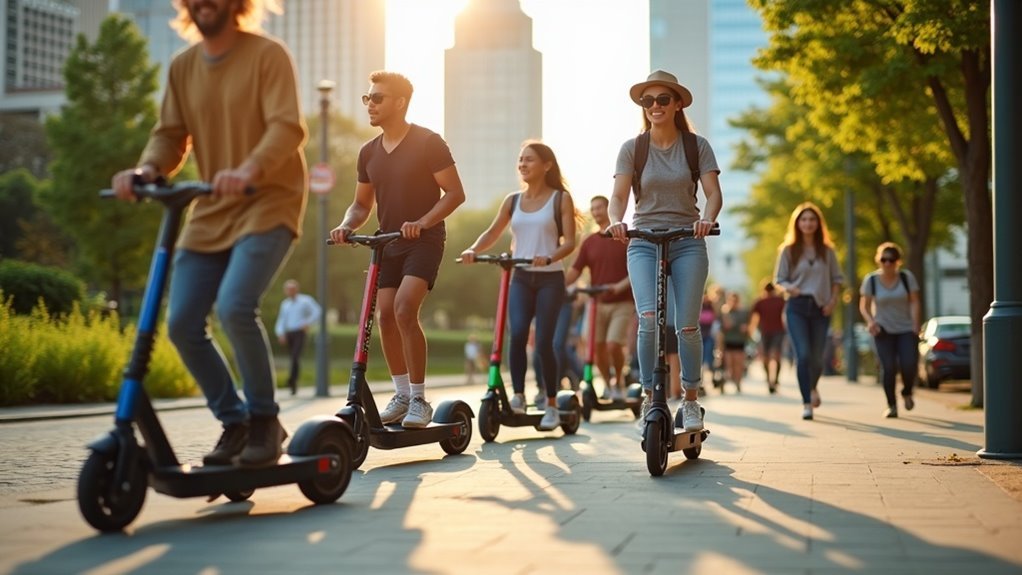
Electric scooters became popular in the late 2010s, primarily due to urban congestion and the emergence of dockless rental services. Companies like Bird and Lime made them accessible and convenient, especially for short trips. Advances in lithium-ion batteries improved performance and charging times, further boosting usage. This shift catered to younger commuters, reducing car reliance. As public perception evolved, e-scooters were embraced as eco-friendly alternatives. Curious about the innovations and trends that shaped this rise?
Key Takeaways
- Electric scooters gained popularity in 2018 with the launch of rental services like Bird and Lime, driven by urban congestion.
- The introduction of lightweight lithium-ion batteries improved performance and made scooters faster and more appealing for short trips.
- Dockless scooter-sharing services provided easy access, significantly increasing user adoption among younger demographics.
- Millions of rides reported within months highlighted the rapid acceptance and growing popularity of electric scooters in urban areas.
- Studies showed that one in four scooter trips replaced car journeys, contributing to a shift in public perception towards eco-friendly transportation.
The Rise of Electric Scooters in the 2010s
As urban areas became increasingly congested, the rise of electric scooters in the 2010s offered a practical solution for commuters seeking convenience and efficiency.
The introduction of lithium-ion batteries made these scooters lighter and faster, enhancing their appeal in urban commuting. The emergence of rental electric scooter companies like Bird and Lime in 2018 popularized micro-mobility, creating substantial market demand.
Improved battery efficiency and reduced charging times bolstered their viability for short trips. Furthermore, the integration of smart technologies, such as GPS tracking and app-based controls, further increased their popularity, attracting significant investment and transforming urban transportation.
The Impact of Dockless Scooter-Sharing Services
Dockless scooter-sharing services have transformed urban mobility by making electric scooters more accessible than ever.
With just a smartphone, you can access a scooter nearby, offering a convenient alternative to traditional transportation methods.
This shift not only caters to younger users but also helps to reduce car usage for short trips, reshaping how we navigate cities.
Urban Mobility Revolution
Since their introduction in 2018, dockless scooter-sharing services like Bird and Lime have reshaped urban mobility by providing a convenient alternative for short-distance travel. Millions of rides reported within months reflected the growing popularity of electric scooters, transforming commuting habits. Decreased battery and GPS tracker costs made these services economically viable. Significantly, studies showed that one in four scooter trips replaced car journeys, reducing traffic congestion and carbon emissions. With smartphones facilitating easy access to electric scooters, users can effortlessly locate, access, and pay for rides, integrating scooters into their daily urban transport.
| Service | Rides (Millions) | Carbon Emissions Reduction |
|---|---|---|
| Bird | 10 | 20% |
| Lime | 8 | 15% |
| Spin | 5 | 10% |
| Jump | 3 | 5% |
| Tier | 2 | 3% |
Accessibility and Convenience
The rise of dockless scooter-sharing services has made electric scooters not just a trend, but a practical solution for urban commuters seeking accessibility and convenience.
With smartphone apps simplifying the process of locating and revealing e-scooters, integrating them into daily commutes has never been easier.
These services have considerably reduced the last-mile transportation gap, enabling commuters to efficiently reach public transit stops and their final destinations.
As part of the micromobility revolution, dockless scooter-sharing systems have transformed urban transportation, offering a flexible, eco-friendly alternative that supports the increasing demand for accessible and convenient travel solutions.
Key Innovations That Fueled Popularity
While the rise of electric scooters can be attributed to various factors, key innovations have played a significant role in their growing popularity. The introduction of lithium batteries improved performance with faster charging and lighter designs, making electric scooters more appealing.
Rental electric scooters emerged in urban areas, offering affordable access for short commutes. Additionally, smart features like GPS tracking and regenerative braking enhanced user experience and safety.
Lightweight designs, exemplified by models like the Apollo Air, broadened accessibility. With an increasing focus on sustainability, e-scooters are marketed as eco-friendly transportation, further contributing to their widespread acceptance and use.
Urban Commuting Trends and E-Scooters
Urban commuting trends have shifted dramatically in recent years, with electric scooters emerging as a preferred choice for many.
The scooter revolution began in 2018, as e-scooter rental services like Bird and Lime took center stage in major cities. These portable designs cater to short-distance travel, making them an attractive alternative to cars, with one in four trips replacing a car journey.
This shift supports urban mobility solutions and aligns with the growing demand for sustainable transportation. By promoting eco-friendly commuting, personal electric scooters are reducing carbon emissions, enhancing urban environments, and easing the burden for traffic officers managing city congestion.
The Role of Smartphone Integration
Smartphone integration has transformed the way users interact with electric scooters, enhancing accessibility and convenience. Since 2018, rental e-scooter companies have adopted apps, making e-scooters more accessible to urban commuters. These apps enable you to locate, access, and pay for rides effortlessly. Features like GPS tracking and ride statistics provide real-time insights, improving safety and user experience. Additionally, smartphone technology aids rental companies in fleet management, optimizing e-scooter distribution and maintenance.
| Feature | Benefit |
|---|---|
| GPS Tracking | Real-time ride information |
| Ride Statistics | Performance insights |
| Payment Processing | Seamless transactions |
| Travel History | Track past rides |
| Fleet Management | Efficient operations |
Environmental Considerations and Public Perception
As awareness of environmental issues grows, electric scooters have emerged as a popular alternative to cars, particularly for short trips.
- One in four scooter trips replaces a car journey, cutting carbon emissions.
- Advancements in lithium-ion battery technology enhance efficiency and sustainability.
- Public perception has shifted, embracing e-scooters as eco-friendly personal micromobility options.
However, the environmental benefits largely depend on usage patterns.
While privately owned scooters effectively replace car trips, rental e-scooters may emit more CO2 than the transport modes they substitute.
It’s essential to reflect on how e-scooters fit into our broader transportation landscape to maximize their eco-friendly potential.
The Future of Electric Scooters in Urban Mobility
With cities facing increasing congestion and pollution, the future of electric scooters in urban mobility looks promising.
As urban populations rise, these eco-friendly vehicles present a convenient transport solution. By 2030, advancements in battery technology and eco-friendly manufacturing will enhance their appeal, making them a sustainable alternative to car travel.
With rising urban populations, electric scooters emerge as a sustainable and convenient alternative to car travel by 2030.
Smart features like GPS tracking and app-based controls will improve user experience and safety. Increased collaboration between electric scooter companies and public transportation will facilitate seamless first and last-mile connectivity, encouraging broader adoption.
Ultimately, electric scooters are set to transform urban mobility, addressing both environmental and transportation challenges.