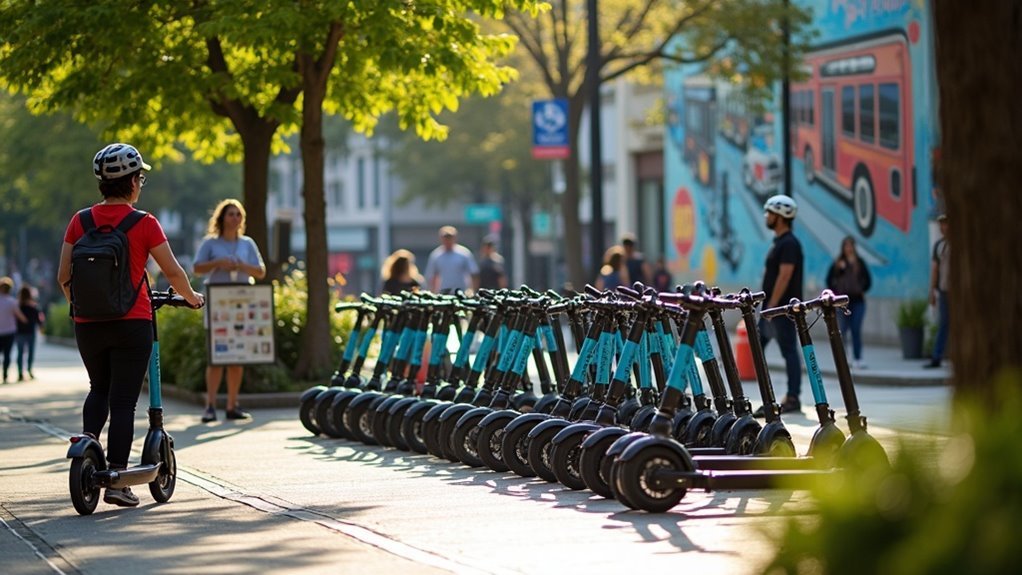
Local transportation departments and public safety organizations manage electric scooter policy in your area by setting regulations, overseeing compliance, and ensuring user safety. These agencies analyze usage patterns to inform decision-making and promote community engagement through feedback. They collaborate with city planners to develop infrastructure that supports electric scooters and addresses safety concerns. Understanding their roles sheds light on how micromobility integrates into urban planning, enhancing your awareness of local transportation dynamics. More insights follow.
Key Takeaways
- Local transportation departments oversee electric bicycle operational guidelines, permit requirements, and compliance with safety regulations in your area.
- City planning agencies collaborate with transportation departments to create infrastructure that accommodates electric bicycles and enhances urban mobility.
- Public safety departments enforce regulations for bicycle usage, ensuring adherence to safety standards and traffic laws.
- Community engagement strategies from local agencies invite public input on micromobility policies and foster resident ownership of bicycle programs.
- Data management by local agencies analyzes usage patterns, allowing for informed decision-making and policy adjustments based on community needs.
Overview of Micromobility Policy Management
As cities evolve to accommodate new transportation modes, electric scooter policy management has emerged as an integral component of urban planning.
Public agencies play a significant role in managing shared electric scooter services, overseeing permit applications, safety regulations, and operational requirements. They guarantee compliance with local laws while engaging in public outreach to educate residents about available options and safety practices.
Data management is essential, allowing agencies to analyze usage patterns and adjust policies accordingly.
In addition, equity considerations are increasingly prioritized, as agencies aim to provide access for underserved communities and address disparities in service availability, fostering a more inclusive transportation landscape.
Role of Local Transportation Departments
While managing the complexities of urban transportation, local transportation departments play an essential role in shaping the landscape of electric scooter services. These public entities regulate shared mobility through the establishment of operational guidelines and safety standards specific to electric scooters. They guarantee compliance with micromobility policy for local governments and often collaborate with city planners for designated infrastructure that accommodates scooters. Additionally, outreach initiatives educate the public on responsible usage of electric scooters. Data collection helps assess the impact of electric scooters on traffic patterns and urban mobility strategies.
| Function | Responsibility | Impact |
|---|---|---|
| Planning | Establish operational guidelines for electric scooters | Guarantees safe usage |
| Regulation | Set permit requirements for scooter services | Promotes compliance |
| Outreach | Educate public on electric scooter usage | Encourages responsible use |
Collaboration With City Planning Agencies
When collaborating with city planning agencies for electric scooters, you’ll find that interagency coordination is essential for developing effective micromobility policies.
Engaging stakeholders early in the process helps address potential policy implementation challenges while ensuring that scooter services align with urban infrastructure.
Interagency Coordination Efforts
Collaboration between local agencies and city planning departments is essential for developing effective electric scooter policies.
To achieve this, interagency coordination efforts often involve:
- Joint meetings to tackle infrastructure and safety challenges specific to electric scooters
- Workshops focused on user compliance and accessibility for scooter riders
- Data sharing on electric scooter usage and demographics
- Integrating electric scooters with public transportation for better connectivity
- Developing thorough shared electric scooter policies that prioritize safety and equity
These initiatives not only enhance service accessibility but also contribute to environmental sustainability, ensuring that electric scooter options serve all community members effectively.
Stakeholder Engagement Strategies
Effective stakeholder engagement strategies are essential for integrating electric scooters into urban environments. By collaborating with city planning agencies, you can facilitate public forums and workshops, gathering community input on local needs and concerns regarding scooter usage. This approach promotes transparency and inclusivity, guaranteeing that everyone’s voice is heard.
Establishing advisory committees with representatives from electric scooter companies, local agencies, and community organizations can address safety and equity challenges in real-time. Additionally, targeted outreach to underserved communities guarantees equitable access to electric scooter options.
Ultimately, these strategies enhance understanding and inform infrastructure investments, supporting a sustainable and efficient urban mobility landscape.
Policy Implementation Challenges
Implementing electric scooter policies presents distinct challenges that require close cooperation with city planning agencies.
To effectively address these policy implementation challenges, consider the following:
- Aligning infrastructure with urban design and community needs
- Ensuring ongoing communication among local agencies and transportation departments
- Balancing rapid growth of electric scooter services with safety and equity
- Engaging community stakeholders for tailored policies
- Facilitating data management and sharing for informed decision-making
Importance of Public Safety Departments
While electric bicycles offer convenient transportation solutions, the role of public safety departments in overseeing their use is essential for maintaining order and ensuring safety on the roads.
These agencies enforce regulations, ensuring operators adhere to safety standards and local traffic laws. They address safety concerns through accident response and incident investigations.
Community Engagement in Micromobility Policy
To effectively shape electric bicycle policy, you need to implement strong public outreach strategies that invite community input.
Collaborative planning efforts not only guarantee that local needs are met but also foster a sense of ownership among residents.
Public Outreach Strategies
How can local agencies effectively engage communities in electric scooter policy? Implementing robust public outreach strategies is essential. Here are some effective methods:
- Host community workshops to gather local input and foster ownership.
- Utilize social media platforms for sharing updates and information about electric scooters.
- Collaborate with local organizations to reach underserved communities.
- Implement feedback mechanisms like surveys and public forums to amplify resident voices.
- Promote educational campaigns to inform about safe electric scooter usage and regulations.
These approaches not only enhance community engagement but also ensure that policies reflect the needs and concerns of residents, ultimately leading to a safer and more inclusive electric scooter environment.
Collaborative Planning Efforts
Engaging communities in electric scooter policy requires collaborative planning efforts that bring together local agencies, transit authorities, and community organizations.
Effective community engagement includes public forums, surveys, and workshops to gather diverse input on transportation needs. By analyzing user behavior data, agencies can tailor electric scooter services to reflect community preferences.
Equity considerations are essential, ensuring underserved communities access electric scooter options through outreach and discount programs.
Building partnerships with electric scooter providers and local stakeholders fosters innovative solutions, enhancing policy implementation.
Ultimately, these collaborative efforts create a sustainable and inclusive electric scooter landscape that meets the needs of all residents.
Integration of Micromobility With Public Transit
As cities endeavor to enhance urban mobility, the integration of electric scooters with public transit emerges as an essential strategy. This collaboration fosters improved access and convenience, benefiting users and transportation systems alike.
The integration of electric scooters with public transit is vital for enhancing urban mobility and convenience for all users.
Consider these key aspects:
- Enhances first/last mile connectivity to transit stations.
- Reduces single-occupancy vehicle trips, cutting traffic congestion and emissions.
- Encourages designated electric scooter parking near transit hubs.
- Promotes unified payment systems for seamless transactions.
- Increases overall ridership on public transit.
With effective electric scooter policy for local areas, agencies can create a sustainable urban environment that serves the community efficiently.
Challenges in Micromobility Regulation
While promoting electric scooters can greatly enhance urban transportation, local agencies often struggle to establish effective regulations that guarantee public safety and compliance.
These challenges arise from the need to balance the growth of scooter services with safety for users and pedestrians. Urban density complicates this further, as regulations must cater to specific community needs.
Without designated parking areas, compliance issues may emerge, affecting user behavior and satisfaction. Additionally, inconsistent enforcement of parking rules can confuse users.
To improve compliance, local agencies must engage their communities and provide clear guidelines that foster a cooperative environment for electric scooters.
Future Trends in Micromobility Management
Local agencies are poised to reshape micromobility management as they adapt to the rapid expansion of shared electric scooter services.
Future trends indicate a focus on:
- Integrating electric scooter programs with public transit
- Enhancing first/last mile connectivity for scooter users
- Utilizing data-driven decision-making for fleet optimization of electric scooters
- Expanding geofencing technology for safety and operational efficiency in scooter usage
- Implementing equity-focused policies for underserved communities to access electric scooters