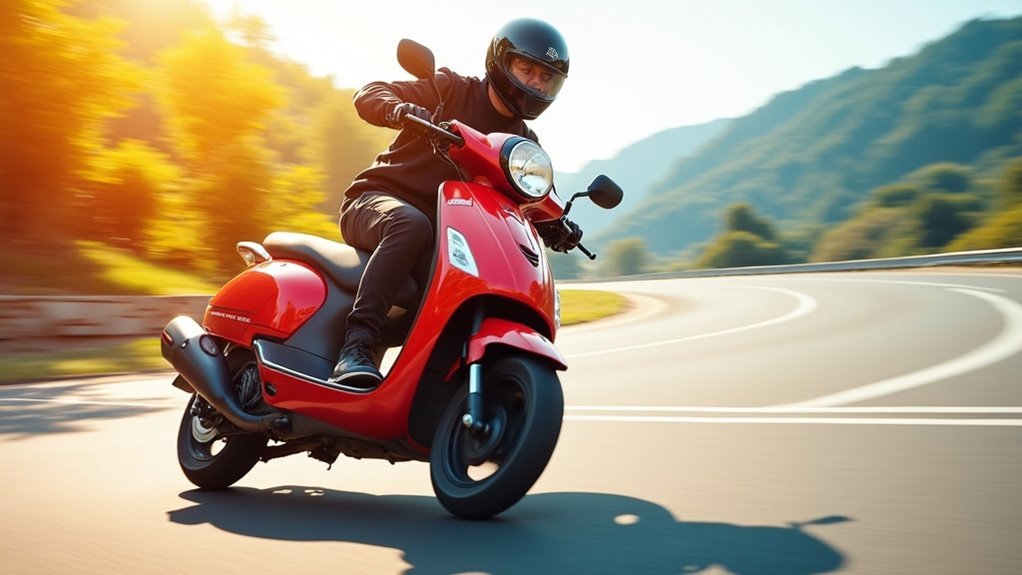
To improve your balance as a beginner on an electric scooter, start with simple drills like the basic stance, where you keep your feet shoulder-width apart and knees slightly bent. Practice gentle weight shifts side-to-side and forward-backward to enhance your control. Add swaying techniques, holding each sway for a few seconds, and gradually incorporate controlled turns. Don’t forget to include one-foot riding drills too! Stick with these exercises, and you’ll build confidence on your electric scooter while discovering more tips to enhance your skills.
Key Takeaways
- Start with a stable stance, placing your dominant foot on the deck of the electric scooter and non-dominant foot on the ground to establish balance.
- Practice gentle weight shifts side-to-side and forward-backward to develop control over your center of gravity while maneuvering the scooter.
- Incorporate slow swaying techniques while bending your knees, holding each position for a few seconds to challenge balance and stability on the scooter.
- Engage in one-leg stands for 30 seconds to enhance stability, which is crucial for riding, and gradually increase the duration for added challenge.
- Use a balance board to simulate electric scooter motions, improving coordination and strength through dynamic practice that mimics the riding experience.
Importance of Balance for Scooter Beginners
Balance is the cornerstone of safe and enjoyable electric scooter riding. For scooter beginners, mastering balance is essential for maintaining control and weight distribution while riding.
Good balance helps prevent falls and accidents, allowing you to build confidence in your electric scooter skills. As you improve your ability to maintain balance, you’ll find it easier to navigate uneven terrain and ride longer distances without fatigue.
Consistent practice of balance techniques lays a strong foundation for advanced skills and tricks on your electric scooter. Embrace the importance of balance, and you’ll enhance your overall riding experience, making it safer and more rewarding for yourself and others.
Starting With Basic Stance Drills
Starting with the right stance is essential for electric scooter beginners looking to improve their balance.
Begin by placing your dominant foot on the scooter deck and your non-dominant foot on the ground to establish a basic stance. Keep your feet shoulder-width apart and knees slightly bent to enhance stability and absorb shocks.
Establish a stable stance by placing your dominant foot on the scooter deck and your non-dominant foot on the ground.
Focus on keeping your head up and eyes forward to boost awareness. Practice shifting your weight gently from one foot to the other while standing still to develop control skills.
Gradually incorporate gentle turns, ensuring your weight stays centered, to further enhance your balance and control on electric scooters.
Weight Shifting Exercises
Weight shifting exercises are essential for building your balance on an electric scooter.
Start by practicing side-to-side and forward-backward weight shifts to enhance your stability.
As you get comfortable, adding a slight squat will engage more muscles and further improve your control during rides.
Basics of Weight Shifting
To maintain control on your electric scooter, mastering the basics of weight shifting is vital. Start by practicing weight shifting exercises that help you understand your center of gravity.
Stand on your scooter and gently lean to each side, feeling how your body adjusts for balance. Incorporate slow movements as you shift weight from one foot to the other to enhance stability.
Try the “rocking” drill, shifting your weight forward and backward while keeping your feet planted. Engaging in dynamic exercises, like moving from a squat to standing, will strengthen your lower body muscles, which are essential for maintaining balance while riding your electric scooter.
Practicing Weight Transfer Techniques
Building on your understanding of weight shifting, practicing specific weight transfer techniques can greatly enhance your balance on the electric scooter.
Start by standing with your feet shoulder-width apart, gently shifting your weight from one foot to the other while keeping the opposite foot firmly on the deck. Incorporate slow, controlled movements to engage your core, which will help improve your balance.
Begin with side-to-side shifts and progress to forward and backward movements as you gain confidence. Consistent practice not only develops proper posture but also enhances your control, reducing the likelihood of falls while maintaining balance on your electric scooter.
Swaying Techniques for Stability
As you practice swaying techniques on your electric scooter, you’ll find that gently shifting your weight from side to side can greatly enhance your balance and stability.
Focus on slow sways, leaning slightly to each side while keeping your knees bent. This position absorbs shocks and helps develop core strength.
Focus on gentle sways while bending your knees to enhance balance and build core strength.
Hold each sway for 3-5 seconds to challenge your balance and strengthen stabilizing muscles. Gradually increase intensity by incorporating small turns or circles.
These movements not only improve muscle memory but also prepare you for dynamic riding scenarios on your electric scooter.
Enjoy the process, and you’ll become more confident in your riding skills!
Controlled Turning Practice
To master controlled turning on an electric scooter, start by understanding how your weight shifts impact balance.
Practice slow-speed maneuvers in a spacious area, ensuring your body remains centered as you turn.
Keep your knees slightly bent and your grip relaxed on the handlebars to enhance your steering control and stability.
Weight Distribution Awareness
Mastering weight distribution is essential for controlled turning on your electric scooter, and practicing this skill can greatly enhance your riding experience.
Start by riding in a straight line, gently leaning into your turns to feel how shifting your weight impacts balance and turning radius. Keep your upper body stable while engaging your legs for smooth weight shifts, ensuring control during turns.
Begin with gradual turns at slow speeds, using cones or markers to guide your practice. Regularly navigate different surfaces to deepen your weight distribution awareness, helping you maintain stability and improve your overall balance while scooting.
Slow Speed Maneuvers
Building on your awareness of weight distribution, slow-speed maneuvers are a great way to enhance your balance and control on the electric scooter.
Practicing these controlled turns helps you develop essential balance skills without the pressure of high speeds.
Focus on:
- Leaning slightly into the turn while bending your knees
- Using gentle steering motions to maintain stability
- Practicing turning in both directions to build muscle memory
- Steering around cones or markers for improved precision
Focused Body Positioning
Focused body positioning is essential for mastering controlled turns on your electric scooter. To maintain balance, keep your head up and eyes forward. Bend your knees slightly to absorb shocks and promote stability. Engaging your core muscles helps you stay upright and counteract wobbling. As you practice, shift your weight by leaning in the direction of the turn. Start slow, then gradually increase your speed to build confidence.
| Key Elements | Actions |
|---|---|
| Knees Bent | Absorb shocks, enhance stability |
| Core Muscles Engaged | Maintain upright posture |
| Weight Shift | Lean into turns for control |
One-Foot Riding Drills
While honing your balance on an electric scooter, one-foot riding drills can be an effective way to develop core strength and stability. Here’s how to get started:
- Begin on a flat surface at low speeds.
- Lift one foot off the deck, keeping your body centered over the scooter.
- Gradually increase the duration as your balance improves.
- Alternate feet to enhance strength and coordination.
Incorporate gentle steering movements while practicing to simulate real riding conditions.
These drills will boost your electric scooter control, ensuring you feel confident and stable as you ride.
Utilizing Slow Movements for Control
To improve your balance on an electric scooter, incorporating slow movements can greatly enhance your control and stability.
By gradually making slow and deliberate turns, you’ll develop muscle memory that allows for better weight distribution. Engage in balance exercises like one-legged stands at a slow pace to challenge your stabilizing muscles.
Additionally, practice gentle sways side to side on the scooter deck to increase body awareness. Focusing on slow, smooth acceleration and deceleration will further cultivate balance control, minimizing abrupt shifts that might lead to instability.
Embrace these techniques, and you’ll find your confidence growing as an electric scooter rider!
Incorporating Balance Exercises Into Routine
Incorporating balance exercises into your routine can greatly enhance your electric scooter riding skills.
These simple drills will help improve your stability and coordination as a beginner:
- Stand on one leg for 30 seconds, gradually increasing the duration.
- Engage in slow squats with a knee lift hold to boost coordination.
- Practice compass lunges, lunging in multiple directions to strengthen your ankles.
- Use a balance board to mimic electric scooter motions, enhancing core strength.