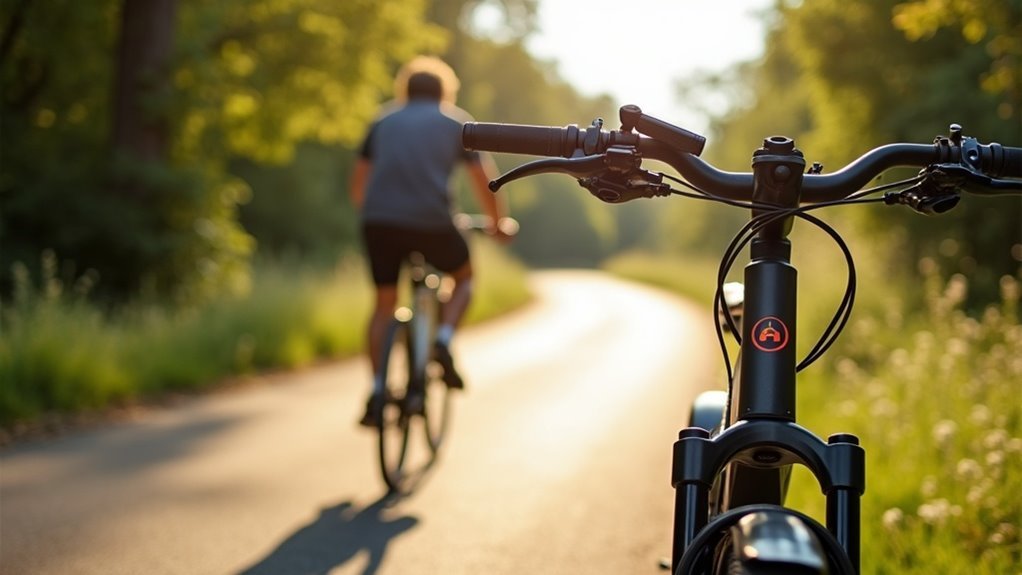
Some e-bikes include Walk Assist Mode to make it easier for you to navigate steep inclines and crowded areas while carrying heavy loads. This feature provides motor assistance at controlled speeds, reducing your physical strain and improving bike handling. It enhances safety by minimizing the risk of falls, especially in tight spaces. If you’re curious about how to maximize your experience with Walk Assist Mode and its benefits, you’ll find more information on that.
Key Takeaways
- Walk Assist Mode provides crucial motor assistance for riders navigating steep inclines or carrying heavy loads, reducing physical strain.
- It enhances bike handling in tight spaces, making maneuverability easier in crowded areas or on difficult terrains.
- The mode promotes safer navigation, minimizing fall risks and accidents when managing heavy bikes or navigating obstacles.
- Activation via a handlebar button ensures controlled speeds, allowing users to focus on their surroundings and maintain safety.
- Regular maintenance is necessary for optimal performance, ensuring the functionality of Walk Assist Mode and preventing operational issues.
Purpose of Walk Assist Mode
Walk assist mode serves an essential purpose for e-bike riders, especially when traversing challenging terrains where traditional cycling isn’t feasible.
This feature enables you to navigate steep inclines and crowded areas effortlessly. By allowing the bike to move at approximately 4 mph, it provides motor assistance while you walk alongside, greatly reducing physical strain.
This is particularly beneficial when pushing heavy bikes or carrying loads. Additionally, walk mode enhances bike handling in tight spaces, making it easier to maneuver through obstacles.
Activated via a dedicated button, this user-friendly assist mode guarantees you can tackle any situation with confidence.
Benefits of Using Walk Assist Mode
When traversing challenging terrains, the benefits of using walk assist mode become immediately apparent. This feature allows you to navigate steep or unrideable paths at around 4 mph, markedly reducing physical strain while walking your bike.
When carrying loads or managing heavy bikes, the motor assistance in walk mode is invaluable. It also enhances your control in crowded areas, making navigation safer and more practical.
Plus, since walk assist uses minimal battery power, you can conserve energy for longer journeys. Ultimately, this mode promotes safer bike handling, reducing the risk of falls and accidents in tricky environments.
Safety Features of Walk Assist Mode
Steering through crowded areas or steep terrains can be challenging, but the safety features of walk assist mode greatly enhance your riding experience. This walk mode not only helps prevent accidents in busy environments but also guarantees stability on inclines, reducing fall risks. With improved visibility in pedestrian zones, you and your bike remain noticeable to others. Additionally, it promotes cautious navigation through tight spaces, minimizing collision risks. Engaging motor assistance at low speeds allows for controlled movement, easing physical strain while managing your bike effectively.
| Feature | Benefit | Safety Enhancement |
|---|---|---|
| Stability Control | Reduces fall risk on inclines | Prevents accidents |
| Visibility Boost | Increases rider and bike visibility | Enhances awareness |
| Cautious Navigation | Aids in maneuvering through obstacles | Minimizes collision risk |
| Low-Speed Assistance | Eases physical strain | Facilitates controlled movement |
| Slow Speed Engagement | Promotes stability in crowded areas | Enhances overall safety |
Technical Aspects of Walk Assist Mode
When you activate walk assist mode, you’ll notice that different bikes use various mechanisms, from dedicated buttons to automatic sensing features.
The speed at which this mode engages can also differ, typically allowing you to move at a controlled pace between 2.5 mph and 4 mph.
Understanding these technical aspects, along with the safety features designed to prevent accidental activation, is essential for maximizing your riding experience.
Activation Mechanisms
To activate walk assist mode on an e-bike, you simply need to press and hold a designated button on the handlebar control, often marked as the “walk mode” button or a specific function key like the Minus (-) button.
This intuitive activation mechanism allows you to engage walk mode while mounted or walking beside the bike, providing speeds between 2.5 mph and 4 mph, depending on the model.
Additionally, safety features may delay activation to prevent accidental engagement, enhancing user safety.
Speed Variability
Understanding the speed variability in walk assist mode is key to maximizing your e-bike experience. This mode typically engages motor assistance at speeds of 2.5 to 4 mph, depending on your e-bike model. Importantly, some systems may restrict walk mode to just 2.5 mph, impacting performance consistency. The table below outlines important aspects of speed variability:
| Feature | Description |
|---|---|
| Speed Range | 2.5 mph to 4 mph |
| Activation Method | Specific button combination |
| System Type | Hub-drive vs. mid-drive efficiency |
| Safety Concerns | Faster speeds in tight spaces |
| Performance Consistency | Varies by brand and model |
Familiarizing yourself with these factors enhances your e-biking journey.
Safety Features
While maneuvering tight spaces or crowded areas, the safety features of walk assist mode are crucial for guaranteeing a secure riding experience.
Engaging walk mode, typically activated via a handlebar button, offers motor assistance at low speeds, allowing you to navigate without pedaling.
Key safety features include a delay in activation, preventing accidental engagement and minimizing collision risks. Some models provide throttle lock to maintain control while walking.
Enhanced visibility guarantees you’re seen in pedestrian zones, promoting cautious movement through obstacles.
These features collectively enhance your safety and comfort, making walk mode a critical component of e-bike technology.
Common Uses for Walk Assist Mode
Walk assist mode on your e-bike is a game changer when you encounter steep or uneven terrains, making it easier to push your bike at a steady pace.
It’s especially useful for handling heavy loads, giving you the support you need without straining your body.
Plus, in emergency situations like a flat tire, this feature allows you to maneuver your bike safely without the need to ride.
Navigating Challenging Terrains
Maneuvering challenging terrains can often test the limits of both rider and bike, but with walk assist mode, you can tackle steep climbs and tricky obstacles with greater ease. This feature provides motor assistance, reducing strain as you navigate unrideable ascents or crowded areas. It’s invaluable when carrying your bike up stairs or through flooded trails, enhancing safety and stability.
| Situation | Benefits | Walk Mode Advantage |
|---|---|---|
| Steep Climbs | Reduces physical strain | Maintains control |
| Tight Spaces | Easier maneuvering | Walk beside bike |
| Stairs | Lightens load | Minimizes injury risk |
| Emergency Transport | Effortless movement | Quick bike relocation |
Handling Heavy Loads
When you’re faced with the challenge of carrying heavy loads, e-bike walk assist mode becomes an invaluable tool. It’s particularly helpful for managing heavy bikes, especially when traversing unrideable terrains.
Here are a few common uses:
- Stairs and Steep Driveways: Effortlessly transport your bike uphill without straining your back.
- Obstacles and Rough Terrain: Move through flooded trails or sandy beaches with controlled ease.
- Heavy Loads: Carry groceries or gear upstairs while minimizing injury risk.
Walk mode enhances your ability to serve others, making it easier to transport essential items while maintaining safety and comfort.
Emergency Situations Management
Managing heavy loads is just one of the many practical applications of e-bike walk assist mode. In emergency situations, this mode becomes invaluable, allowing you to navigate difficult terrains like steep hills or flooded trails safely.
It helps you manage a malfunctioning bike, enabling you to walk it back to a repair location without straining yourself. When faced with a flat tire, you can efficiently transport your bike home.
Additionally, walk mode assists in crowded spaces, reducing collision risks, and helps you carry heavy loads up stairs or driveways, providing practical solutions when lifting is challenging.
Potential Limitations of Walk Assist Mode
Although walk assist mode offers convenience, it isn’t without its drawbacks, particularly in crowded or indoor spaces where accidental activation can lead to safety hazards.
Here are some limitations you should consider:
- Accidental Activation: You might inadvertently trigger walk mode, risking collisions with obstacles.
- Speed Concerns: Some users may find the maximum speed too fast, leading to control issues and potential damage.
- Terrain Limitations: Not every surface is suitable for walk mode, which may hinder its effectiveness in certain conditions.
Understanding these limitations can help you make informed decisions about when to utilize walk assist mode effectively.
Tips for Effectively Using Walk Assist Mode
Using walk assist mode effectively can enhance your biking experience, especially in challenging situations.
Activate walk mode by holding the Minus (-) button on your handlebar when maneuvering tough terrains or carrying heavy loads. This reduces physical strain, making it easier to manage your bike.
Test walk assist during setup or after repairs to verify it functions properly. Adjust the pedal assist level to match your comfort and terrain, optimizing your speed.
Regular maintenance is key; check connections to prevent issues, confirming a smooth experience with walk mode when it matters most.
Embrace these tips to serve both yourself and others better.