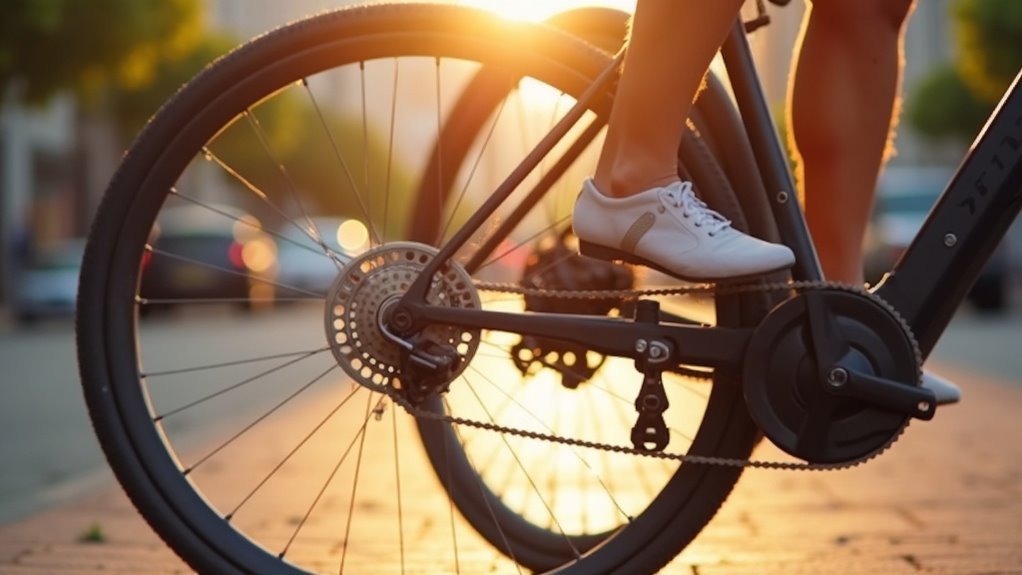
Some e-bikes use torque sensors instead of cadence sensors because they provide a more responsive and dynamic riding experience. Torque sensors adjust motor assistance based on your pedaling effort, which enhances performance and improves battery efficiency, especially on varied terrains. You’ll feel more connected to your bike, benefiting from better control on hills and diverse surfaces. If you want to explore more about how these sensors differ and impact your ride, there’s plenty more to uncover.
Key Takeaways
- Torque sensors provide responsive motor assistance based on rider effort, enhancing control and performance for cyclists.
- They improve battery efficiency by activating the motor only when needed, extending range on a single charge.
- Torque sensors adapt better to varied terrains, offering superior assistance on hills and challenging surfaces.
- They create a more natural and engaging riding experience, fostering a stronger connection between the rider and the e-bike.
- Torque sensors are ideal for performance-focused riders, promoting active pedaling techniques for better workout benefits.
Understanding Torque Sensors in E-Bikes
When you hop on an e-bike equipped with a torque sensor, you’ll notice a significant difference in how the bike responds to your pedaling.
These sensors measure the force you apply to the pedals, providing dynamic motor assistance that adapts to your effort. This results in a more natural riding experience, particularly on varied terrains.
Torque sensors enhance battery power efficiency by delivering proportional assistance, conserving battery life and extending your bike’s range.
Riders appreciate the improved control and responsiveness, making torque sensor-equipped e-bikes ideal for performance-focused cyclists seeking a workout with adjustable resistance, ultimately leading to greater satisfaction.
Benefits of Torque Sensors for Riders
One of the standout benefits of torque sensors for riders is their ability to create a more intuitive and responsive riding experience. By measuring the force you exert, these sensors deliver power assistance that feels natural, closely mimicking traditional cycling.
You’ll notice enhanced battery efficiency, as torque sensors provide proportional support, conserving energy on varied surfaces and hilly terrains. This results in greater control and smoother shifts, minimizing jerking during acceleration.
For performance-focused riders, the adjustable resistance offers an engaging workout, making every ride enjoyable and fulfilling. With torque sensors, you truly connect with your e-bike and the road ahead.
Comparing Torque and Cadence Sensors
Comparing torque and cadence sensors reveals distinct differences that can greatly impact your riding experience.
Torque sensors measure the force you apply to the pedals, delivering dynamic power assistance, which is ideal for performance-focused riders. This allows for better control on varied terrains and enhances battery efficiency.
Torque sensors enhance your ride by measuring pedal force, providing dynamic power assistance for better control and battery efficiency on varied terrains.
In contrast, cadence sensors track your pedaling speed, providing consistent power regardless of your effort. While they’re often simpler and budget-friendly, they may feel more mechanical.
Ultimately, if you seek a smooth, responsive ride, especially on climbs, torque sensors may be the better choice for your e-bike adventures.
The Role of Cadence Sensors in E-Bikes
Cadence sensors play a significant role in shaping the riding experience for many e-bike enthusiasts.
These sensors measure your pedaling rate, adjusting the motor’s power output to provide consistent assistance. By engaging automatically when you start pedaling, cadence sensors offer a straightforward experience, especially for casual riders.
However, while they deliver steady support, they don’t account for the effort you exert, which can lead to a less natural performance. This makes cadence sensors particularly appealing for those prioritizing ease of use over dynamic responsiveness, ensuring a comfortable ride without the complexity of more advanced systems.
Advantages of Cadence Sensors
When you’re considering the advantages of cadence sensors, cost-effectiveness stands out.
These sensors are generally more budget-friendly, making them ideal for entry-level e-bikes.
Plus, their simple operation means you can enjoy a smooth ride without worrying about complex settings, perfect for casual outings.
Cost-Effectiveness
While considering the various options for e-bike sensors, it’s clear that cadence sensors stand out for their cost-effectiveness, making them a favored choice among budget-conscious riders.
These sensors are less expensive to manufacture than torque sensors, allowing entry-level e-bikes to offer greater affordability. Their simpler technology, often using magnets or accelerometers, reduces production costs and maintenance needs.
This straightforward design supports a reliable riding experience, providing consistent power output based on pedaling speed. By choosing cadence sensors, you’re not only saving money but also promoting electric biking to a wider audience, helping others enjoy the benefits of e-bikes.
Simple Operation
Choosing cadence sensors not only offers a cost-effective solution but also simplifies the riding experience for many cyclists.
Here are some key advantages:
- Consistent power: Cadence sensors provide steady electric assist based on your pedaling speed.
- Minimal effort: You can activate the electric assist easily, making rides more relaxed.
- Lower maintenance: Their straightforward design means fewer mechanical complexities compared to torque sensors.
- Battery efficiency: They help manage energy and prolong battery life by maintaining a consistent level of assistance.
For casual riders, understanding and using pedal-assist systems becomes a breeze, enhancing overall enjoyment on the road.
Disadvantages of Using Cadence Sensors
While cadence sensors offer some advantages, they come with notable drawbacks.
You might find that your battery drains faster since these sensors provide constant assistance, regardless of how hard you’re pedaling.
Additionally, the mechanical riding experience can feel less engaging, and you may struggle with varied terrains due to limited adaptability in power output.
Battery Drain Concerns
As you ride with a cadence sensor, you might notice that the power assistance kicks in even with minimal effort, which can lead to quicker battery drain.
This constant engagement can greatly affect your e-bike range. Consider these factors:
- Increased energy usage during low-intensity rides.
- Frequent recharging needed for long journeys.
- Less efficient power distribution compared to torque sensors.
- Reduced overall range due to steady output regardless of your effort.
2. Mechanical Riding Experience
Though cadence sensors offer a consistent power output, they can create a mechanical riding experience that feels disconnected from the natural dynamics of cycling.
You might notice that as you pedal harder, the assistance remains constant, leading to a lack of intuitive feedback. This disconnect can hinder motor engagement, resulting in a jerky ride when changing speeds.
Additionally, the continuous power application may accelerate battery depletion, making your rides less engaging, especially if you’re fitness-focused.
In contrast, torque sensors offer a more responsive experience, adjusting assistance based on your input, enhancing control and enjoyment on varied terrains.
3. Limited Terrain Adaptability
The limitations of cadence sensors become particularly evident when tackling varied terrains. Unlike torque sensors that dynamically adjust to your input, cadence sensors struggle with responsiveness, resulting in:
- Lag in motor assistance during steep climbs.
- Unnatural riding experiences as power output doesn’t match pedal pressure.
- Difficulty maintaining momentum on inclines and uneven surfaces.
- Increased battery depletion from inefficient energy use.
In contrast, torque sensors provide a more intuitive ride, ensuring smoother shifts and ideal handling, making them the superior choice for those who ride through diverse terrain.
Embrace the adaptability that a torque sensor offers!
How Sensor Types Affect Battery Efficiency
When considering e-bikes, understanding how sensor types impact battery efficiency can greatly influence your riding experience.
Torque sensors offer proportional power assistance based on your pedaling force, activating the motor only when needed. This leads to enhanced battery efficiency and extends your range on a single charge.
In contrast, cadence sensors provide constant assistance, which can deplete your battery faster since the motor runs even with minimal effort.
Studies reveal that electric bikes with torque sensors can improve battery efficiency by up to 20%, making them a more sustainable choice for regular cyclists traversing varied terrains.
Choose wisely for best performance!
Choosing the Right Sensor for Your Riding Style
Selecting the right sensor for your riding style can greatly enhance your e-bike experience. Here’s what to reflect upon:
- Torque Sensor: Ideal for performance-focused riders, offering responsive assistance based on effort.
- Cadence Sensor: Perfect for casual riders prioritizing ease and consistency in their ride.
- Terrain: If you tackle hills or varied surfaces, a torque sensor provides better control.
- Fitness Benefits: Torque sensors promote an active pedaling style, maximizing your workout.