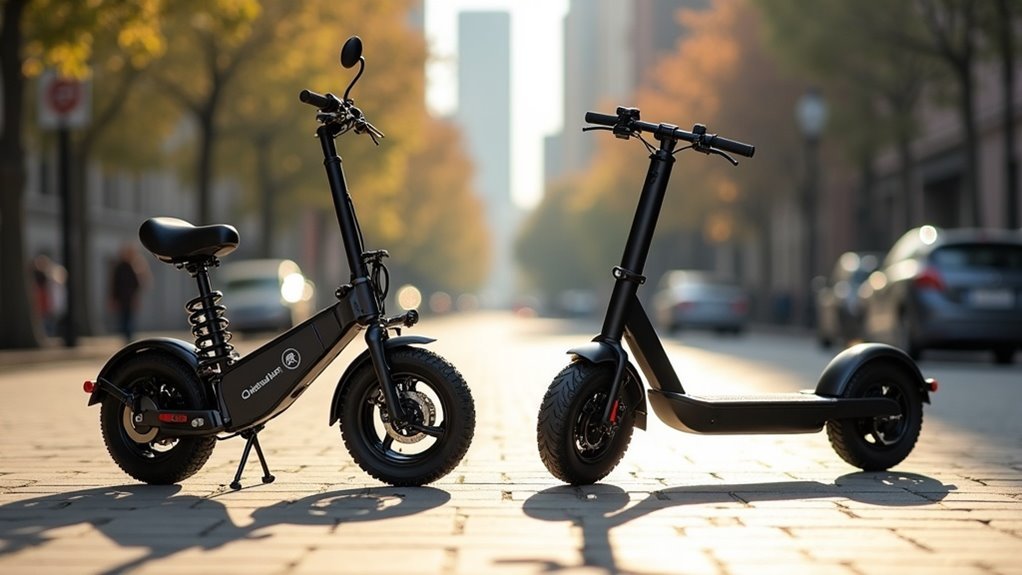
Some e-scooters have suspension while others don’t, primarily based on their intended use and terrain. If you’re riding on rough surfaces, a good suspension system enhances comfort and stability. Lightweight urban scooters often skip suspension to reduce weight, focusing on efficiency over comfort. Factors like rider weight and cost also play a role in design choices. Curious about the different types of suspension systems and their benefits? There’s plenty more to uncover!
Key Takeaways
- Suspension enhances ride quality by absorbing bumps, making it essential for scooters designed for rough terrain.
- Lightweight urban scooters often forego suspension to reduce overall weight and improve portability.
- Rider weight and style influence suspension choice, necessitating different systems for various users.
- Cost considerations can lead to simpler designs without suspension, prioritizing affordability over comfort.
- Dual suspension systems are preferred in high-performance models for better stability and shock absorption.
Understanding Electric Scooter Suspension
When you ride an electric scooter, the suspension system plays an essential role in ensuring a smooth and comfortable journey.
Different types of suspension, such as spring, hydraulic, rubber, and air, provide varying levels of shock absorption tailored to your ride quality needs.
Explore the diverse suspension types—spring, hydraulic, rubber, and air—each offering unique shock absorption to enhance your ride quality.
If you tackle rough terrain, a high-quality suspension enhances control and minimizes fatigue.
Remember, your rider weight and preferred riding style influence the best suspension choice for you.
Regular maintenance is crucial too—check bolt tightness, lubricate parts, and replace worn components to keep your scooter performing at its best and delivering the smoothest ride possible.
The Importance of Suspension in E-Scooters
Though many riders might overlook it, the suspension system in electric scooters is essential for ensuring a safe and enjoyable experience.
Good suspension absorbs bumps and shocks, enhancing ride quality, especially for high-performance electric scooters and during off-road riding. The type of suspension—be it spring, hydraulic, or rubber—affects comfort and stability.
Riders who tackle longer distances or mixed surfaces will find that a robust electric scooter suspension system reduces fatigue and maintains control, regardless of their weight and riding style.
Choosing the right suspension can make all the difference in your overall journey, elevating your riding experience markedly.
Different Types of Suspension Systems
Understanding the various types of suspension systems can greatly impact your electric scooter experience.
Spring suspension, the most common type, provides basic shock absorption but lacks adjustability.
Hydraulic suspension excels on uneven roads, offering superior shock absorption and adjustable damping.
Air suspension enhances ride comfort by absorbing small bumps, although it requires careful pressure monitoring to avoid leaks.
Rubber suspension is lightweight and low-maintenance, effective for minor vibrations but struggles with larger impacts.
Finally, dual suspension combines front and rear components, ensuring a smoother ride, particularly for long-distance and off-road adventures.
Choose wisely for the best ride experience!
Factors Influencing the Decision to Include Suspension
Choosing the right suspension for your electric scooter involves several key factors that can greatly affect your riding experience. Suspension is an important feature, especially for scooters designed for bumpy roads or off-road conditions. Lightweight scooters aimed at urban commuting often skip suspension to reduce weight. Cost considerations also play a role; more advanced suspension systems can raise prices, making budget-friendly models simpler. Additionally, rider weight impacts suspension design—heavier riders usually need robust shock absorption systems for comfort. Here’s a quick comparison:
| Factor | Impact on Suspension |
|---|---|
| Terrain Type | Necessitates shock absorption |
| Weight | Affects system robustness |
| Cost | Influences design choices |
| Use Case | Determines suspension need |
Maintenance Considerations for Scooter Suspension
To keep your electric scooter’s suspension performing at its finest, regular maintenance is crucial.
Start by checking the tightness of bolts and screws to prevent loosening, which can compromise safety.
Don’t forget to lubricate moving parts; this reduces friction and extends the life of scooter suspensions.
Be alert for strange noises during rides or reduced shock absorption, as these are signs that you need to inspect your suspension.
Replace worn or damaged components, like shocks and struts, promptly to guarantee peak performance.
Regular checks help you maintain a safe and enjoyable ride, regardless of the shocks and bumps along the way.