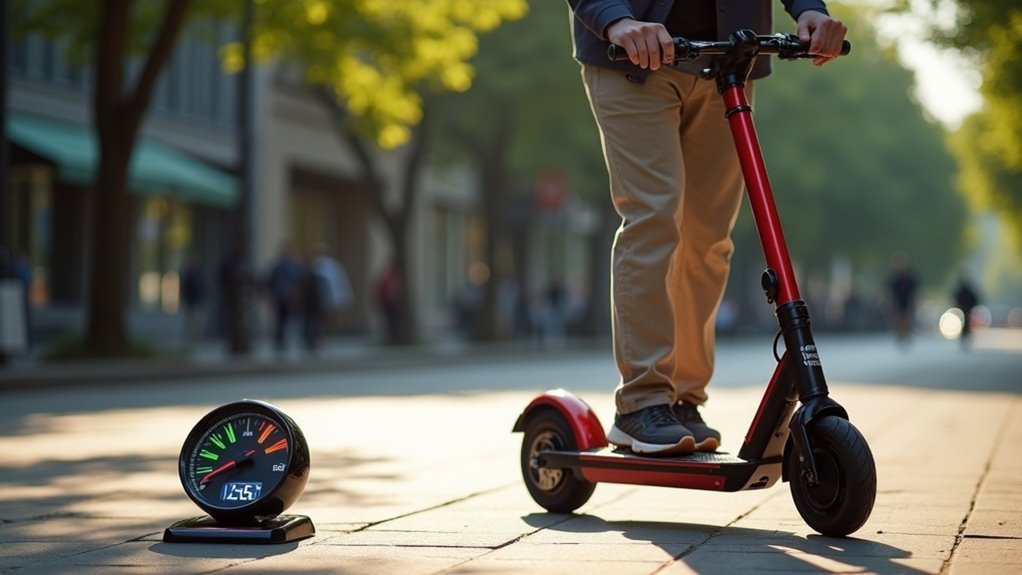
Rider weight impacts e-scooter performance by directly influencing acceleration, top speed, and battery life. Heavier riders require more power, resulting in slower acceleration and reduced speeds. For example, a 300 lb rider may only achieve half the range of a lighter rider. Overloading also strains the braking system and stability, increasing safety risks. Understanding these dynamics is key to optimizing your riding experience, and you’ll find essential insights on best practices for heavier riders next.
Key Takeaways
- Rider weight affects the power required for acceleration, leading to slower speeds for heavier individuals.
- Increased weight results in higher energy consumption, reducing battery life and overall range.
- Heavier riders face greater rolling resistance, which diminishes travel distance on a single charge.
- Weight overload strains the braking system, impacting stability and increasing stopping distances.
- Performance is compromised on inclines, necessitating more powerful motors for heavier riders.
Understanding Electric Scooter Weight Capacities
When selecting an electric scooter, understanding its weight capacity is vital, as it directly affects performance and safety.
Electric scooter weight limits typically range from 220 lbs to 440 lbs, depending on the model. Exceeding these limits can compromise performance, resulting in slower acceleration and reduced battery life. Heavier riders, particularly those around 300 lbs, may find their range noticeably diminished.
Manufacturer’s specifications outline these maximum weight capacities, influenced by frame material and motor power.
Regular maintenance, including proper tire inflation, is essential for best performance, ensuring that power consumption remains efficient even at or near the weight limits.
The Relationship Between Rider Weight and Scooter Performance
Rider weight plays an essential role in determining e-scooter performance, as it directly impacts how efficiently the motor operates. Heavier riders demand more power to overcome inertia and rolling resistance, which results in slower acceleration and reduced top speeds.
For instance, if you weigh over 300 lbs, you might only travel 15-17 miles on a scooter rated for 25 miles due to increased battery depletion. Additionally, tackling inclines may require dual motors or higher wattage models.
To guarantee peak performance, maintaining tire pressure and monitoring battery capacity becomes significant, particularly for those carrying heavier loads.
Safety Risks of Exceeding Weight Limits
Exceeding the weight limit on an electric scooter greatly compromises safety, as it affects stability and handling.
When you overload your scooter, the braking system strains, resulting in longer stopping distances and increased safety risks. Additionally, reduced acceleration and slower response times can hinder your ability to navigate traffic safely.
This not only elevates the potential for falls or collisions but also leads to premature wear and tear on components, increasing the likelihood of mechanical failures.
Moreover, some regions impose legal penalties for exceeding weight limits, which may void your warranty, emphasizing the importance of adhering to the electric scooter’s weight limit.
How Rider Weight Affects Battery Life and Range
Overloading an electric scooter not only raises safety concerns but also greatly impacts battery life and range.
When rider weight increases, consider these factors:
- Heavier riders demand more power from the motor, accelerating battery drain and reducing performance.
- Increased weight raises rolling resistance, which diminishes overall efficiency and range on a single charge.
- Using a scooter with a larger battery (1000Wh+) can better support the additional weight and mitigate strain on the battery.
Ultimately, exceeding the maximum weight limit can lead to a drop in range, with heavier riders potentially experiencing only 15-17 miles instead of the rated 25 miles.
Best Practices for Heavier Riders
When choosing an e-scooter, it’s essential to prioritize specific features that cater to heavier riders for peak performance and safety.
Opt for models with weight capacities of at least 330-400 lbs to accommodate your needs. Regularly check your tire pressure to maintain proper tire function, as this prevents flats and minimizes battery drain caused by increased rolling resistance.
Look for powerful motors and reinforced frames that enhance safety and stability. Utilizing smart riding modes can further optimize performance, while good suspension guarantees a comfortable ride.
Remember to monitor battery health by keeping levels between 20-90% for longevity.
Selecting the Right Scooter for Your Weight
Choosing the right e-scooter involves understanding how your weight impacts its performance. For peak performance, consider these key factors:
Selecting the ideal e-scooter requires recognizing the influence of your weight on its overall performance.
- Weight Capacity: Select a scooter with a weight capacity exceeding your total weight by 10-15%. Heavier riders should aim for at least 330-400 lbs.
- Motor Power: Opt for higher wattage motors to handle added weight, guaranteeing speed and stability on inclines.
- Battery Capacity: Choose scooters with batteries over 1000Wh to reduce faster drain and extend range.
These factors guarantee a robust design and reliable performance, enhancing your riding experience as a heavier rider.